A Roof Over Your Head And A Helmet In Question
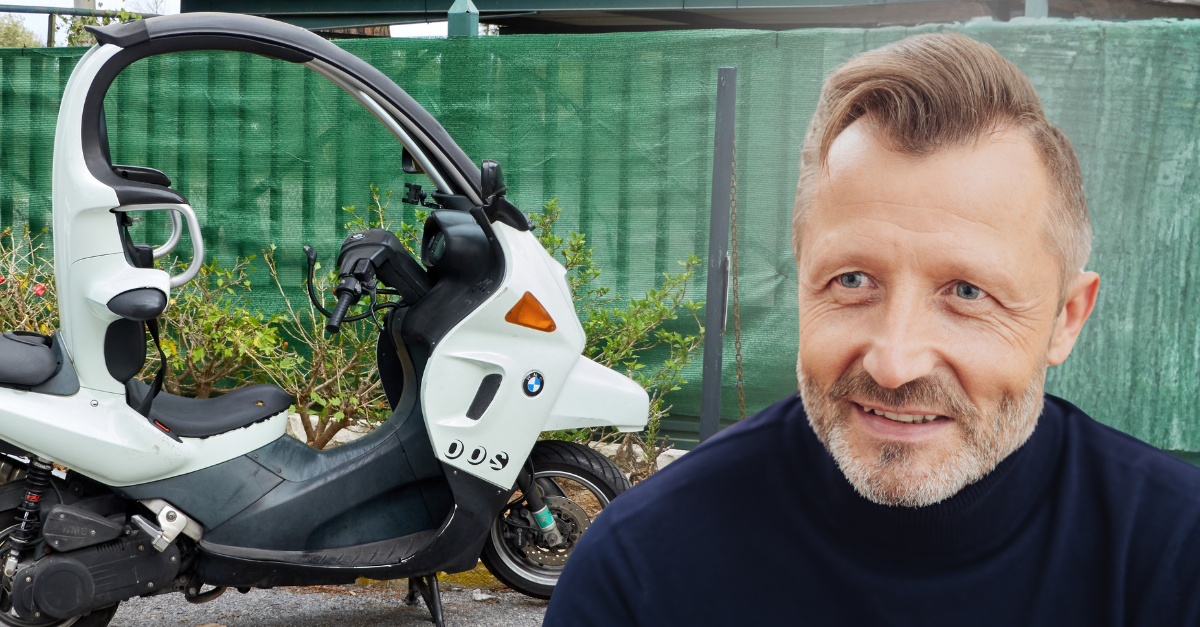
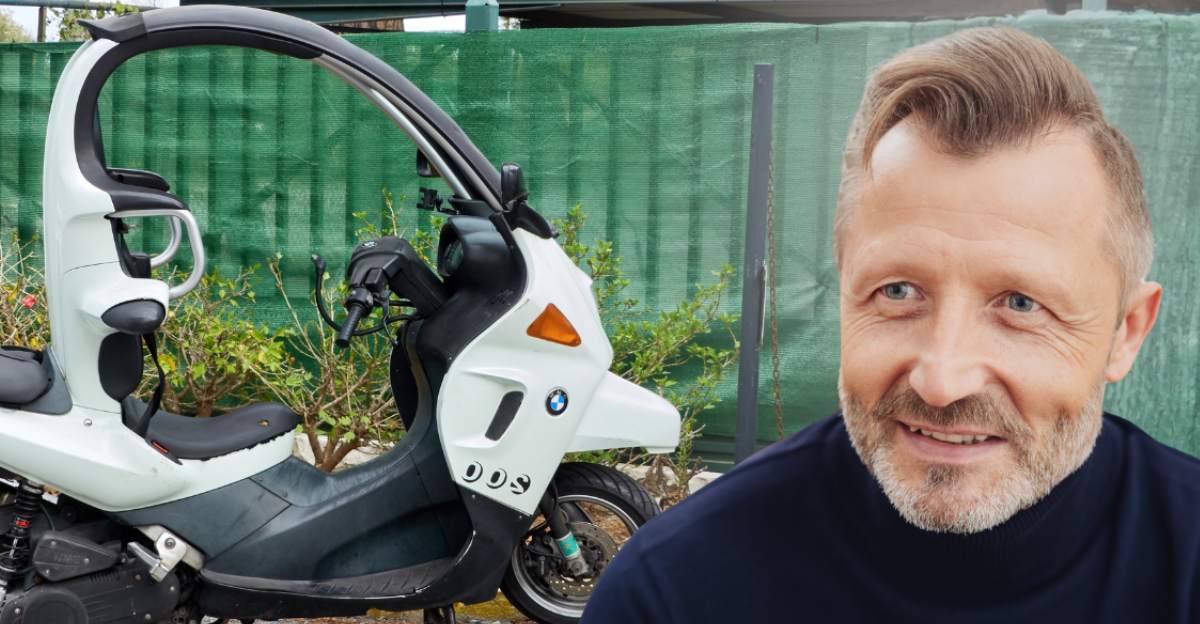
At the turn of the millennium, BMW decided the world of two wheels needed a little German engineering flair—and possibly a roll cage. The result was the BMW C1, a scooter so unusual it looked like it had driven straight out of a concept car show and onto city streets. It had a roof. It had a windshield. It even had seat belts. And yes, it was still technically a scooter.
 Capturing Images, Shutterstock
BMW’s Big City Gamble
In the late 1990s, BMW Motorrad wanted to expand beyond traditional motorcycles and tap into urban commuting. European cities were congested, parking was scarce, and small-displacement scooters were everywhere. BMW saw an opportunity to offer something safer and more premium than the typical step-through runabout.
The C1 was their answer—a machine designed specifically for city life, blending scooter convenience with automotive-style safety thinking.
 Stefano Bianco, Wikimedia Commons
Born At The Dawn Of A New Millennium
Production of the BMW C1 began in 2000 and continued until 2002. It was built in Italy and aimed primarily at European markets, where scooters were a daily necessity rather than a weekend toy.
Timing-wise, it felt futuristic—like a Y2K vision of what commuting would look like in the 21st century.
 Chuck Schultz, Wikimedia Commons
A Scooter With A Roof—Seriously
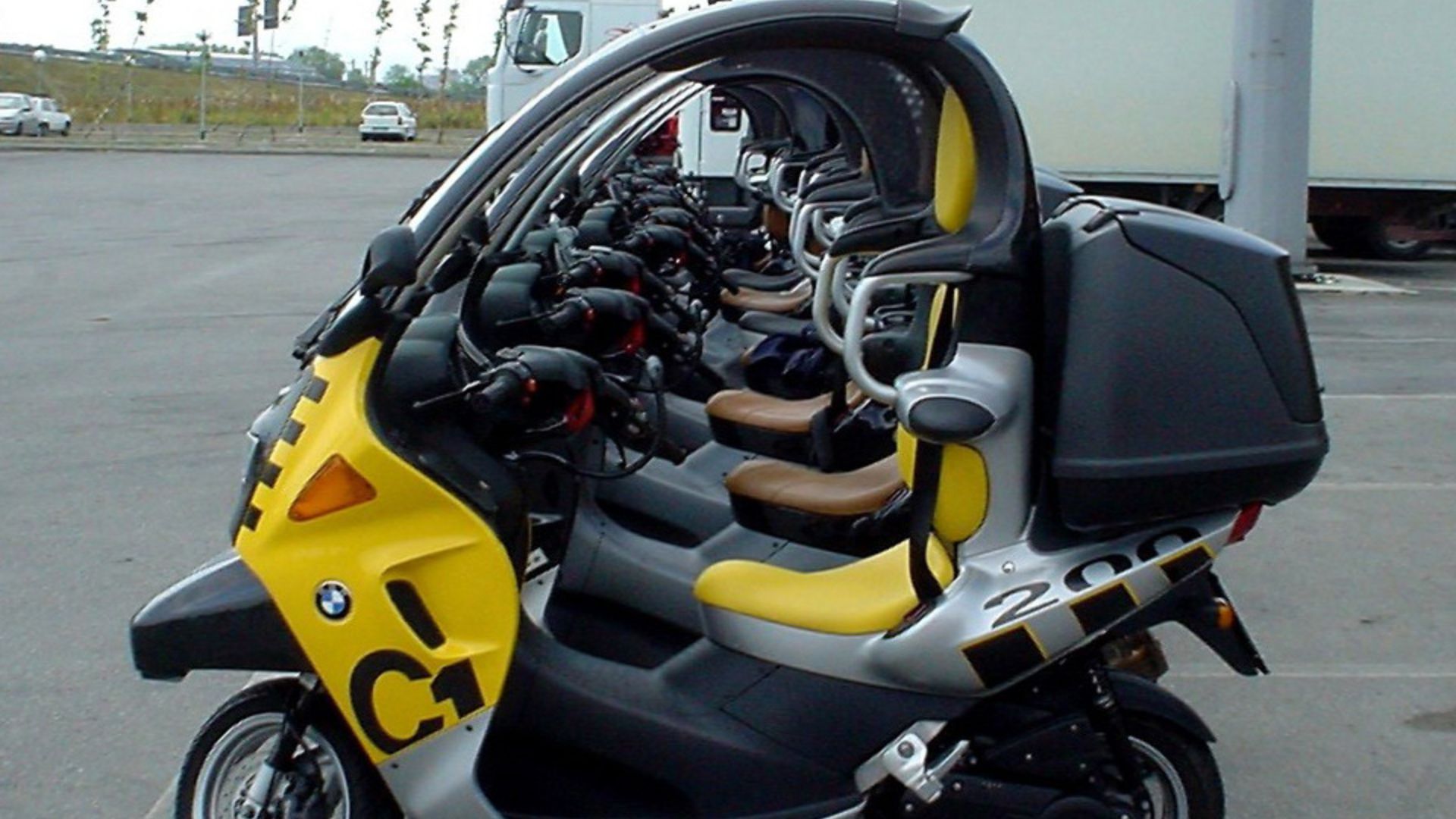
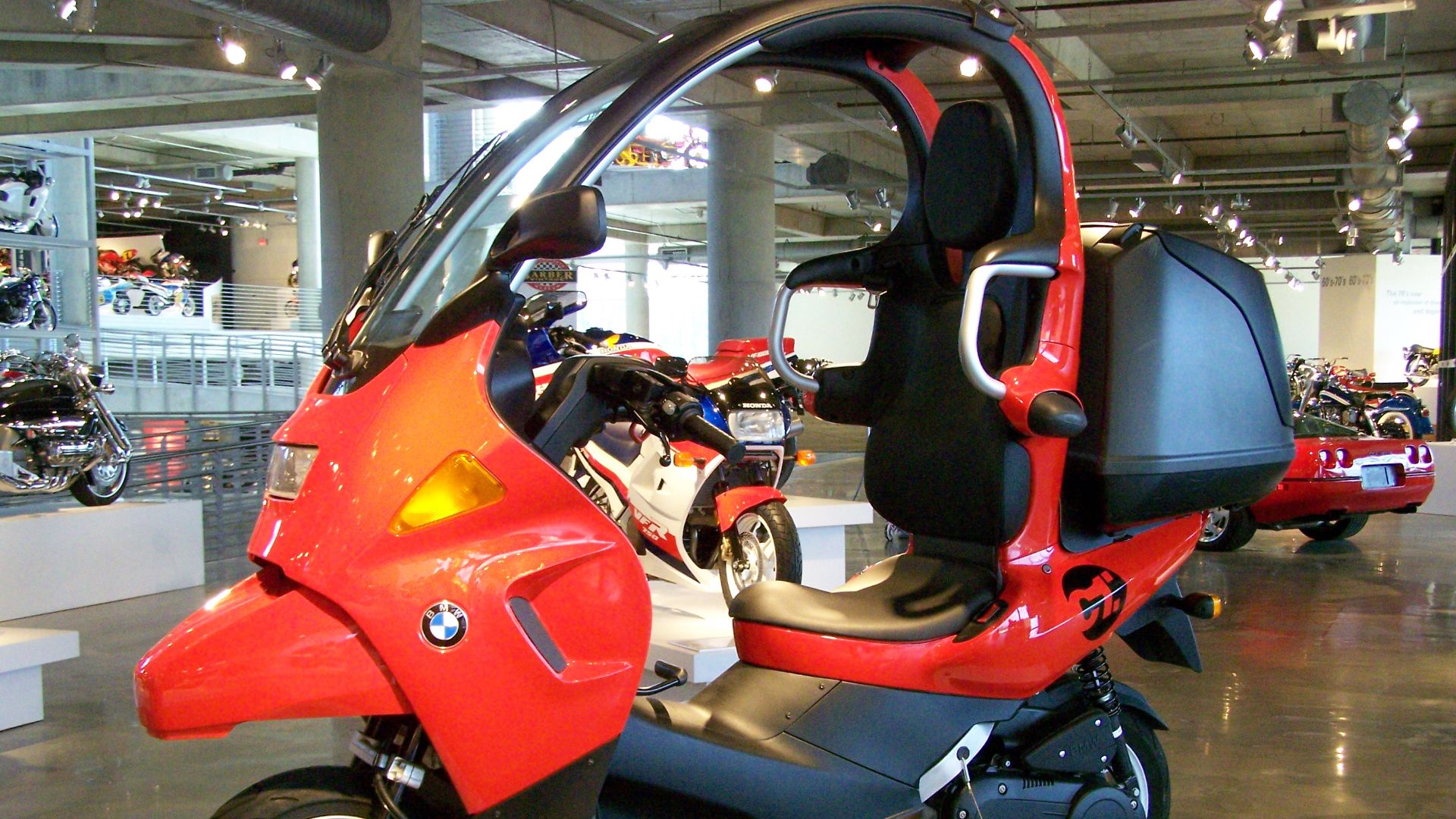
The C1’s defining feature was its integrated roof and aluminum safety frame. Instead of exposing the rider to wind and rain, the C1 enclosed them in a protective structure that extended above and around the seat.
It looked less like a Vespa and more like someone had carefully lowered a greenhouse onto a scooter chassis.
The Roll Cage On Two Wheels
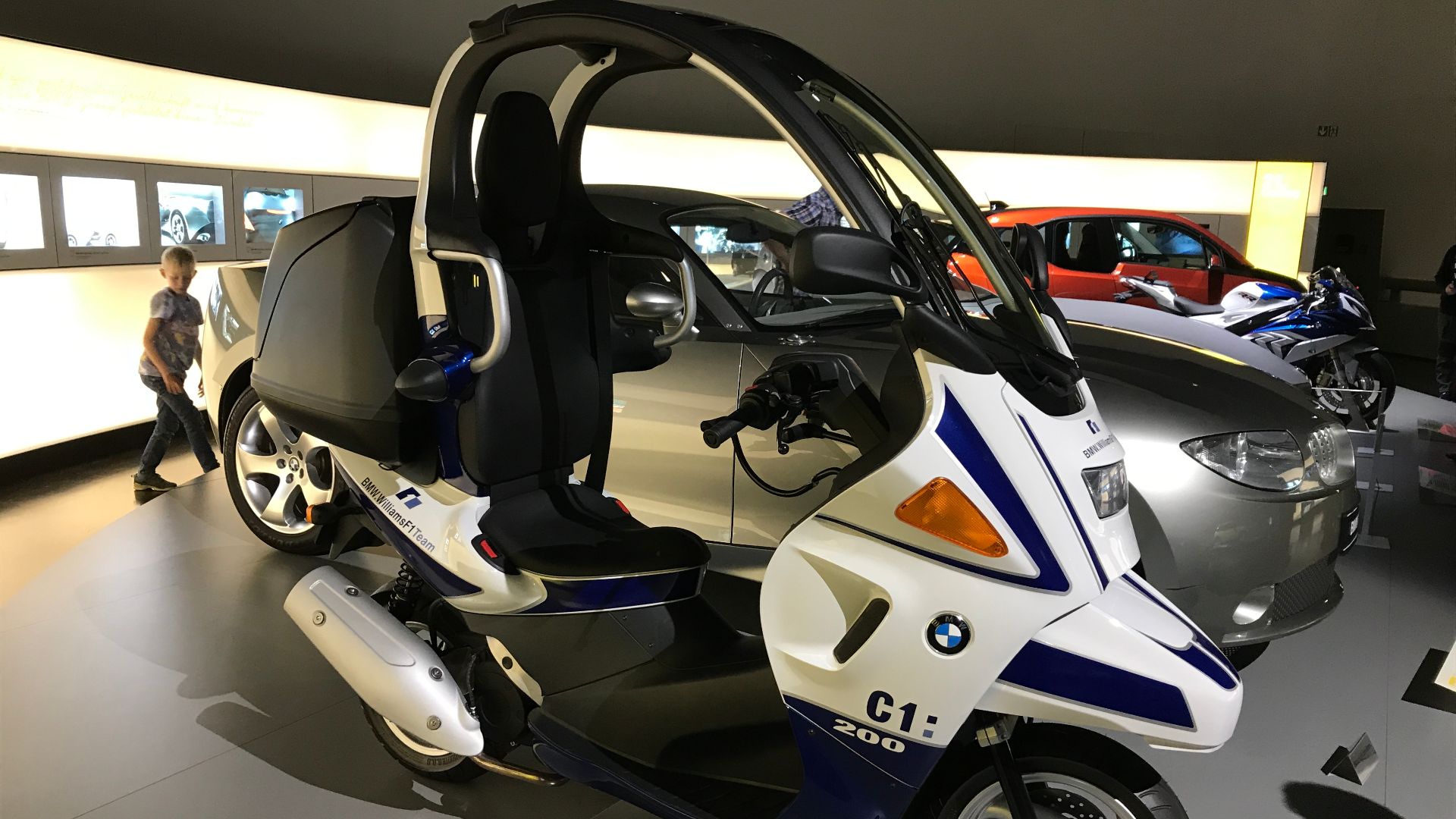
BMW didn’t just add a roof for style points. The C1 featured a rigid aluminum space frame designed to protect the rider in an accident. This frame worked in conjunction with crumple zones and energy-absorbing components.
The idea was simple but radical: bring car-style occupant protection to a two-wheeled vehicle.
 Smiley.toerist, Wikimedia Commons
Seat Belts—On A Scooter
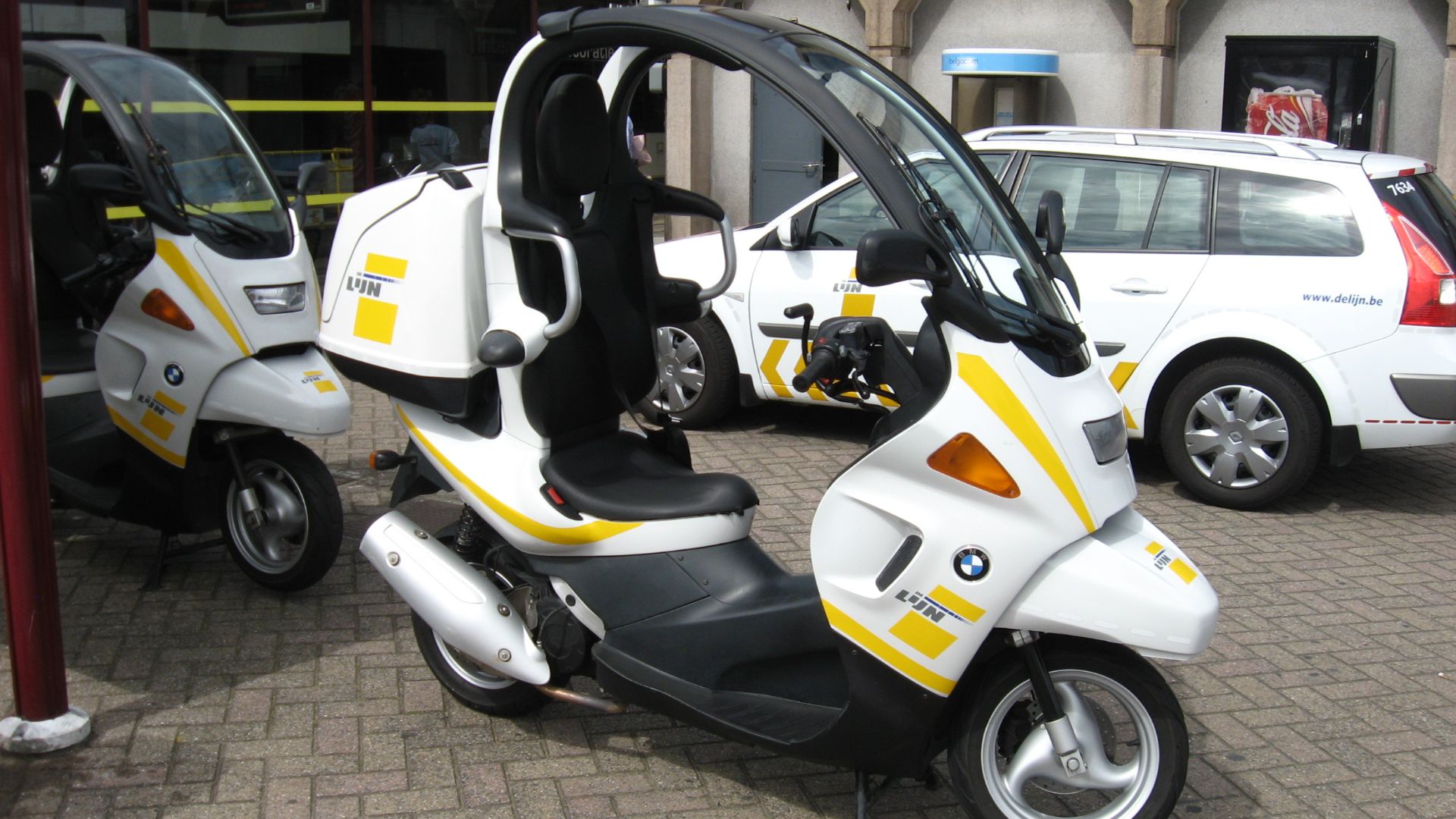
Perhaps the most eyebrow-raising feature was the inclusion of seat belts. The C1 used a pair of safety belts—one lap belt and a diagonal shoulder belt—to secure the rider in place.
Instead of bracing yourself in a fall, you were meant to stay seated within the protective structure.
 Andrea Volpato from pv Novara, Italia, Wikimedia Commons
The Helmet Controversy
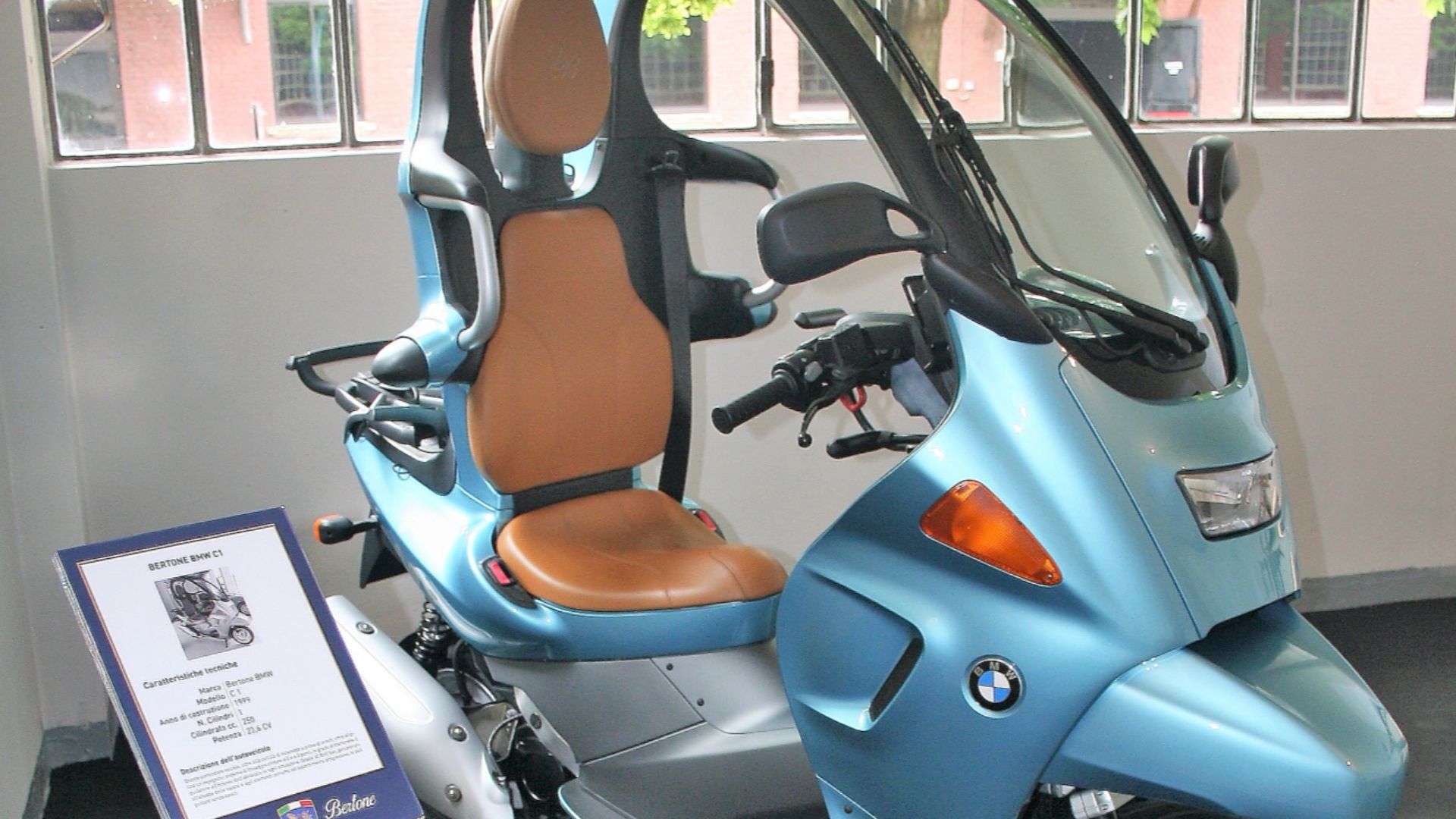
BMW engineered the C1 so that, in certain markets, riders were legally allowed to ride without a helmet. The built-in safety cell was designed to provide sufficient head protection during specific types of impacts.
However, helmet laws varied by country, and not all governments agreed with BMW’s assessment. In some places, helmets remained mandatory, which undermined one of the C1’s biggest selling points.
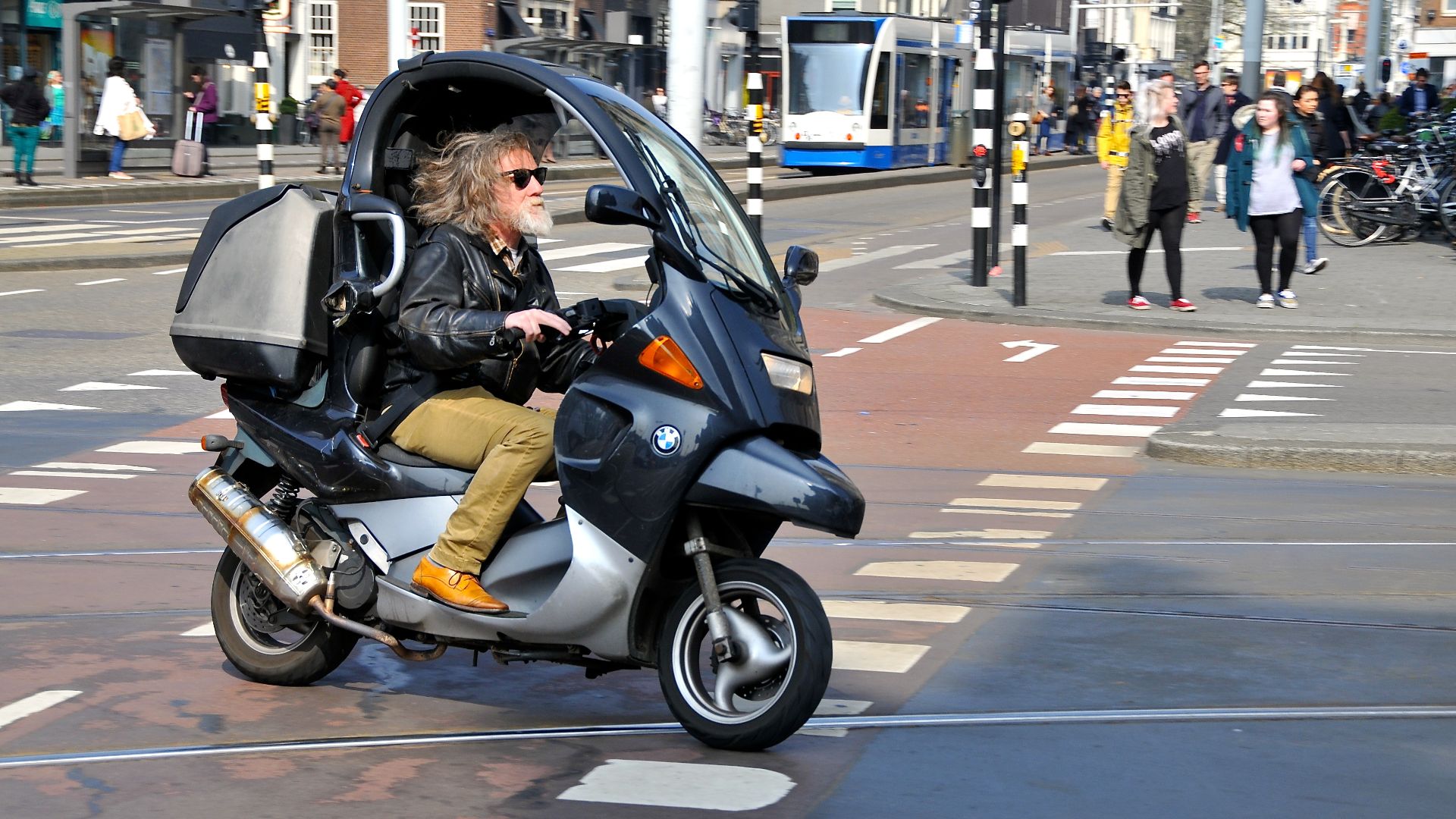 FaceMePLS from The Hague, The Netherlands, Wikimedia Commons
Designed To Keep You Clean
Another major appeal was weather protection. The tall windshield and roof helped shield riders from rain and road grime. BMW even designed the C1 so commuters could theoretically ride to work in a business suit without arriving soaked or splattered with dirt.
It wasn’t just transportation—it was a rolling umbrella with a motor.
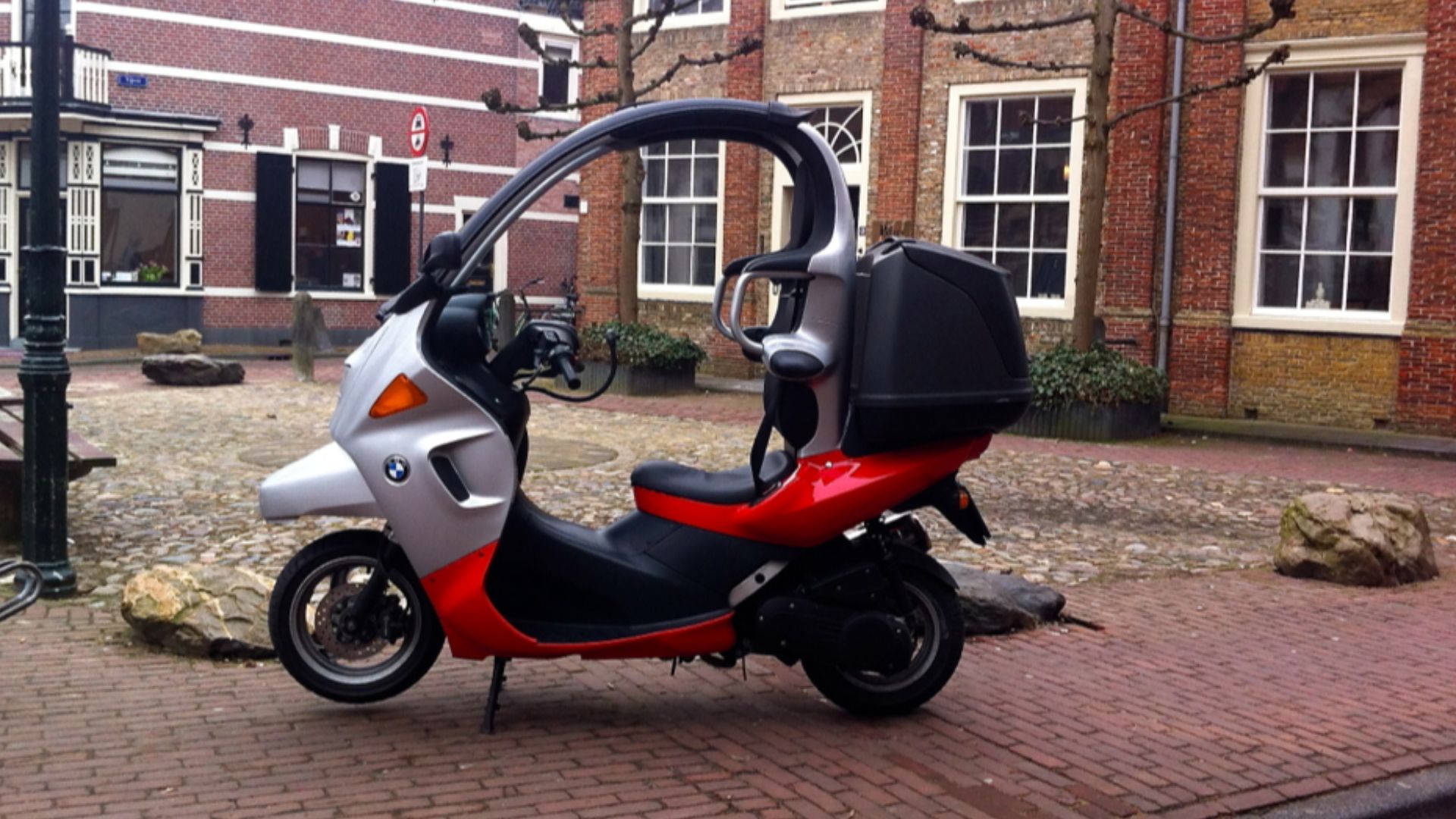 FaceMePLS from The Hague, The Netherlands, Wikimedia Commons
Two Engine Options
The C1 was offered in two main variants: the C1 125 and the C1 200. The numbers referred to engine displacement, with the 125cc model aimed at riders with standard licenses in many European countries.
The 200cc version offered a bit more punch for those who wanted stronger acceleration and higher cruising speeds.
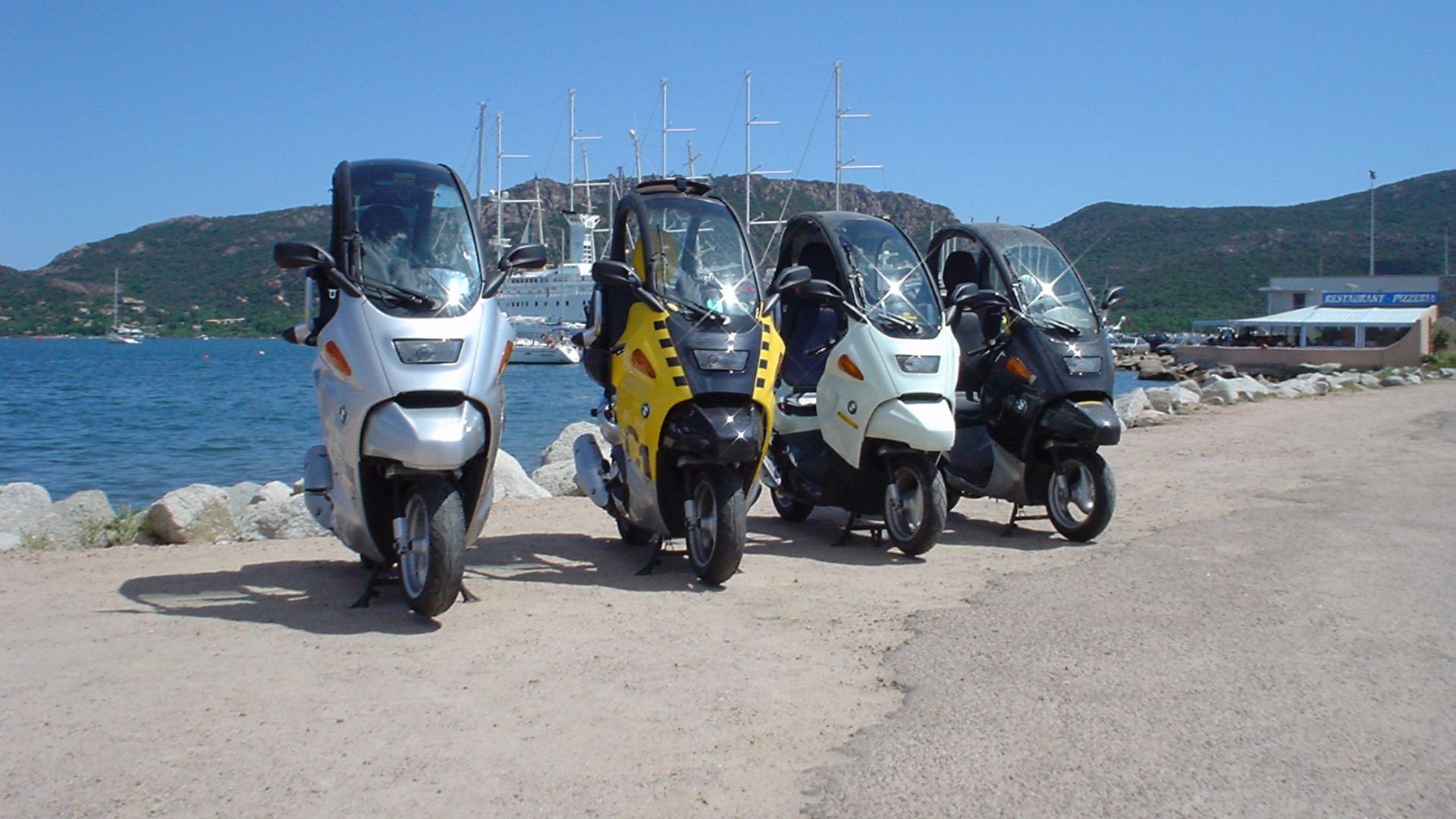 Stefano Bianco, Wikimedia Commons
Rotax Power Underneath
Power came from a single-cylinder, four-stroke engine supplied by Rotax. The liquid-cooled motor delivered modest performance, perfectly suited for city streets rather than open highways.
It wasn’t built for speed records. It was built for stoplights and roundabouts.
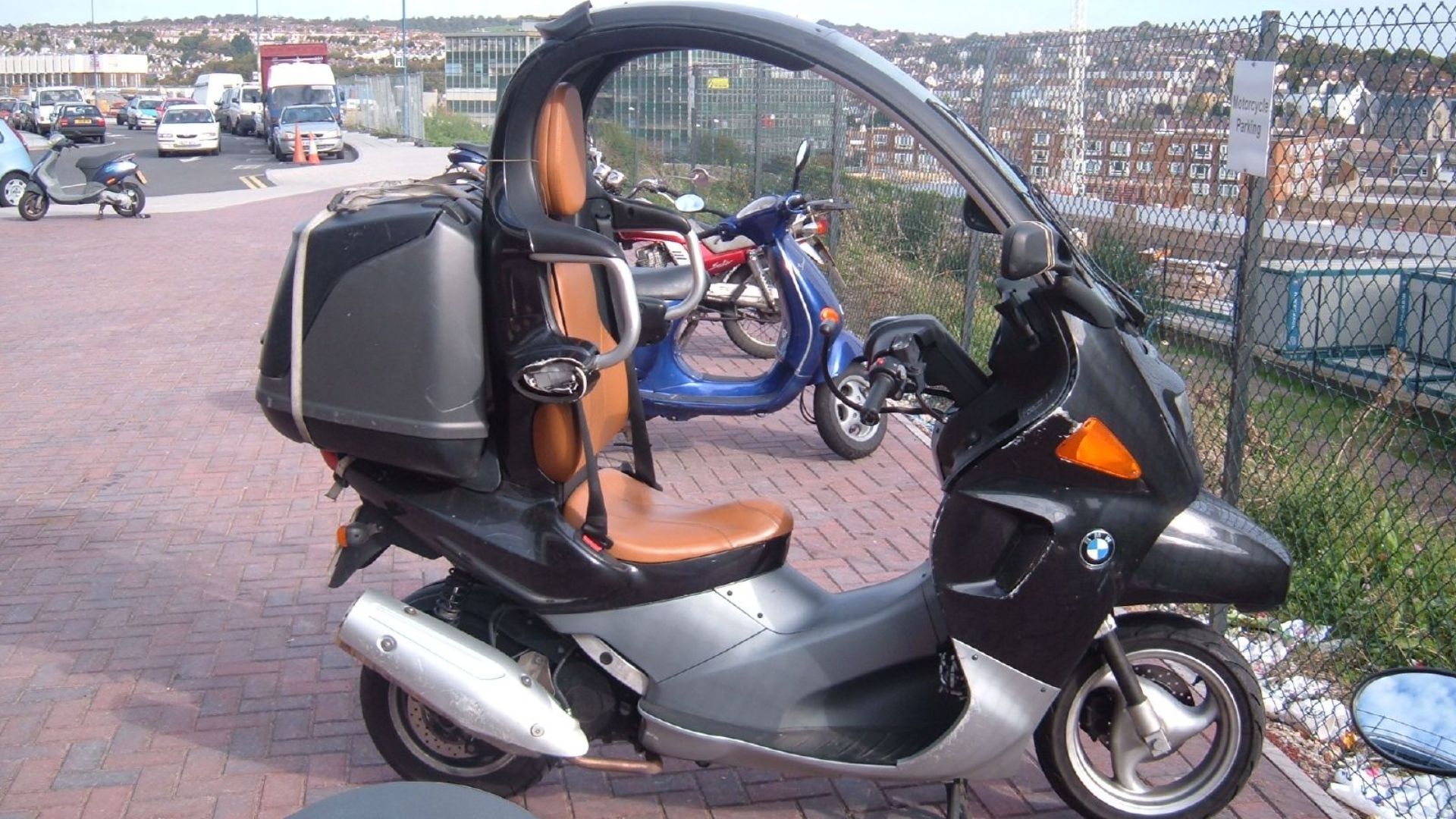 Les Chatfield, Wikimedia Commons
Continuously Variable Convenience
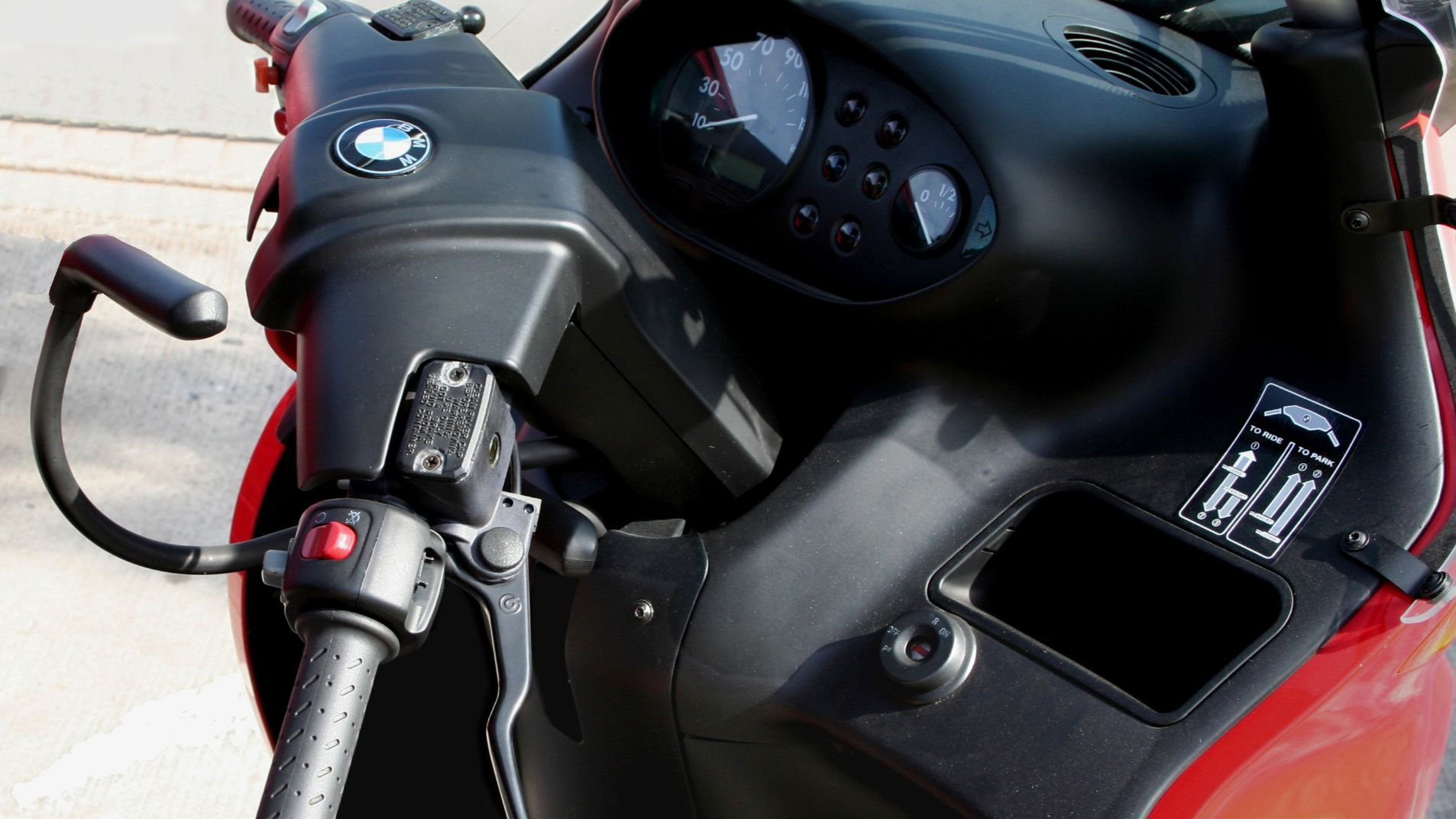
Like many scooters, the C1 used a continuously variable transmission. That meant twist-and-go simplicity—no clutch lever, no gear changes, just smooth acceleration.
BMW wanted the riding experience to feel approachable, even for people who had never considered owning a motorcycle.
 Lothar Spurzem, Wikimedia Commons
Safety As The Selling Point
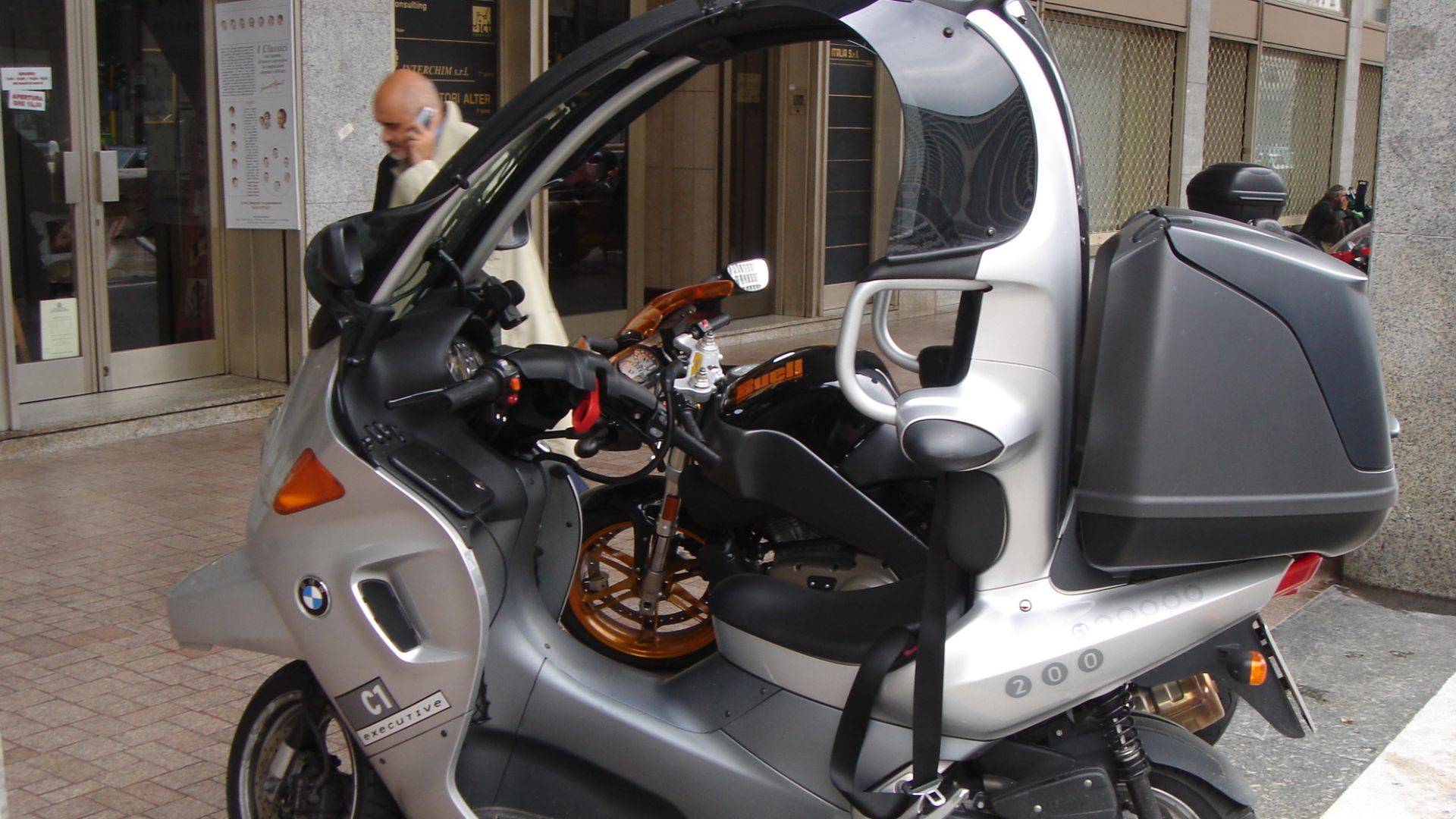
BMW heavily marketed the C1’s safety credentials. It underwent extensive crash testing, including frontal impact tests that were rare for two-wheeled vehicles at the time.
The company emphasized that the reinforced frame and seat belt system significantly reduced the risk of certain injuries compared to conventional scooters.
A Design That Looked Like Tomorrow
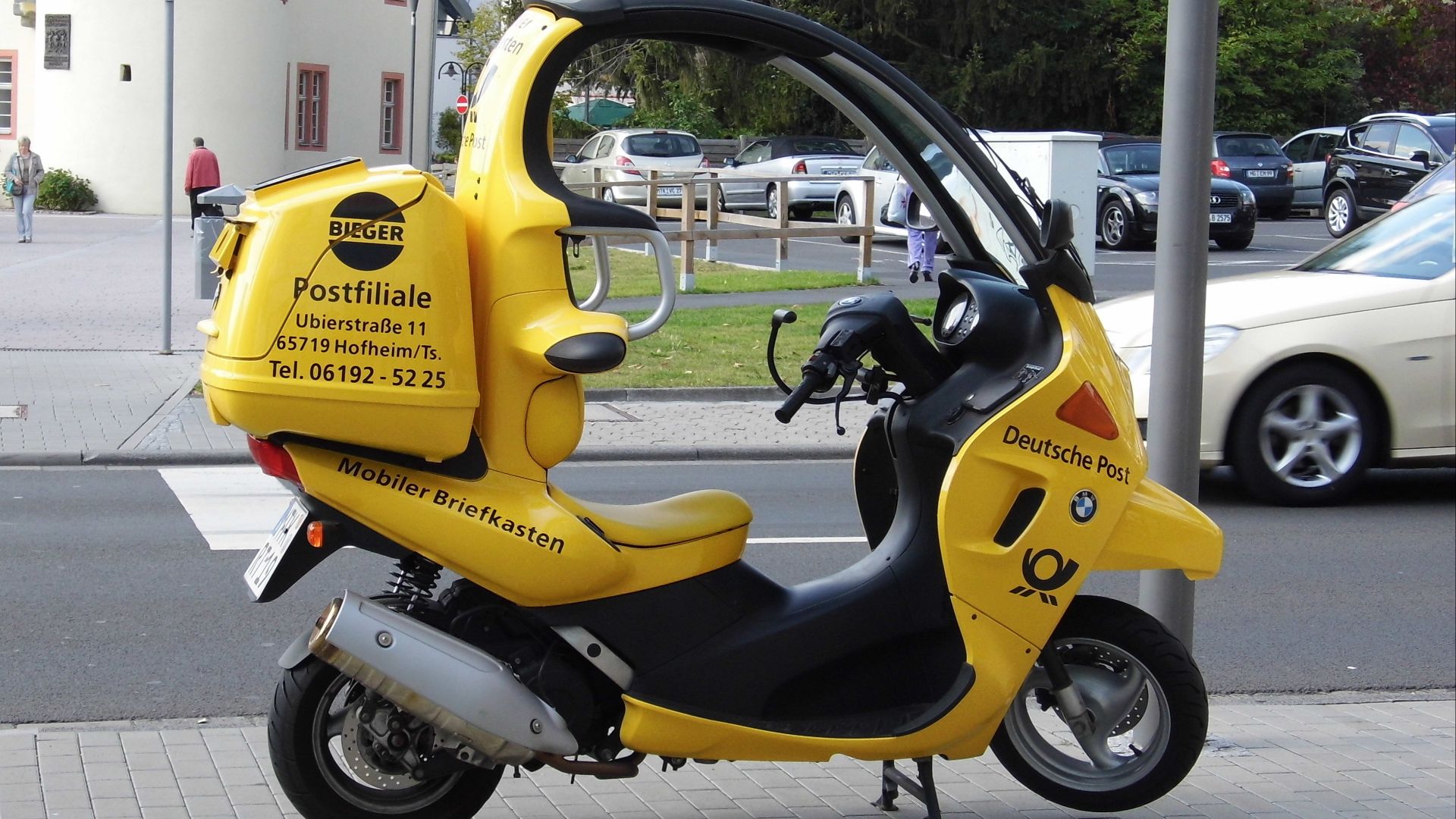
The C1 didn’t just perform differently—it looked like it had time-traveled from a design studio obsessed with the future. Its tall profile, exposed frame elements, and angular body panels made it instantly recognizable.
It was impossible to mistake for anything else on the road. Love it or hate it, you noticed it.
 Karsten Ratzke, Wikimedia Commons
Practical Storage And Urban Utility
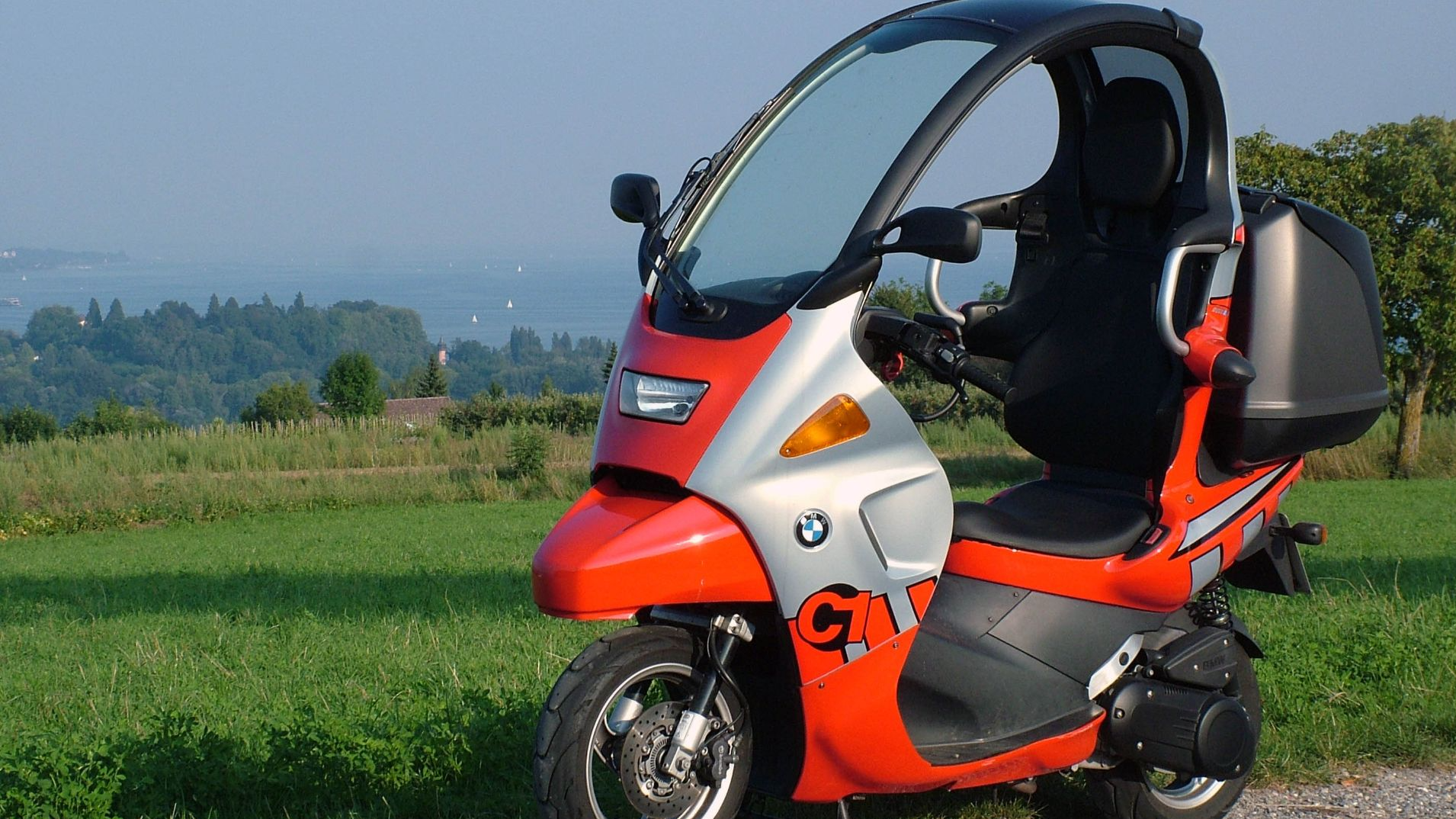
Under-seat storage offered space for everyday essentials, though the roof structure limited some traditional scooter conveniences. The C1 also featured a relatively upright seating position that improved visibility in traffic.
It felt more like sitting in a tiny cockpit than straddling a bike.
Comfort Over Cool
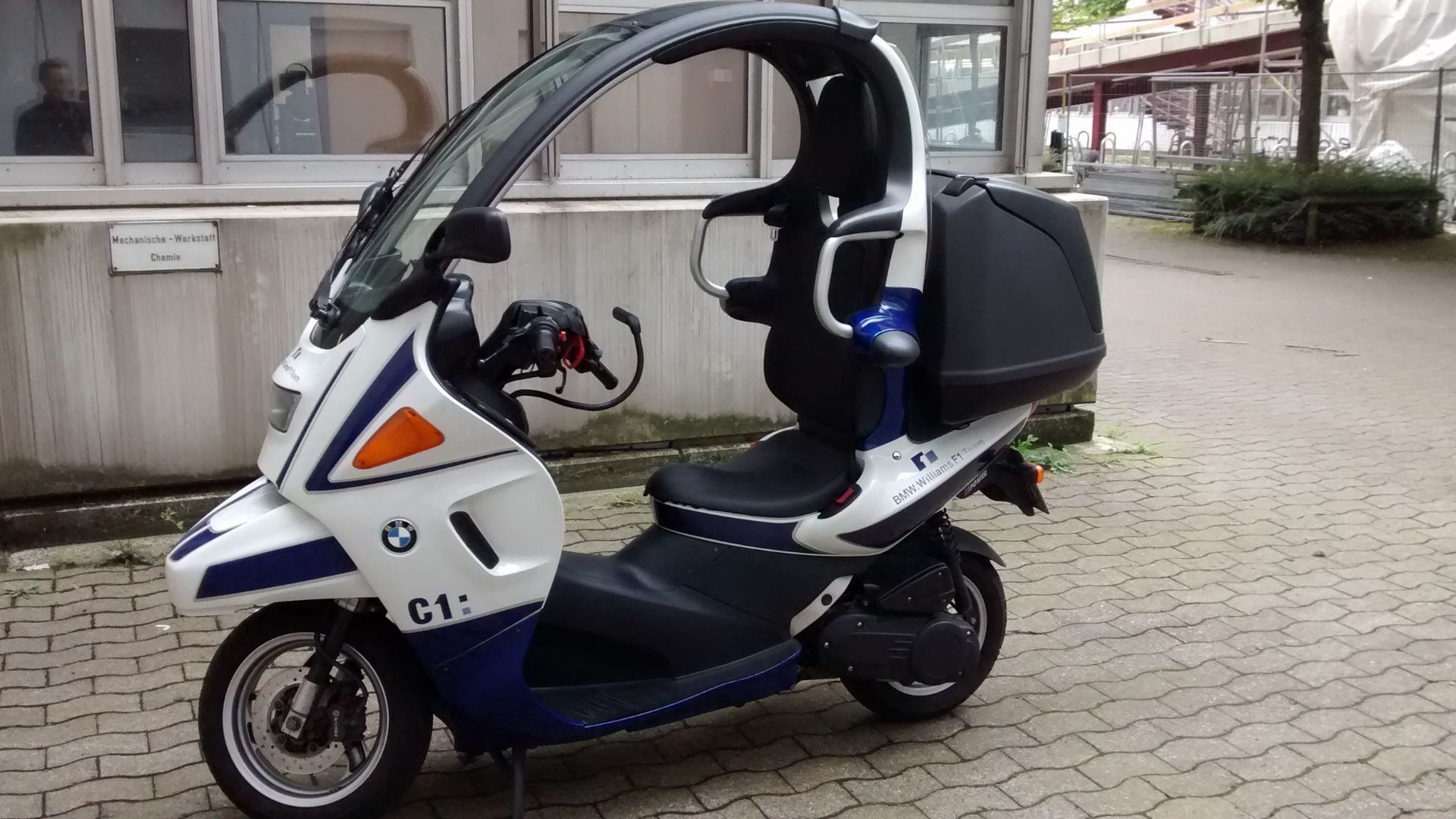
The seating position was upright and chair-like, complete with a supportive backrest. Riders sat higher than on most scooters, which added to the feeling of control in traffic.
It prioritized ergonomics and comfort over the windswept “cool factor” that many scooter buyers wanted.
 Rudiger Muller, Wikimedia Commons
Weight And Handling Trade-Offs
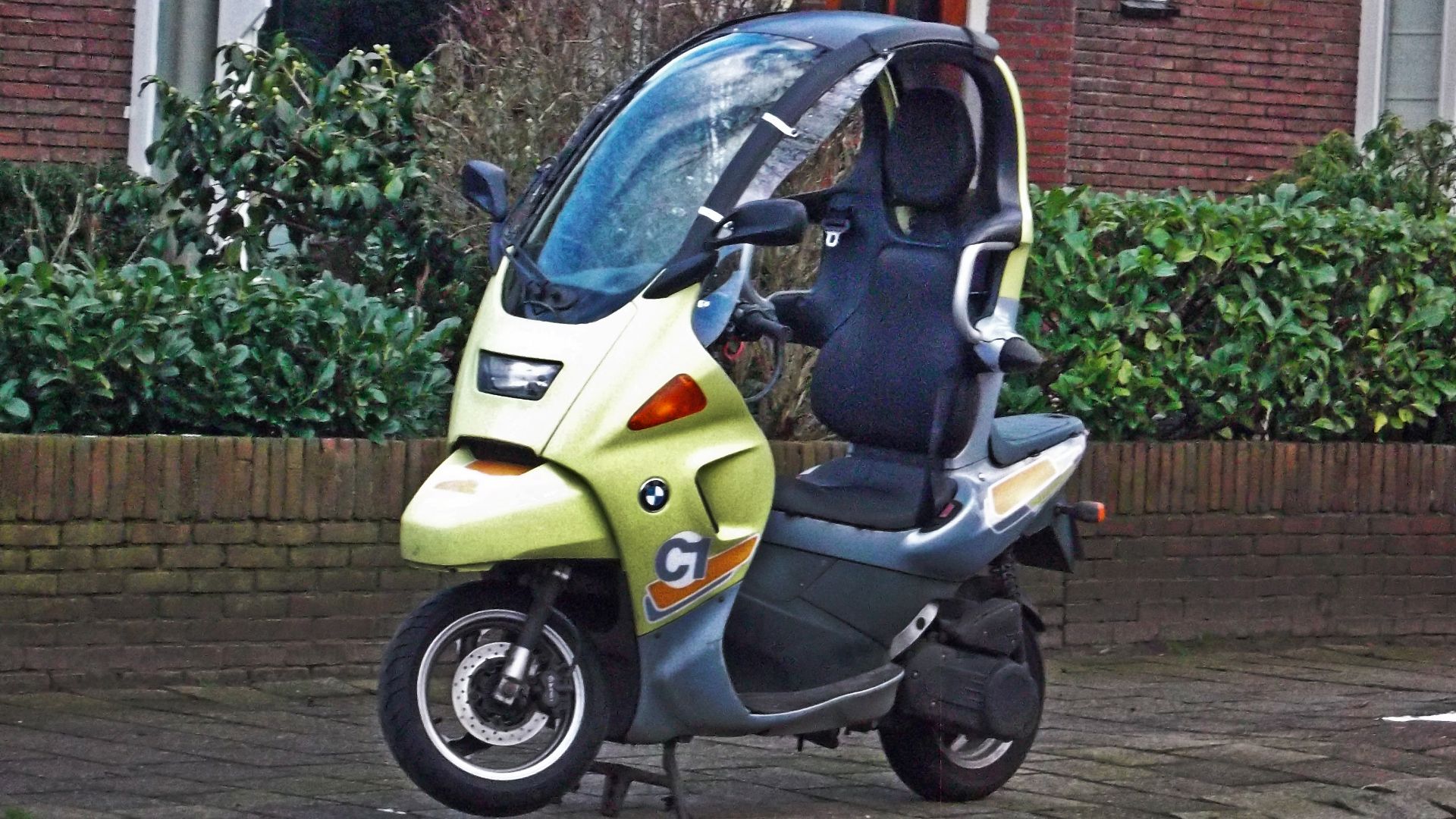
All that safety equipment came at a cost. The C1 was significantly heavier than typical scooters in its class.
That extra weight affected handling at low speeds and made maneuvering a bit more cumbersome than lighter competitors.
 Dennis Elzinga, Wikimedia Commons
Price Tag Problems
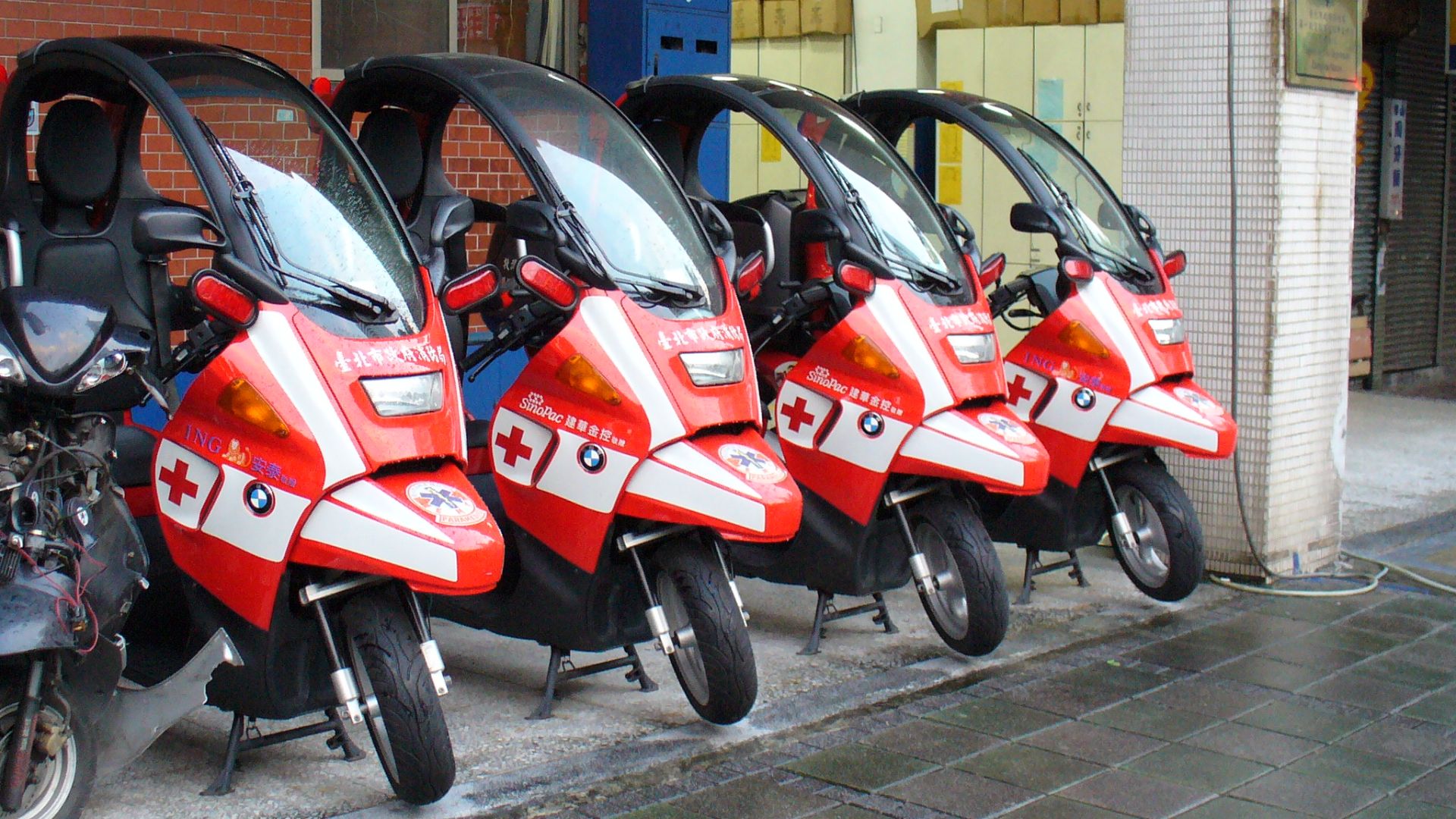
BMW positioned the C1 as a premium product, and it was priced accordingly. Compared to other 125cc scooters, it was expensive.
For many buyers, the added safety and engineering didn’t justify the higher cost—especially when traditional scooters were cheaper and simpler.
 David Villa, Wikimedia Commons
A Niche Within A Niche
Scooters already occupy a specific slice of the transportation market. The C1 carved out an even narrower segment: safety-focused, car-like scooter commuting.
It appealed to a very particular type of urban professional—but not to the masses.
Sales That Didn’t Soar
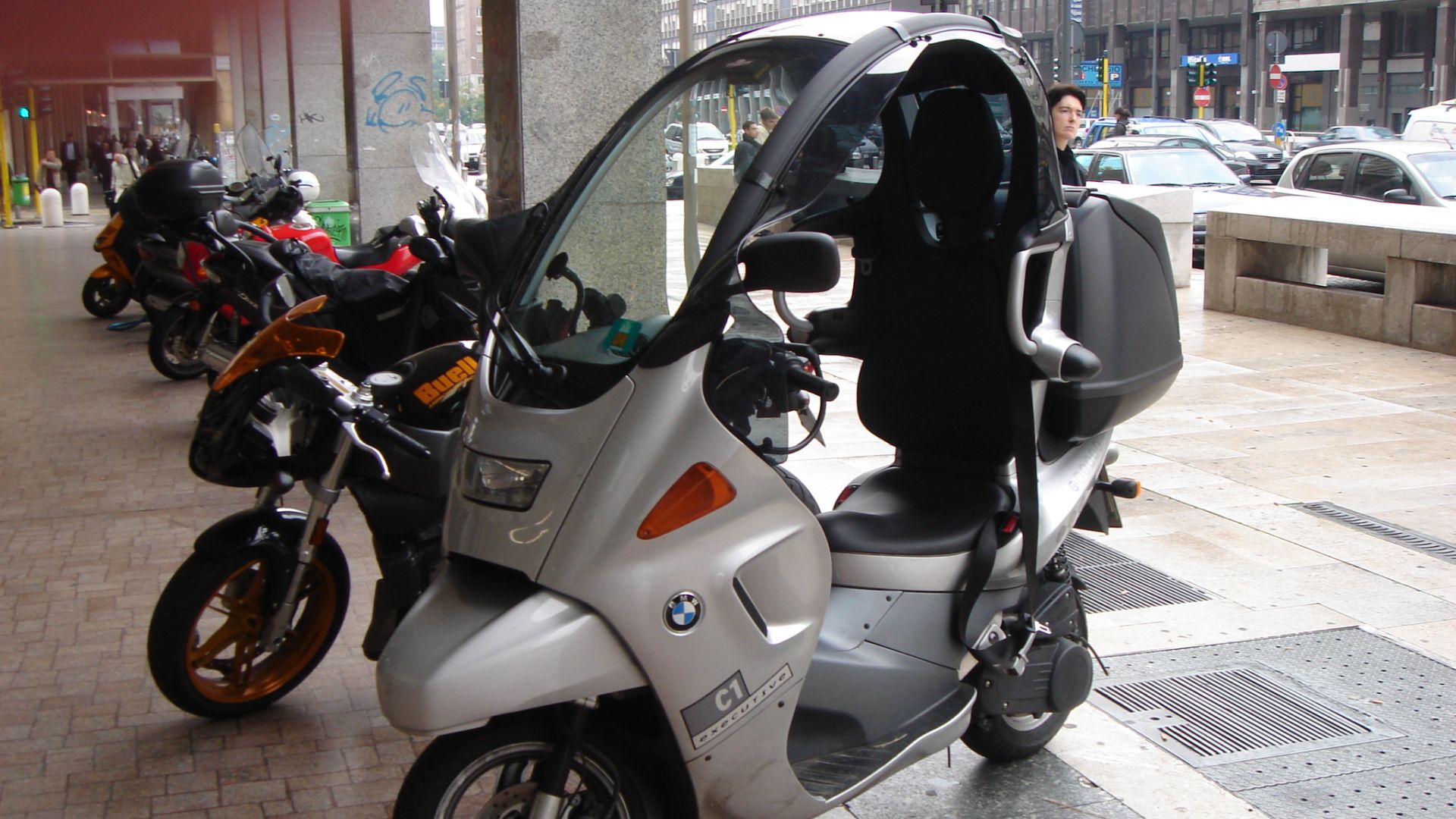
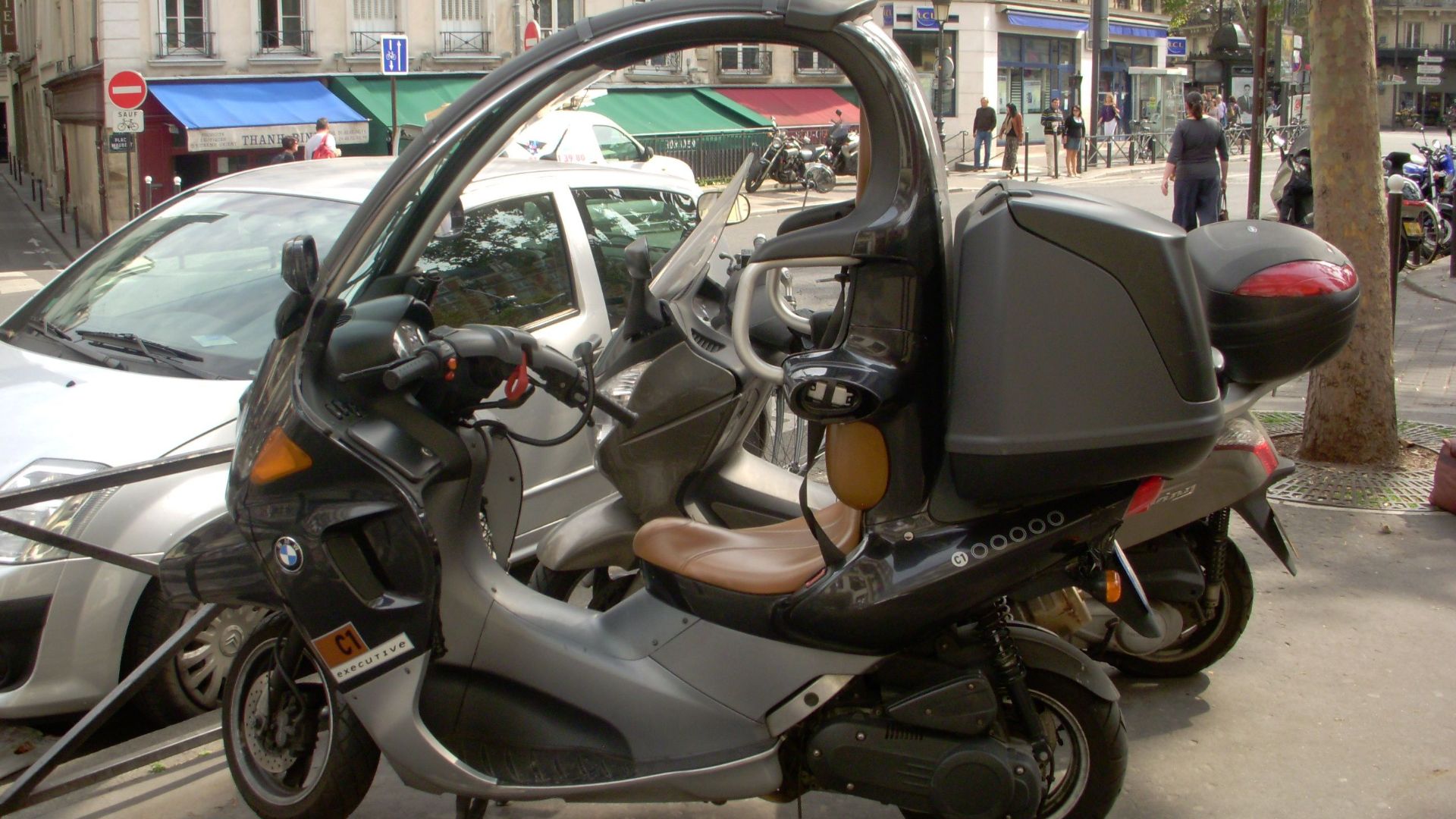
Despite its innovation, the C1 struggled commercially. Production ended in 2002 after only a few years on the market.
It simply didn’t sell in the numbers BMW had hoped for.
 daisyelaine, Wikimedia Commons
The Aftermath And Cult Following
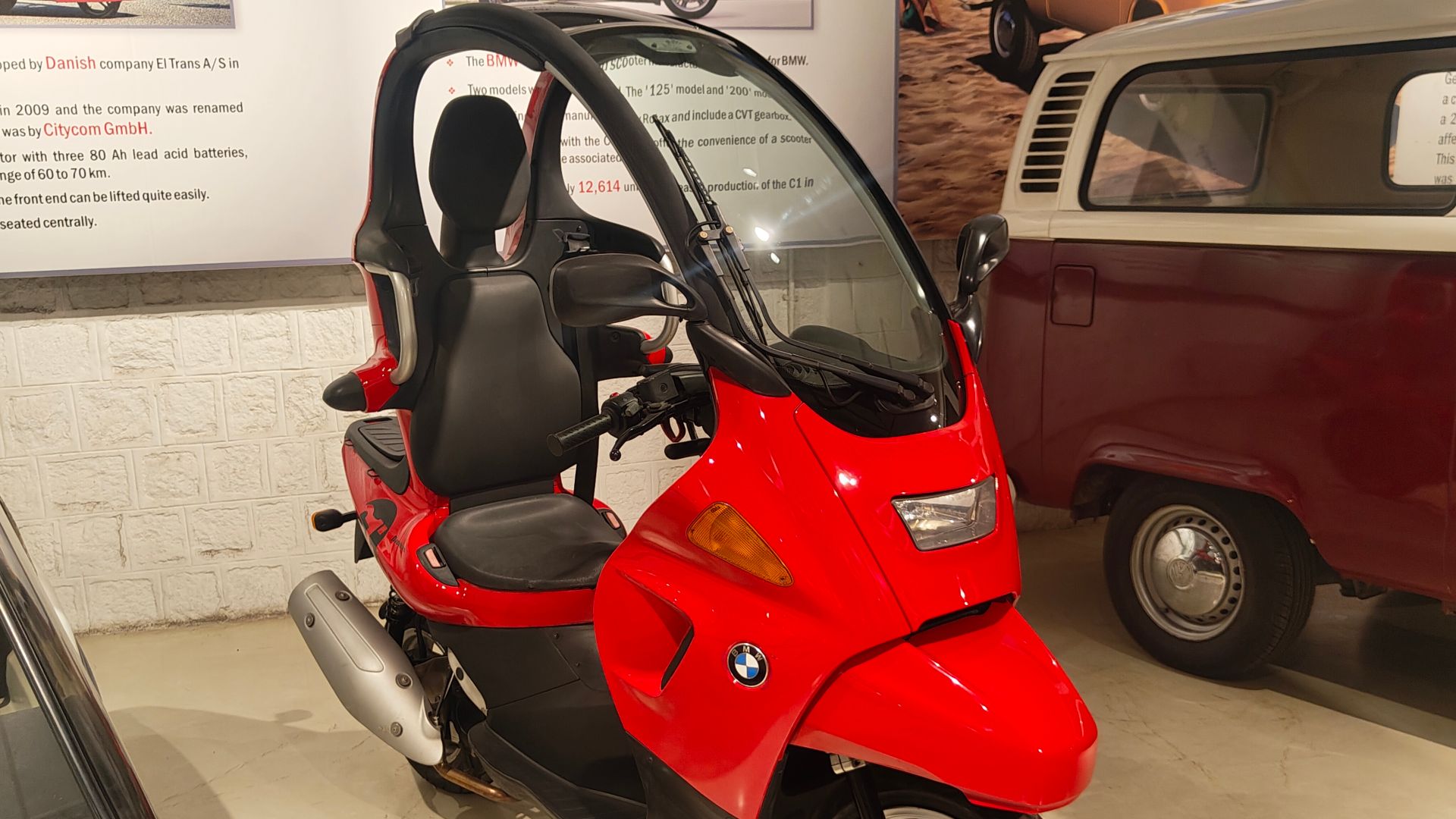
Though discontinued, the C1 developed a small but loyal following. Enthusiasts appreciated its engineering ambition and quirky character.
In many ways, it became one of those “ahead of its time” machines that people only fully appreciate after it’s gone.
 Manoj Vellingiri, Wikimedia Commons
Influence On Urban Mobility Thinking
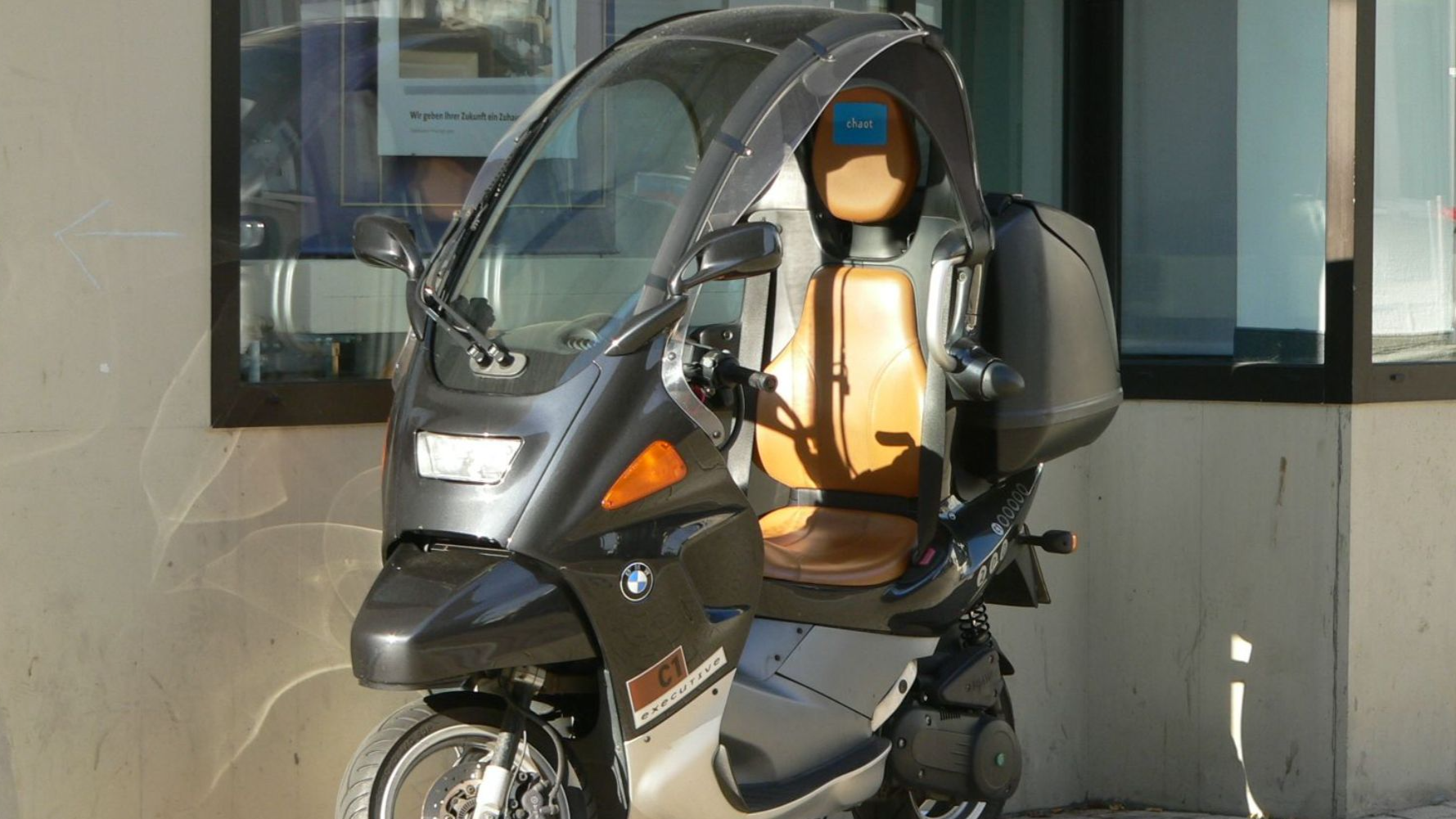
The C1 demonstrated that manufacturers were willing to rethink what two-wheeled transport could be. It blurred the line between scooter and microcar and sparked conversations about safety in urban mobility.
While it didn’t revolutionize the industry, it proved that innovation doesn’t always have to look conventional.
The Scooter That Dared To Be Different
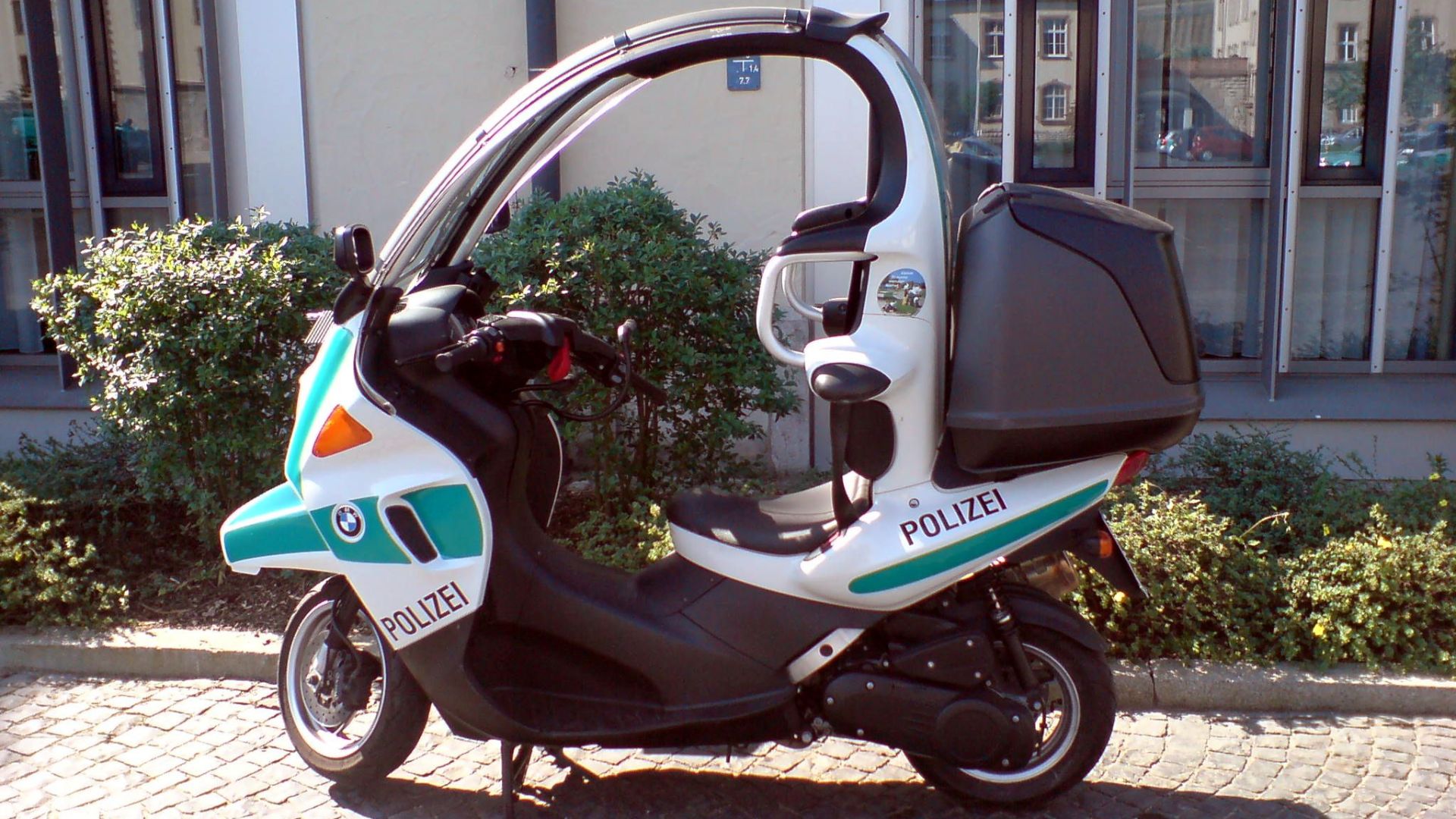
The BMW C1 remains one of the boldest experiments in modern motorcycle history. A roof, seat belts, a roll cage—features no one expected on a scooter—were suddenly reality.
It may not have changed the streets forever, but it changed expectations. And for a brief moment in the early 2000s, BMW gave commuters something nobody else dared to build—a scooter with a roof and the audacity to call it progress.
You May Also Like:
The True Origin Of The Term ‘Muscle Car’—And Who Really Invented It
Why Elvis Presley’s Favorite Car Model Was Quietly Discontinued