
A Denied Claim Can Feel Like The End Of The Road
A bent wheel seems like a pretty straightforward consequence of hitting a bad pothole. But when a city refuses to pay, the question quickly becomes less about what happened and more about what you can prove. Luckily, a claim denial isn’t the end of the matter.
Find Out Why The Claim Was Denied
Don't settle for a generic “claim denied” notice. Read the letter carefully and identify the exact reason. The city may argue that it had no prior knowledge of the pothole, that another agency owns the road, that your documentation was incomplete, that you missed a deadline, or that it doesn't believe the damage resulted from that particular defect. Each reason requires a different response.

Make Sure You Filed Against The Right Government
A road running through a city isn't necessarily maintained by that city. It might be a county road, state highway, parkway, toll road, or roadway controlled by another public authority. Progressive recommends identifying the agency responsible for maintaining the road before seeking reimbursement. If you filed with the wrong entity, a denial may say very little about the strength of the underlying claim.

Prior Notice Can Be The Biggest Obstacle
Some jurisdictions make prior notice especially important. New York City, for example, generally requires evidence that the city had written notice of the dangerous street condition, acknowledged it in writing, or had previous qualifying notice before certain roadway-damage claims can succeed. Simply proving that a giant pothole existed on the day your wheel hit it may not satisfy that rule.
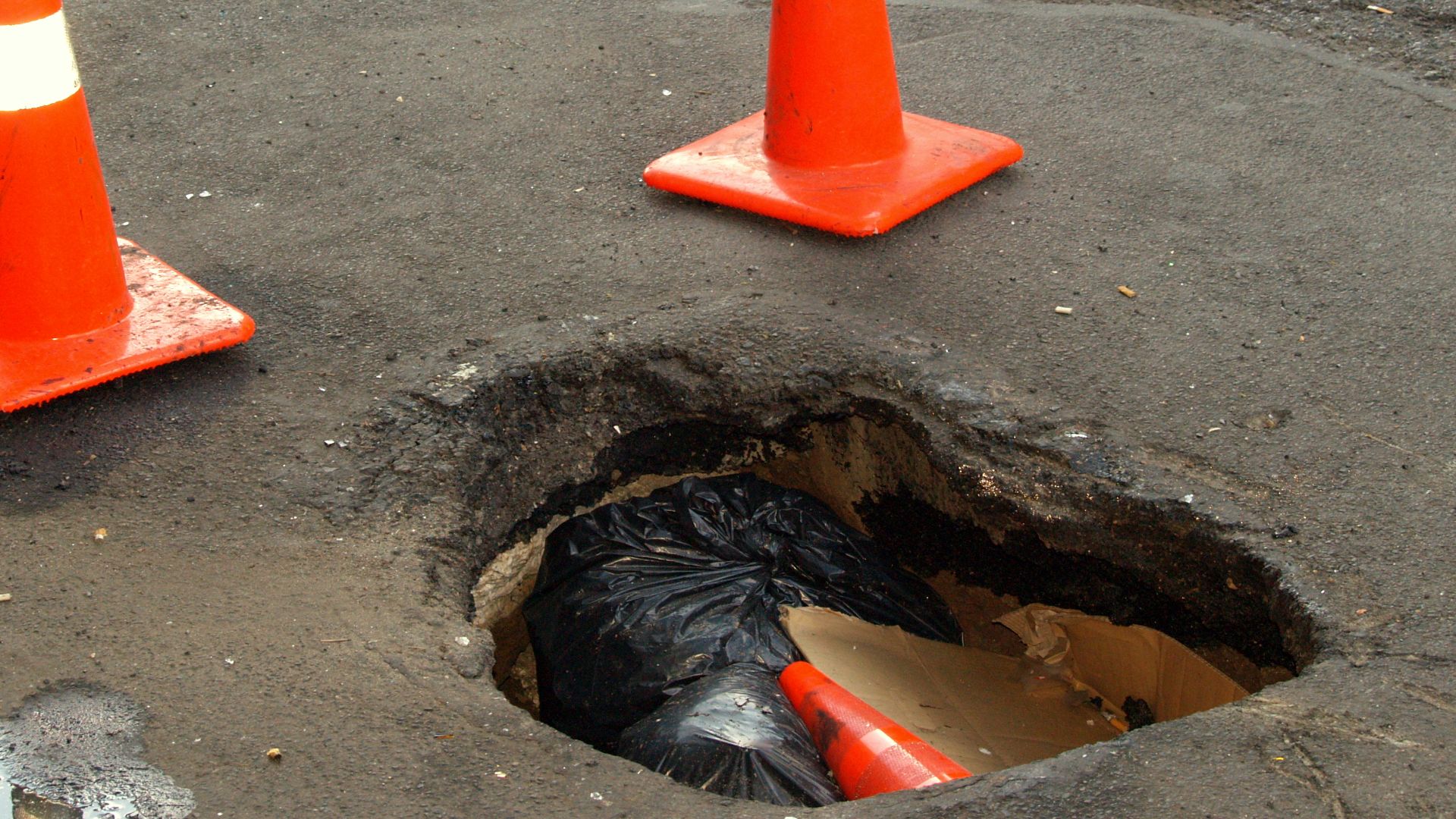 David Shankbone, Wikimedia Commons
Look For Evidence The Pothole Was Already Known
If lack of notice caused the denial, start investigating. Was the pothole previously reported through 311? Had neighbors complained about it? Did local news outlets mention the road? Were there temporary markings or repair patches around it? Did other motorists suffer damage at the same location? Evidence that the problem existed and had already attracted official attention can matter considerably, depending on local law.

Public Records Could Help
Consider requesting maintenance records, service requests, pothole complaints, inspection records, and work orders for the specific stretch of road. Public-records laws vary by state, but these documents may reveal when the road department first became aware of the defect or whether crews previously inspected or patched it. Be precise about the location and relevant dates so the request doesn't become unnecessarily broad.

Report The Pothole Even If Your Claim Was Already Denied
Reporting the defect now probably won't retroactively prove the city knew about it before your accident. It can, however, create a record, help protect other drivers, and document that the condition exists. Consumer Reports and AAA both recommend reporting dangerous potholes to the responsible road agency.

Photograph The Scene If It Is Still Safe To Do So
Strong documentation can make a property-damage claim much easier to evaluate. Photograph the pothole, surrounding road, nearby intersection or address, lane position, and any identifying landmarks, but never put yourself in traffic to get a better picture. If possible, include something that gives the hole a sense of scale without creating another roadway hazard.

Save Every Photograph Of The Car Too
Take close photos of the bent wheel, damaged tire, suspension damage, and any other visible effects. Keep pictures from before repairs if possible. Los Angeles, Chicago, and other cities specifically request supporting materials such as damage photos, repair estimates, receipts, and insurance information when processing property claims.

A Bent Wheel May Not Be The Only Damage
A violent pothole impact can injure more than the rim. Consumer Reports warns that tires can suffer internal damage that isn't immediately visible, while wheels, alignment, steering, suspension, and even structural components can also be affected. If the steering wheel vibrates, the car pulls, the tire loses pressure, or anything feels different, have the vehicle inspected rather than replacing only the visibly bent wheel.

Get A Detailed Repair Estimate
Ask the shop to describe exactly what it believes the pothole damaged. A useful estimate might distinguish the wheel, tire, alignment, control arm, bearing, or other damaged component rather than providing one unexplained total. The stronger the connection between the impact and each repair, the easier it is to show what you're actually asking the city to reimburse.

Keep The Invoices After The Repair
You don't necessarily have to leave a damaged vehicle sitting while a government claim works its way through the system. Cities commonly accept paid invoices or repair estimates as proof of loss. Chicago, for example, asks pothole claimants for paid repair receipts or written estimates. Keep everything, including towing, wheel repair, alignment, and replacement-part invoices.

Don't Let The Claim Deadline Slip Away
Government claim deadlines can be surprisingly short. New York City's property-damage notice of claim generally must be filed within 90 days, while Los Angeles says claims involving personal property generally must be filed within six months under California law. Your jurisdiction may use a completely different deadline, so don't assume ordinary lawsuit time limits apply.

A Denial Letter May Start Another Clock
Pay attention to the date the denial was issued and what the notice says about further action. In Los Angeles, for example, a claimant generally has six months after service of a denial notice to file certain court actions, subject to exceptions. New York City also imposes separate deadlines for lawsuits after the notice-of-claim process. Missing a post-denial deadline can matter just as much as missing the original claim deadline.

Ask Whether The Claim Can Be Reconsidered
Some claims departments will review additional evidence, even though the outcome isn't guaranteed to change. Los Angeles specifically says claimants denied because of insufficient evidence can contact the assigned investigator or adjuster with additional information. If you've since obtained better photographs, a more detailed estimate, or proof that the pothole had been reported earlier, ask whether there is a reconsideration or supplemental-evidence process.

Your Collision Coverage May Be Another Route
If you carry collision coverage, your own auto insurance may cover pothole damage subject to the policy and deductible. Progressive specifically treats hitting a pothole as the type of event collision coverage can cover, and Consumer Reports likewise says collision insurance may help with pothole-related repairs. Comprehensive coverage generally isn't the relevant coverage simply because the road itself caused the damage.

Run The Deductible Math First
If your wheel repair costs $650 and your collision deductible is $500, an insurance claim may produce little financial benefit. If the pothole caused several thousand dollars in wheel, tire, suspension, and alignment damage, the calculation changes. Ask your insurer how the loss would be handled and whether a claim could affect future premiums before deciding whether to file.

Check Your Tire And Wheel Protection Too
If you bought the tires or wheels recently, look for a road-hazard warranty or separate wheel-and-tire protection plan. Consumer Reports notes that road-hazard protection may cover certain pothole-related tire damage, although conditions, exclusions, mounting fees, and other charges vary. This won't make the city responsible, but it may give you another way to reduce the repair bill.

Going To Court May Still Be Possible
A municipal claim denial isn't necessarily the final legal decision. New York City's Comptroller explicitly notes that denied property-damage claimants may pursue a lawsuit, and Los Angeles likewise explains that a claimant who disagrees with a denial can file a court action within the applicable deadline. Whether small claims court is available, and whether you must complete a government-claim procedure first, depends on local law.

Don't Assume Small Claims Works The Same Everywhere
Local procedures can be unusually specific. Chicago, for example, handles certain claims of $2,500 or less through a City Council claims process rather than requiring the claimant to immediately file an ordinary small-claims case. That's a good reminder that internet advice from another state may send you to the wrong office entirely. Check the procedure for the government that actually maintained your road.

Government Immunity Makes These Cases Different
Suing a city isn't quite like suing the driver who backed into your parked car. Government entities can benefit from statutory immunities, notice requirements, liability limitations, and special filing procedures. Nolo notes that successful roadway claims commonly require more than showing the pavement was dangerous. If the damage is substantial or the rules become confusing, a local attorney can explain how your state's governmental-liability law applies.

Be Ready For Questions About Your Own Driving
The city or insurer may look at the circumstances surrounding the impact too. Your speed, weather, visibility, ability to avoid the hole, and whether you were driving reasonably for the conditions can become relevant depending on state negligence rules. Don't exaggerate or reconstruct details you don't remember. A straightforward account supported by photographs and repair records is more useful than trying to make the incident sound dramatic.

Decide How Much The Fight Is Worth
A $200 wheel repair probably doesn't justify hours of records requests, filing fees, and court appearances. A $2,500 bill involving a wheel, tire, suspension, and alignment may be another matter. Consider the amount at stake, the strength of the notice evidence, your filing deadlines, and how complicated the local process is before deciding whether to continue.

The City's First “No” Doesn't Always Have To Be The Last One
A denied pothole claim can be difficult to overturn, particularly if the city says it had no legally sufficient notice of the defect. But you still have options. Confirm who maintains the road, read the denial closely, gather photographs and repair records, investigate earlier complaints, check whether reconsideration is available, and review your own collision or road-hazard coverage. If the repair bill is large enough, court action may also remain possible after the required municipal claim process. The key is moving quickly, because when you're dealing with a government agency, the shortest deadline can matter more than the size of the pothole.

You May Also Like: