Your Curbside Problem
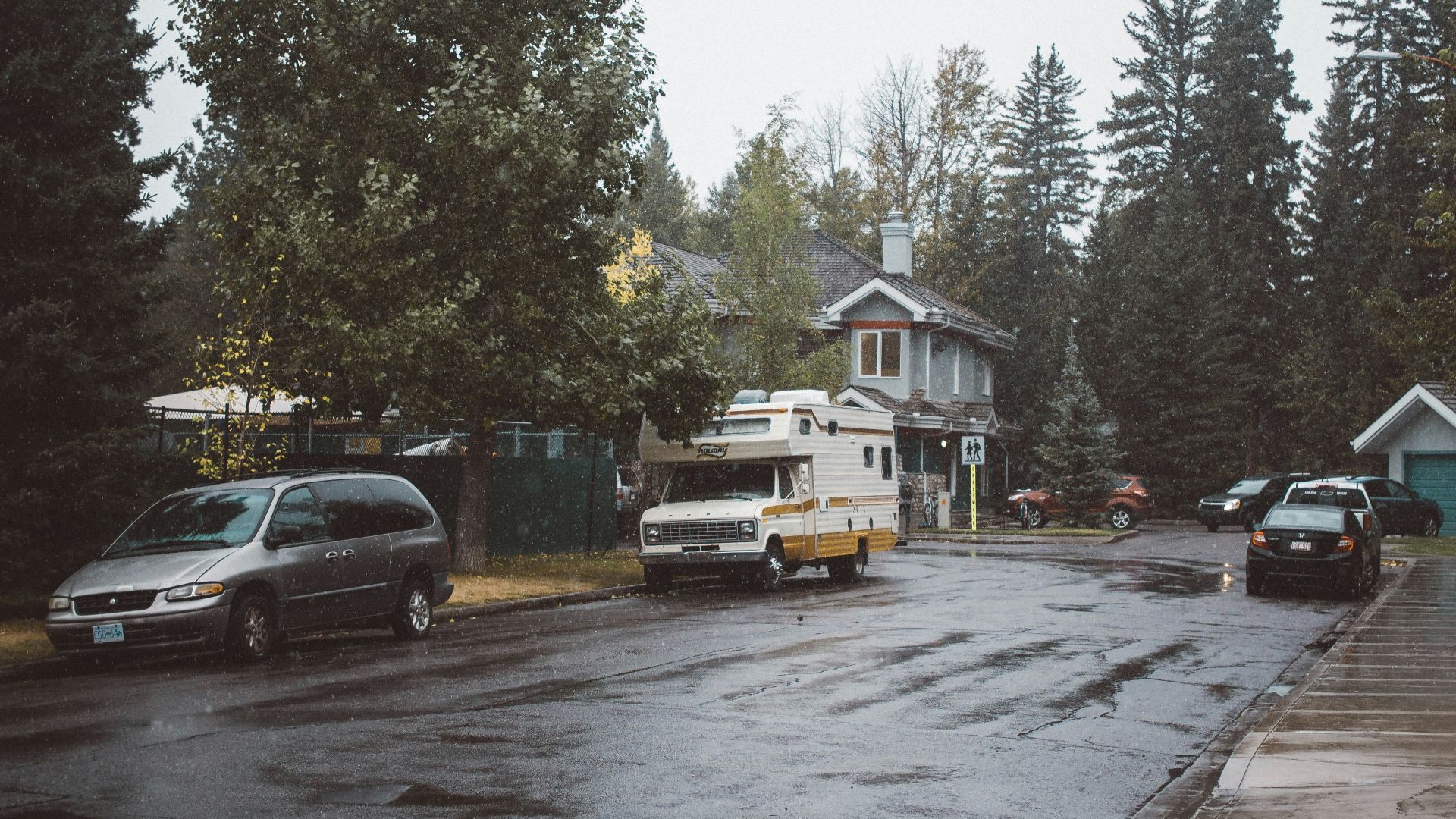
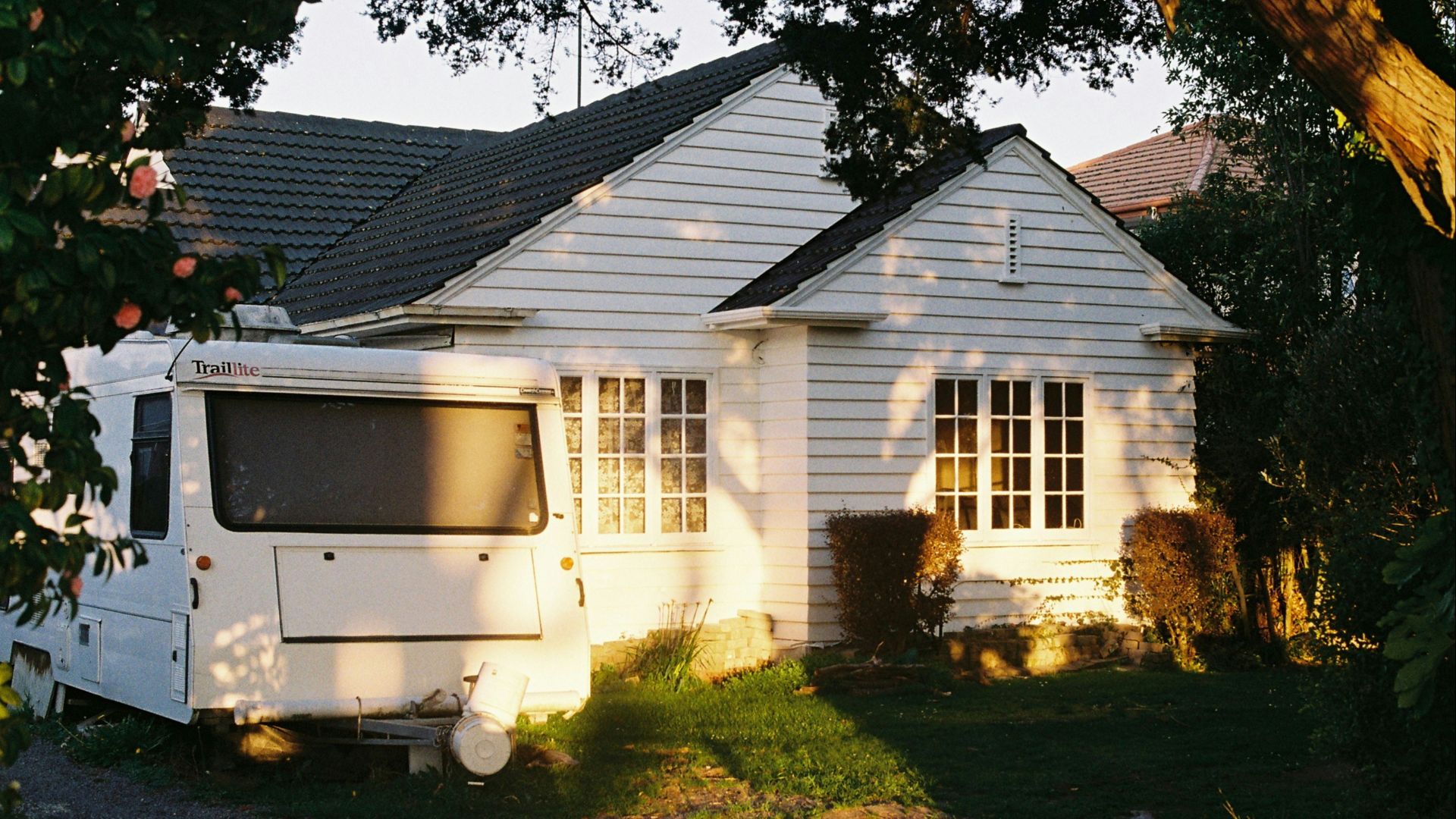
Your neighbor owns an enormous RV, but instead of parking it outside his house, he repeatedly leaves it outside yours. It blocks your view, monopolizes curb space, and irritates you every time you open the curtains. Whether you can make him move it depends largely on local parking law.
You Don't Own The Curb
Start with the frustrating part: owning your house generally does not give you exclusive ownership of the public parking space directly outside it. Where street parking is otherwise legal, you usually cannot claim that section of curb merely because it happens to border your property. You don't own the curb any more than your neighbor does.
Neither Does Your Neighbor
That principle works both ways. Your neighbor generally cannot reserve public curb space either. Washington law, for example, expressly prohibits attempting to reserve part of a highway for parking to the exclusion of others. So he cannot legitimately declare the space outside your house his personal RV storage area.
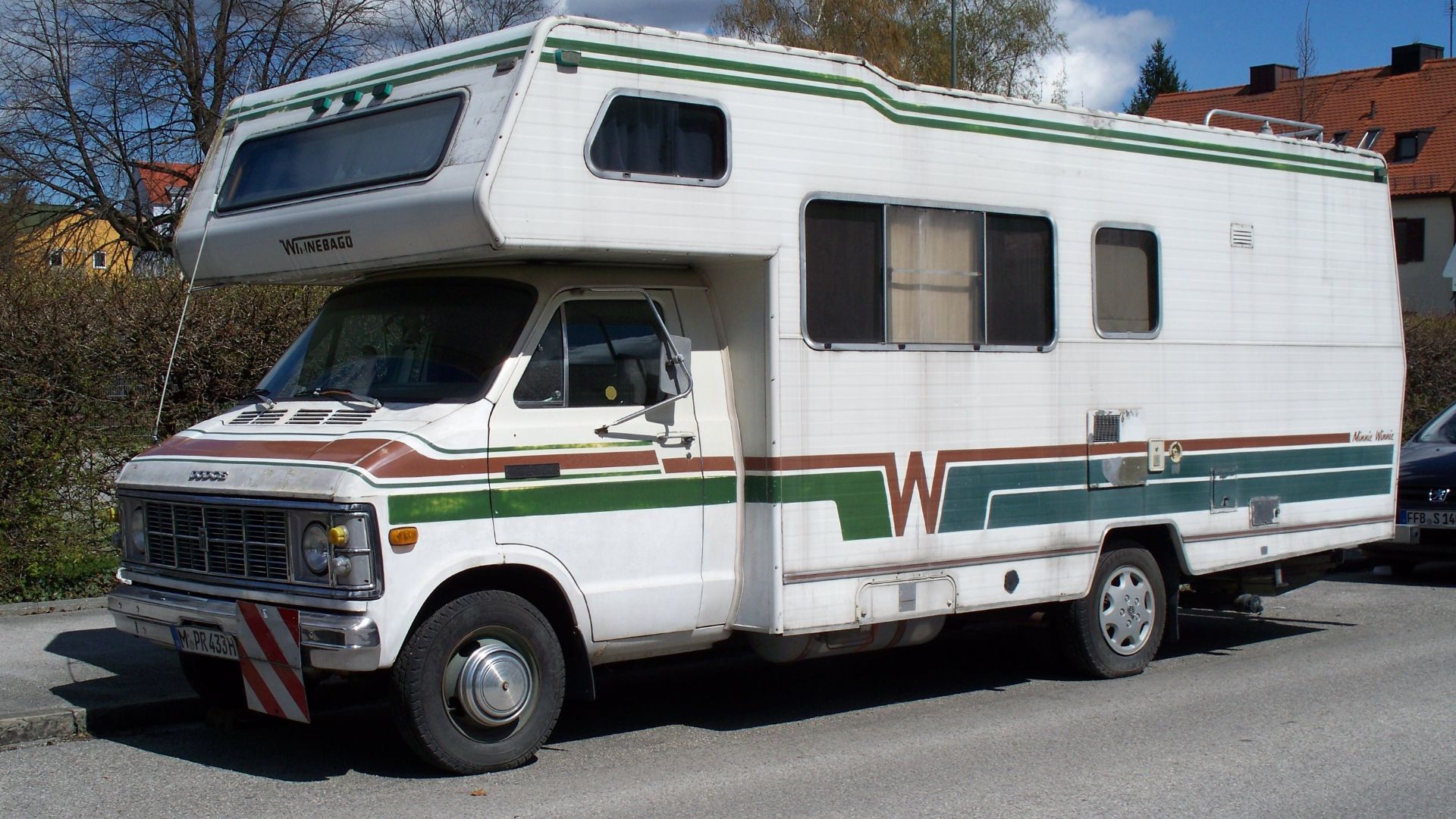 High Contrast, Wikimedia Commons
RVs Can Face Restrictions
The fact that this is an RV rather than an ordinary sedan can completely change the analysis. Cities frequently impose special rules on recreational vehicles, trailers, buses, and oversized vehicles, particularly in residential neighborhoods. Check your municipal code before assuming ordinary street-parking rules apply.
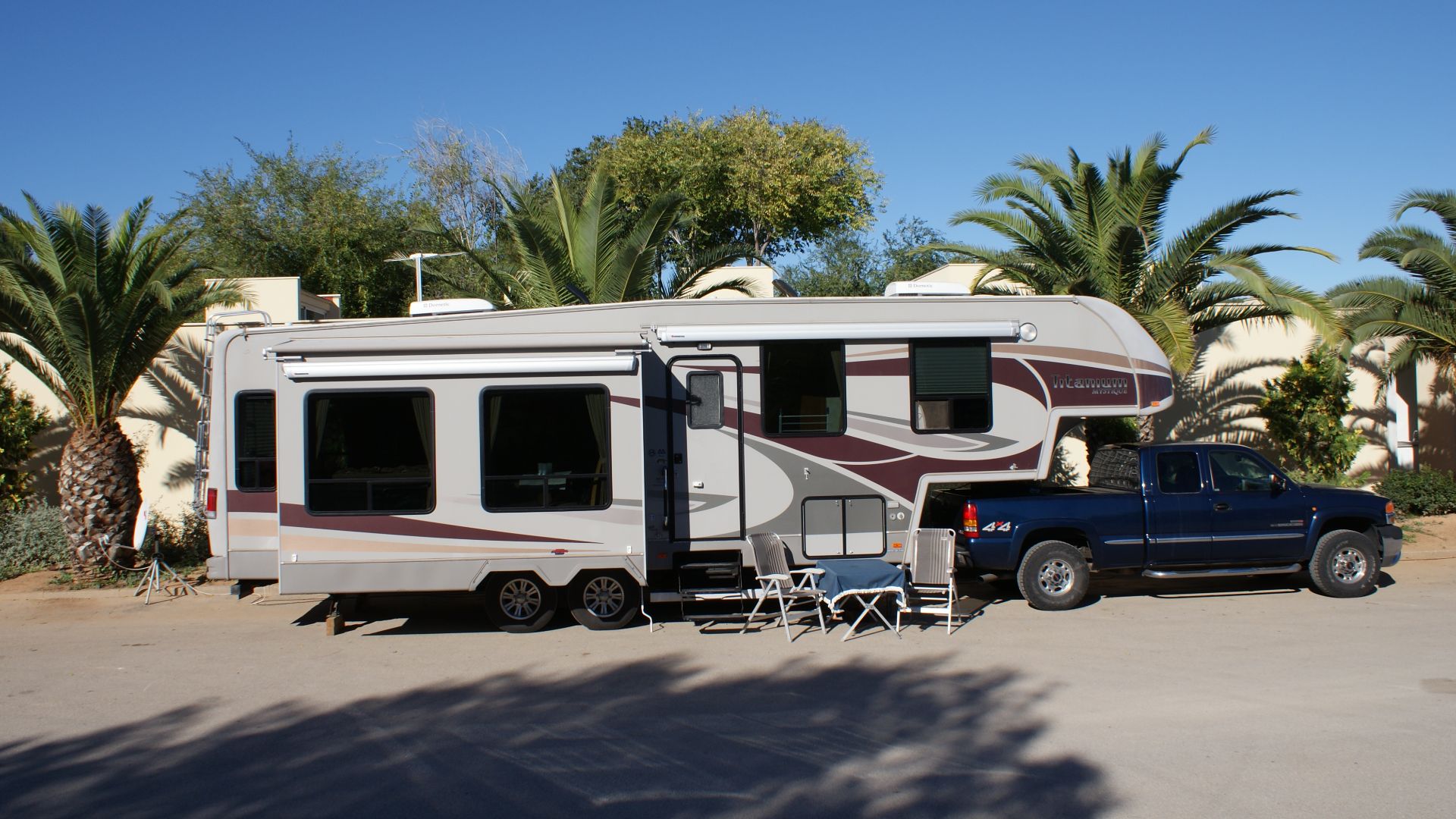
Rules Vary Dramatically
There is no nationwide rule saying how long your neighbor's RV can remain outside your house. Local governments can take very different approaches. Seattle uses a general 72-hour street-parking limit, while Portland imposes substantially tougher restrictions on RV parking around residential property.
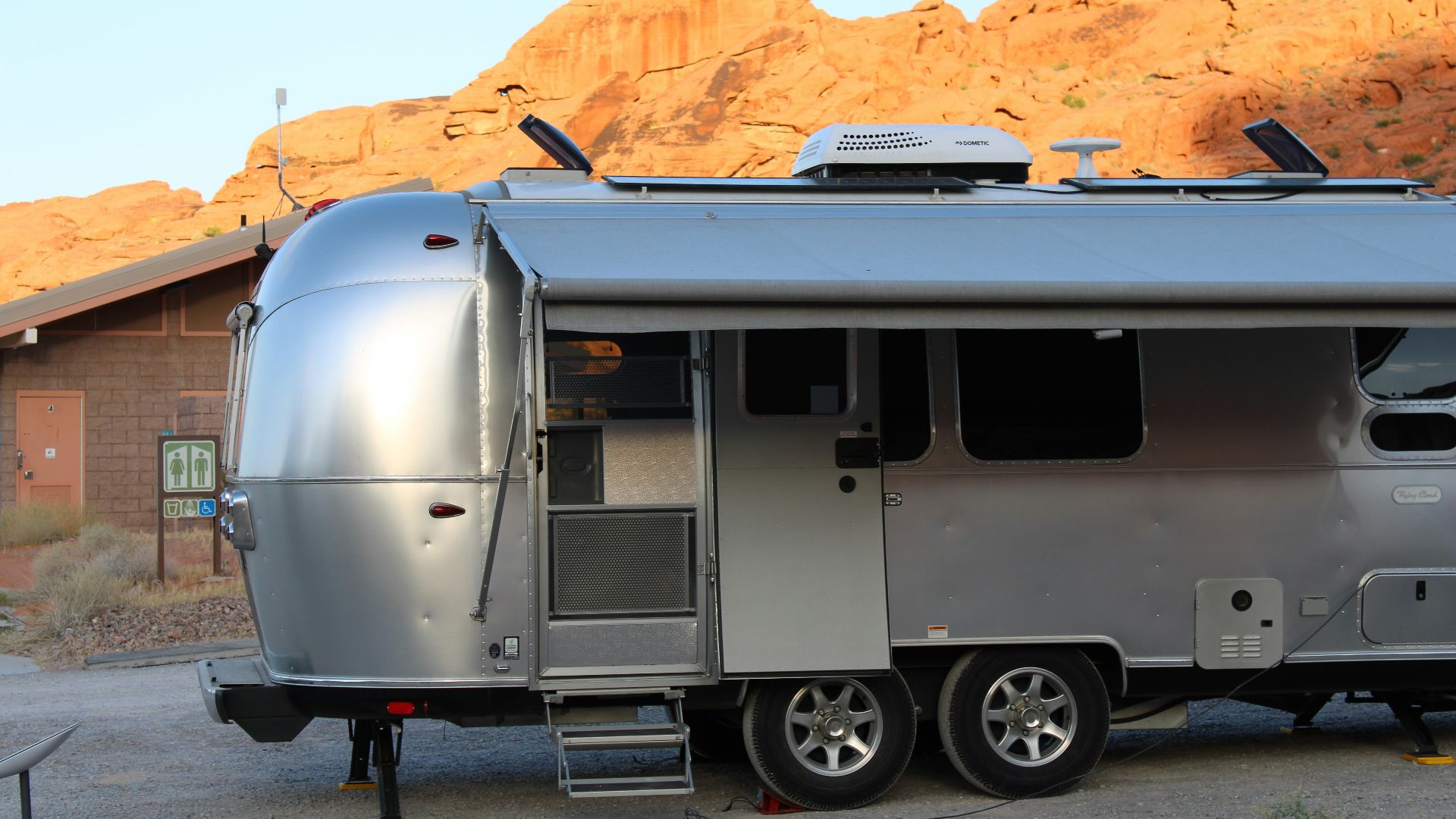
Portland Gets Very Strict
Portland illustrates just how restrictive local rules can become. Its code generally prohibits recreational vehicles from parking adjacent to or directly across from residential property, although limited exceptions exist for servicing, loading, or unloading. That means your neighbor's arrangement could be illegal there regardless of whose house fronts the curb.
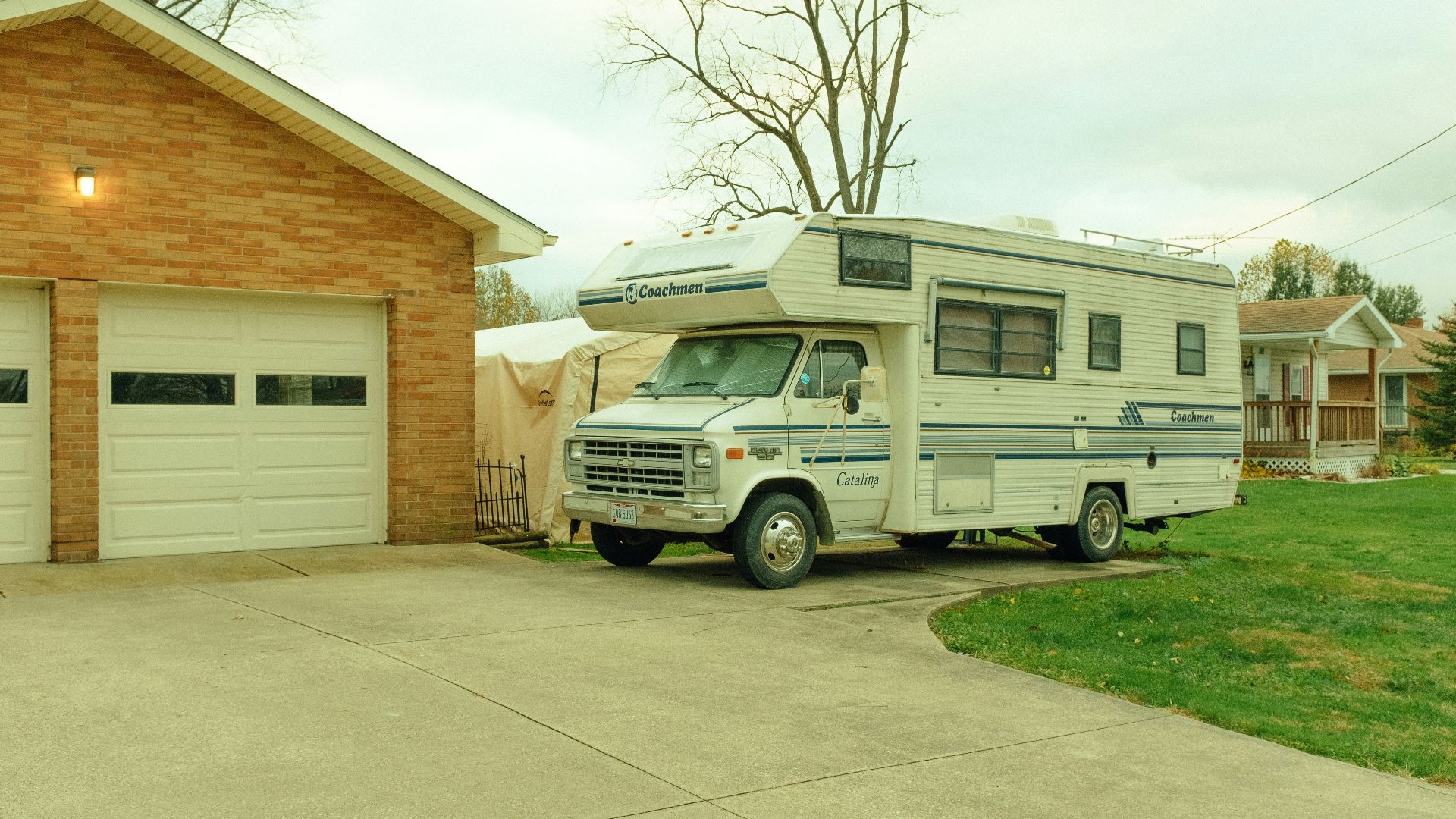
Seattle Uses Another Approach
Seattle provides a useful contrast. Vehicles generally cannot remain on the same block for more than 72 consecutive hours. The city also prohibits vehicles wider than 80 inches from parking on streets or alleys outside industrial zones between midnight and 6 a.m., potentially catching many large RVs.
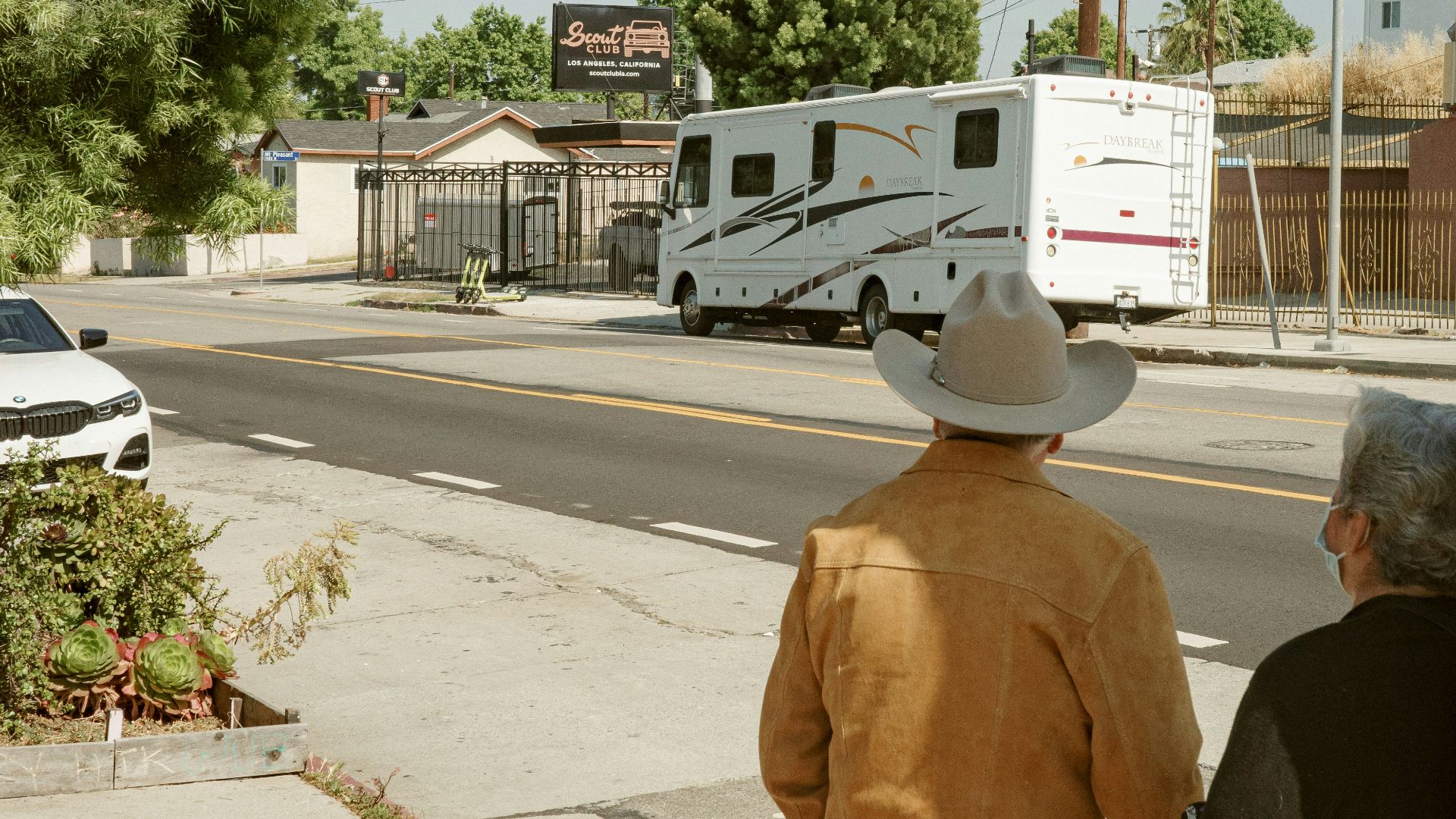
Moving It May Matter
If your city imposes a maximum parking period, determine what actually counts as moving the RV. Simply starting the engine or rolling several feet may not reset the clock. Portland, for example, treats failure to move a vehicle off the block face within 24 hours as evidence of prohibited storage.
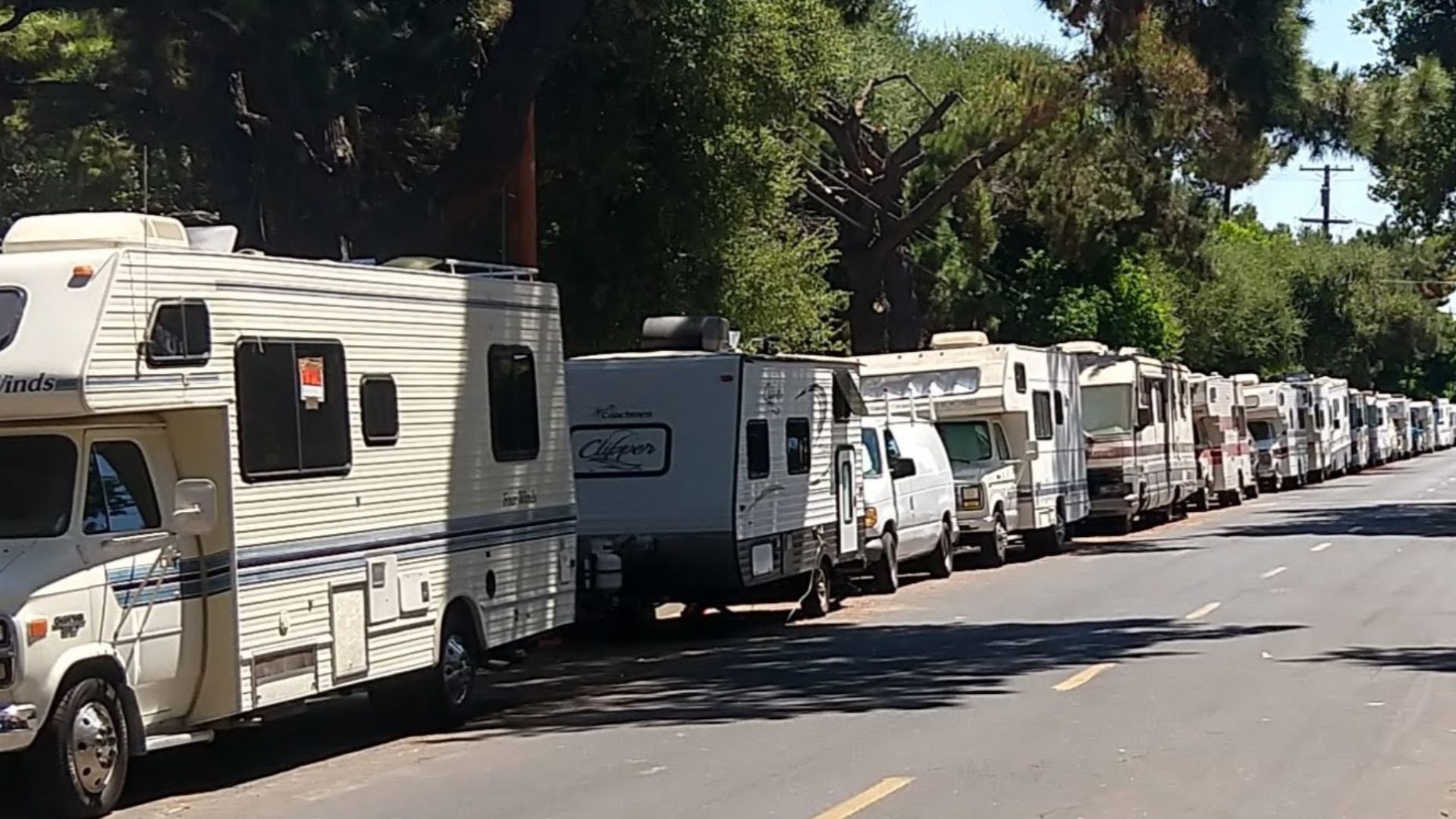 Elwood P. Dowd, Wikimedia Commons
Check Your City Code
Search your municipal website for terms such as "recreational vehicle," "oversized vehicle," "street storage," "abandoned vehicle," and "residential parking." Your city's transportation, parking enforcement, police, or code-enforcement department may also publish an easier explanation than the underlying ordinance.

Signs Still Control
Do not overlook ordinary parking signs because you are focused on the RV. Posted time limits, permit zones, street-cleaning restrictions, temporary construction rules, and no-parking periods can apply regardless of vehicle type. Your neighbor must comply with those restrictions just like anyone else using the street.
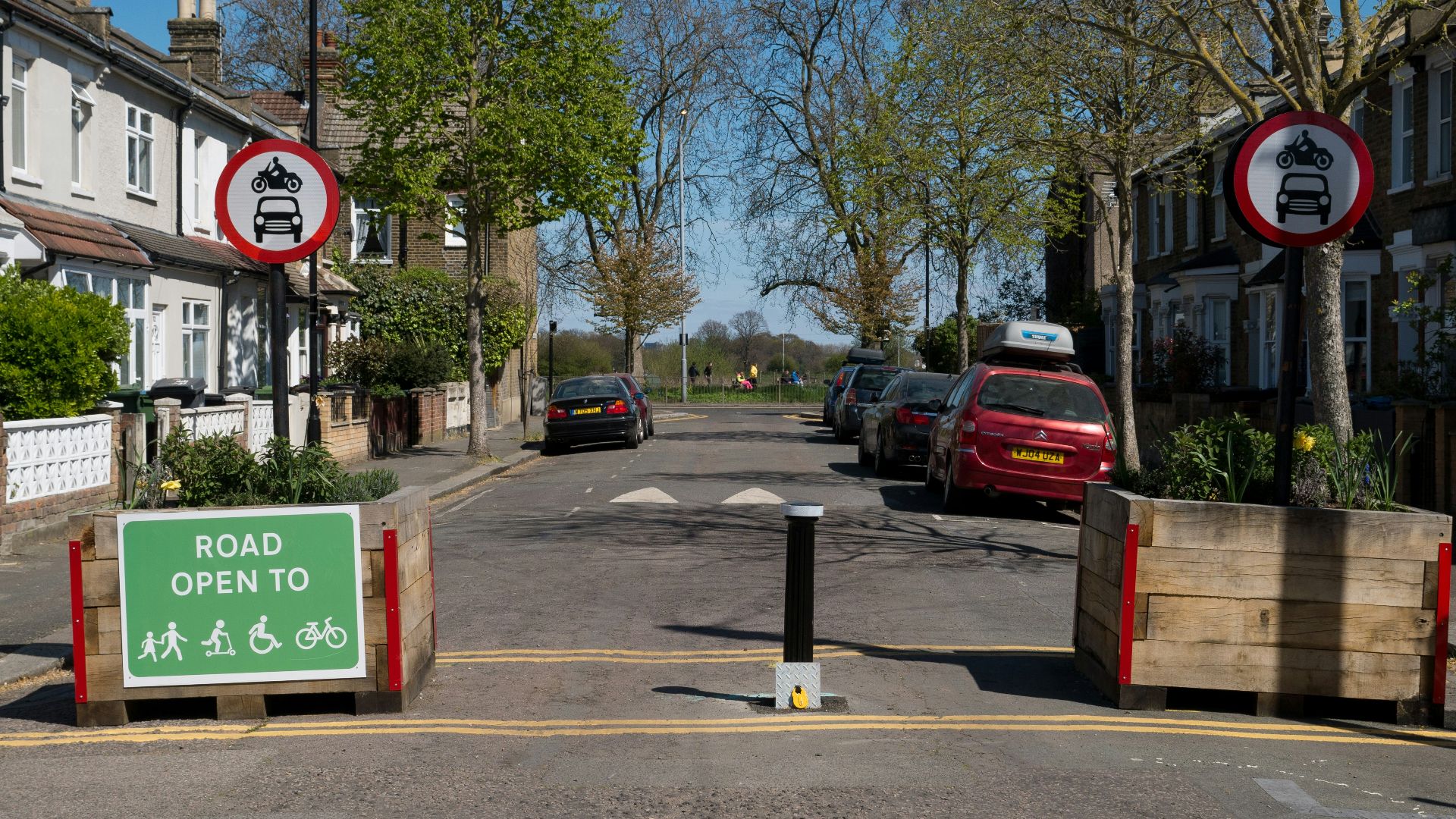
Driveways Change Things
Your neighbor cannot use the fact that the street is public as permission to block your driveway. Washington, for example, generally prohibits standing or parking in front of a public or private driveway, subject to a limited option for local exceptions involving certain residential property owners.
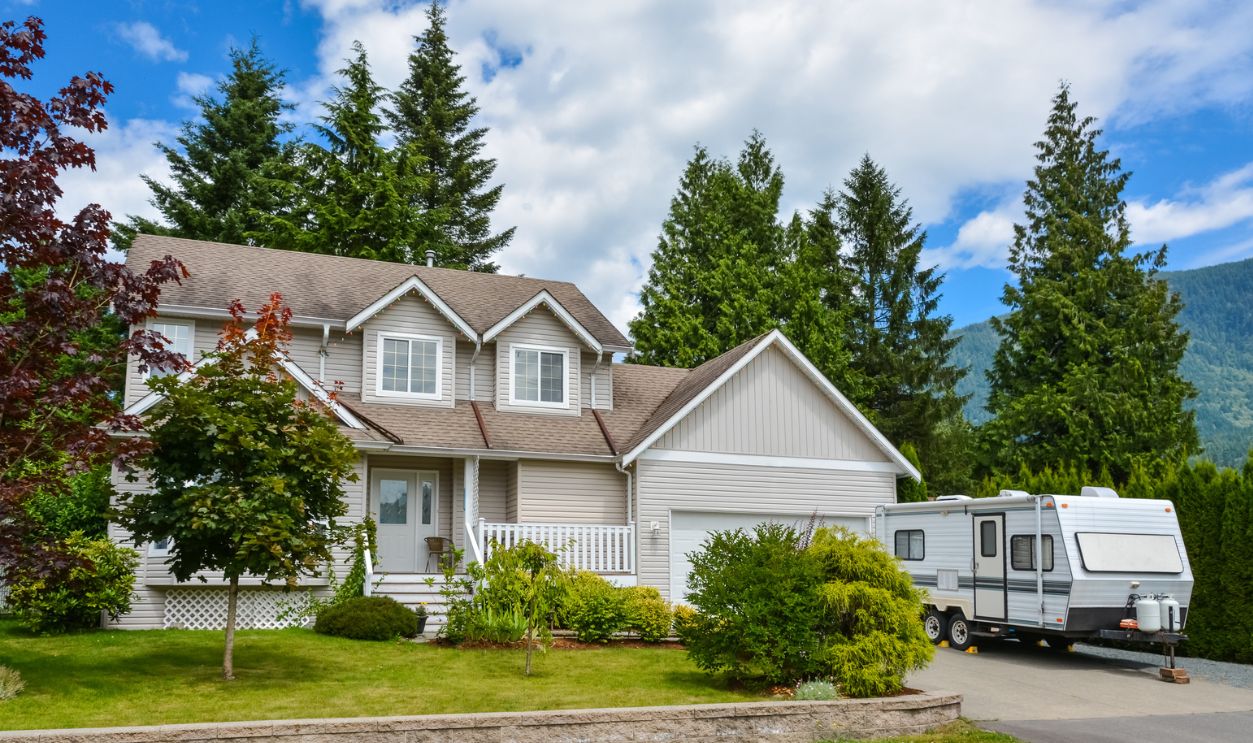
Watch The Fire Hydrant
An RV's length makes clearance rules particularly important. Washington prohibits standing or parking within 15 feet of a fire hydrant, and California likewise generally prohibits parking within 15 feet of one. A huge motorhome can violate these rules even when its front end appears comfortably positioned.
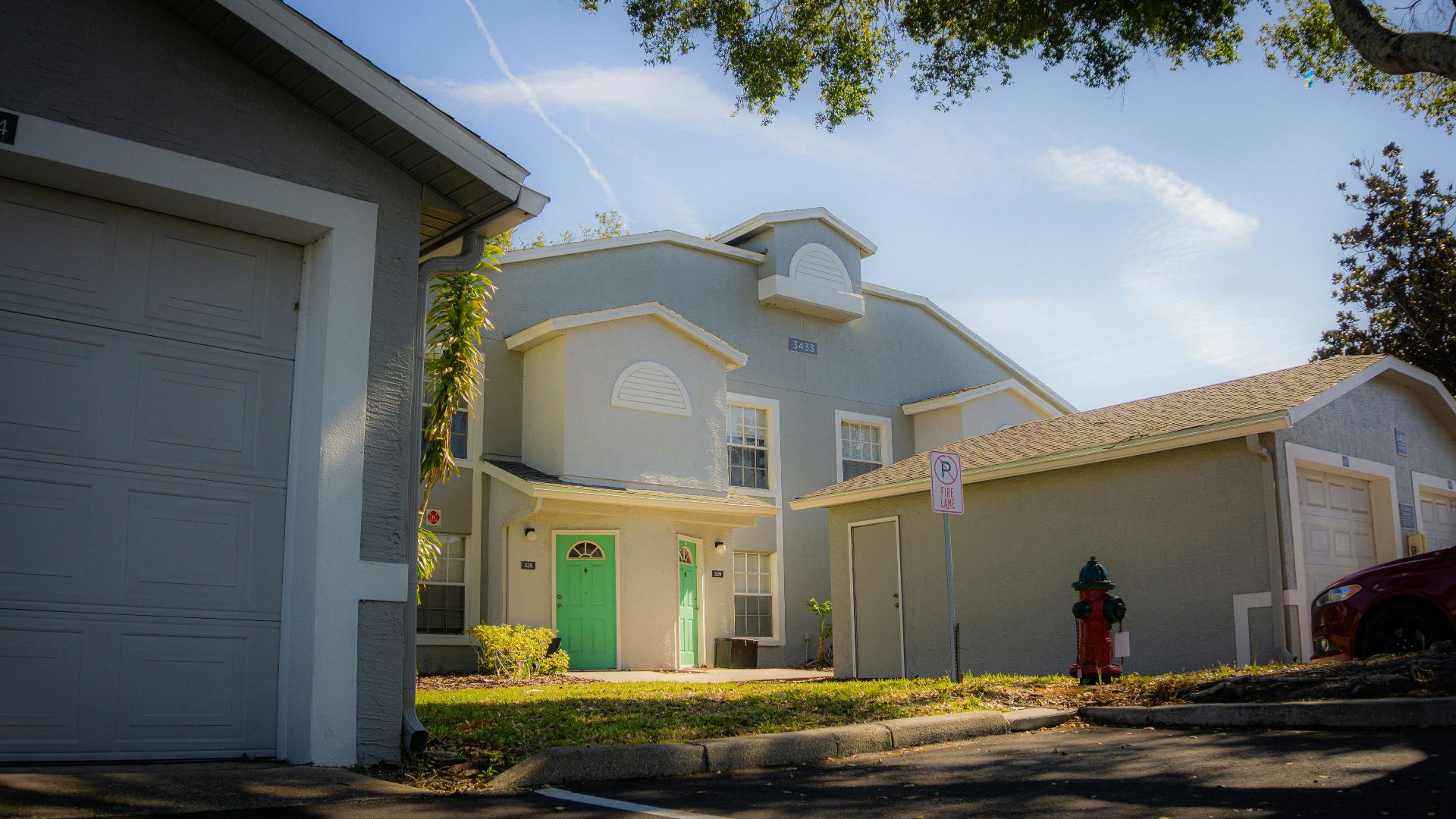 Osmany M Leyva Aldana, Unsplash
Intersections Matter Too
The RV also cannot create an obstruction merely because its tires fit beside the curb. State and local laws regulate parking near intersections, crosswalks, traffic controls, and other safety-sensitive locations. Washington, for example, establishes specific clearances around crosswalks and stop or yield signs.
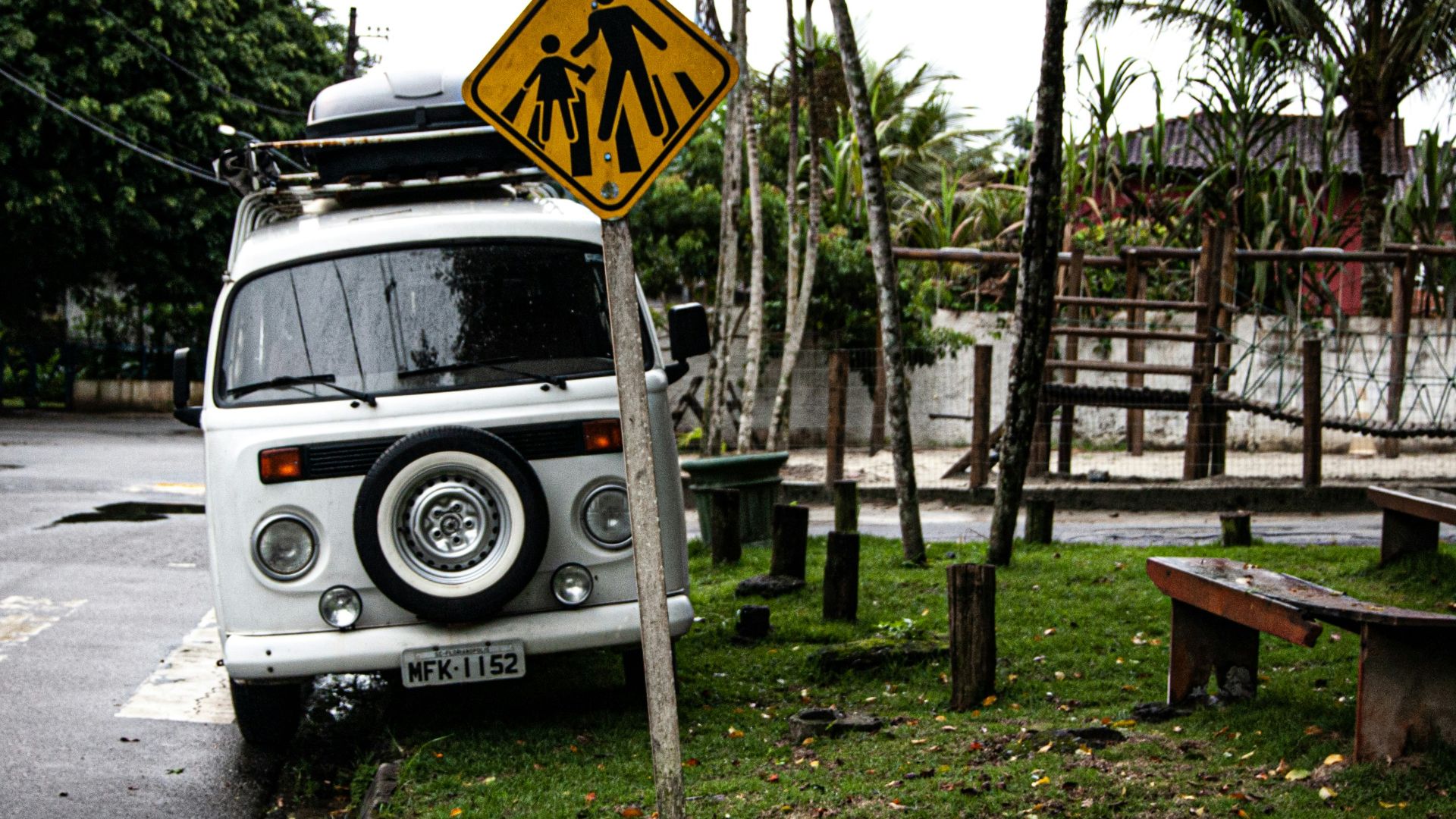
Visibility Can Be Relevant
Your strongest complaint may therefore be about safety rather than scenery. If the RV's position interferes with traffic, pedestrian visibility, or a regulated intersection clearance, document exactly what is happening. Avoid simply reporting that you dislike seeing a giant vehicle through your living-room window.
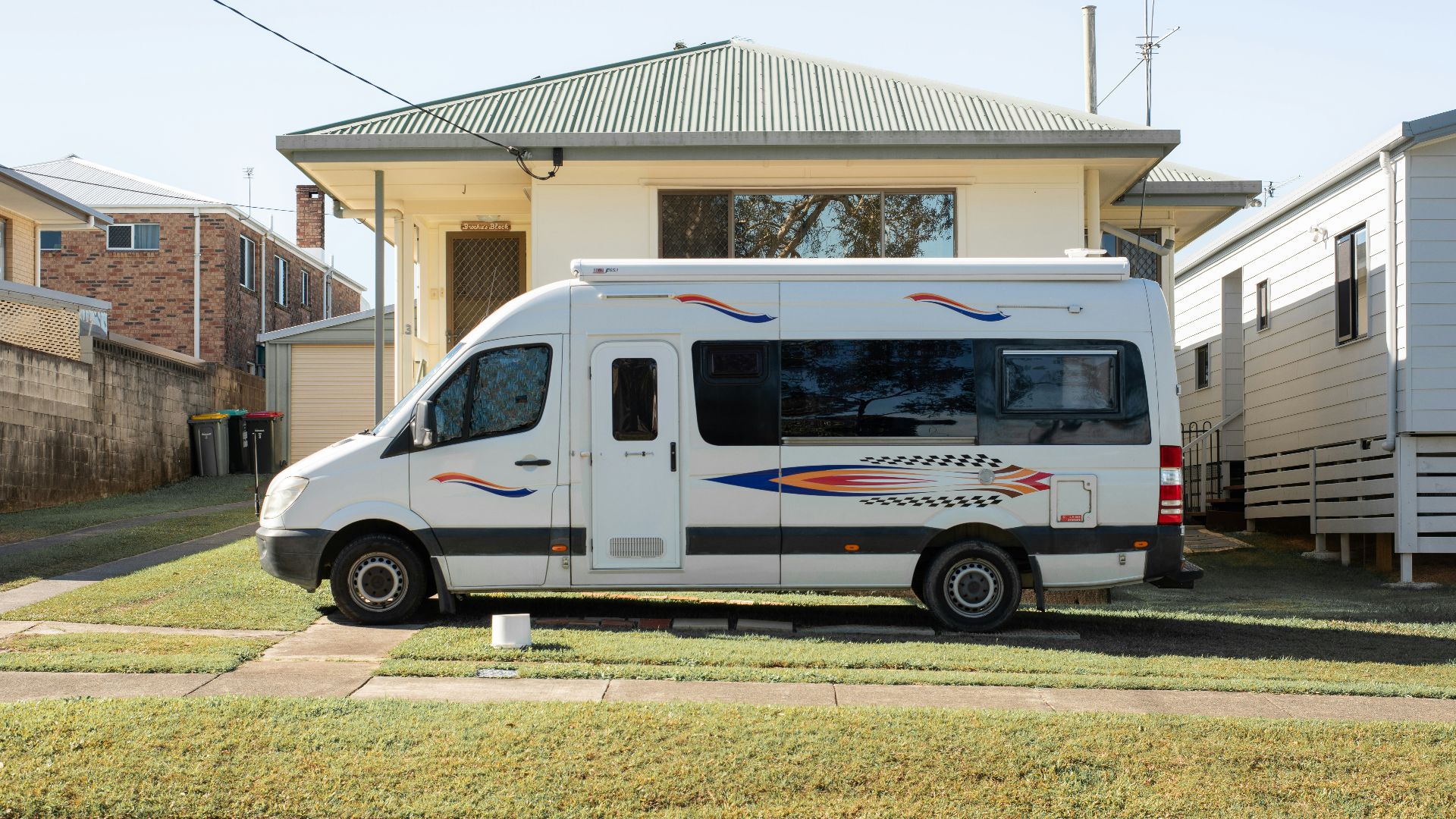
Your View Isn't Guaranteed
Unfortunately, an RV being ugly, enormous, or annoying usually does not by itself create a parking violation. If it complies with every applicable rule, your desire for an unobstructed view from your house may carry considerably less legal weight than an actual safety or parking-code violation.
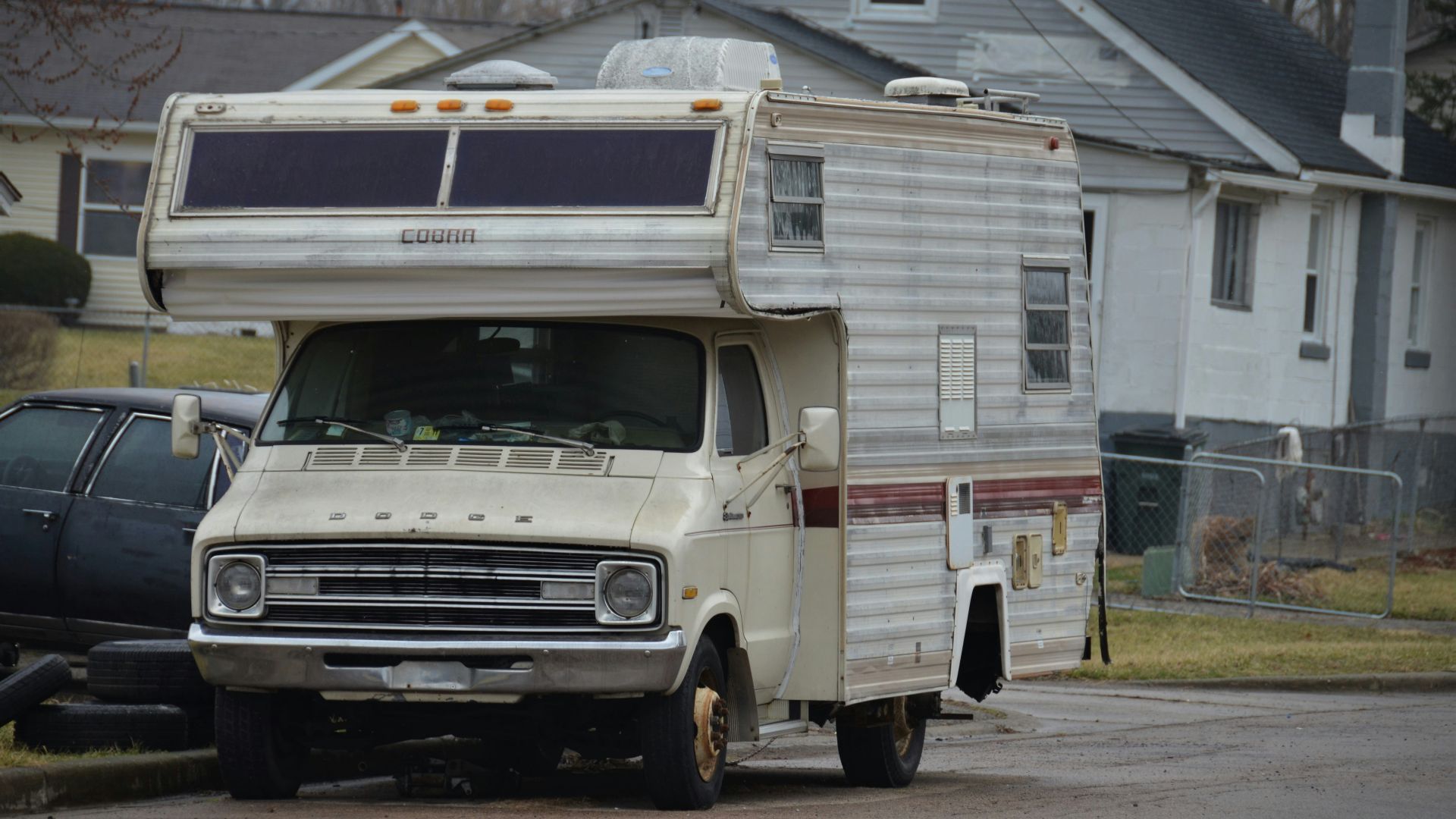
Check HOA Rules
If both homes belong to a homeowners association, review its governing documents too. An HOA may have restrictions concerning RVs, oversized vehicles, or long-term parking that apply to owners within the community. Whether particular rules reach public streets depends on the documents, local law, and the HOA's authority.

Don't Tow It Yourself
Even if you discover an apparent violation, resist calling a private towing company and ordering the RV removed from a public street yourself. Public-street enforcement ordinarily belongs to the appropriate government authority. Report the violation through your city's designated parking, police, transportation, or code-enforcement process instead.
Gather Useful Evidence
Before reporting it, keep a simple record showing dates, times, photographs, license plate, location, and how long the RV remains stationary. If the problem involves a driveway, hydrant, intersection, or sign, photograph that relationship too. Good documentation makes your complaint much easier to evaluate objectively.

Report The Actual Violation
When contacting authorities, identify the rule you believe is being broken rather than presenting a neighborhood feud. Seattle, for example, specifically tells residents they can report vehicles that remain on a city street beyond its 72-hour limit. A concise, factual complaint is generally more useful.

Towing Can Eventually Happen
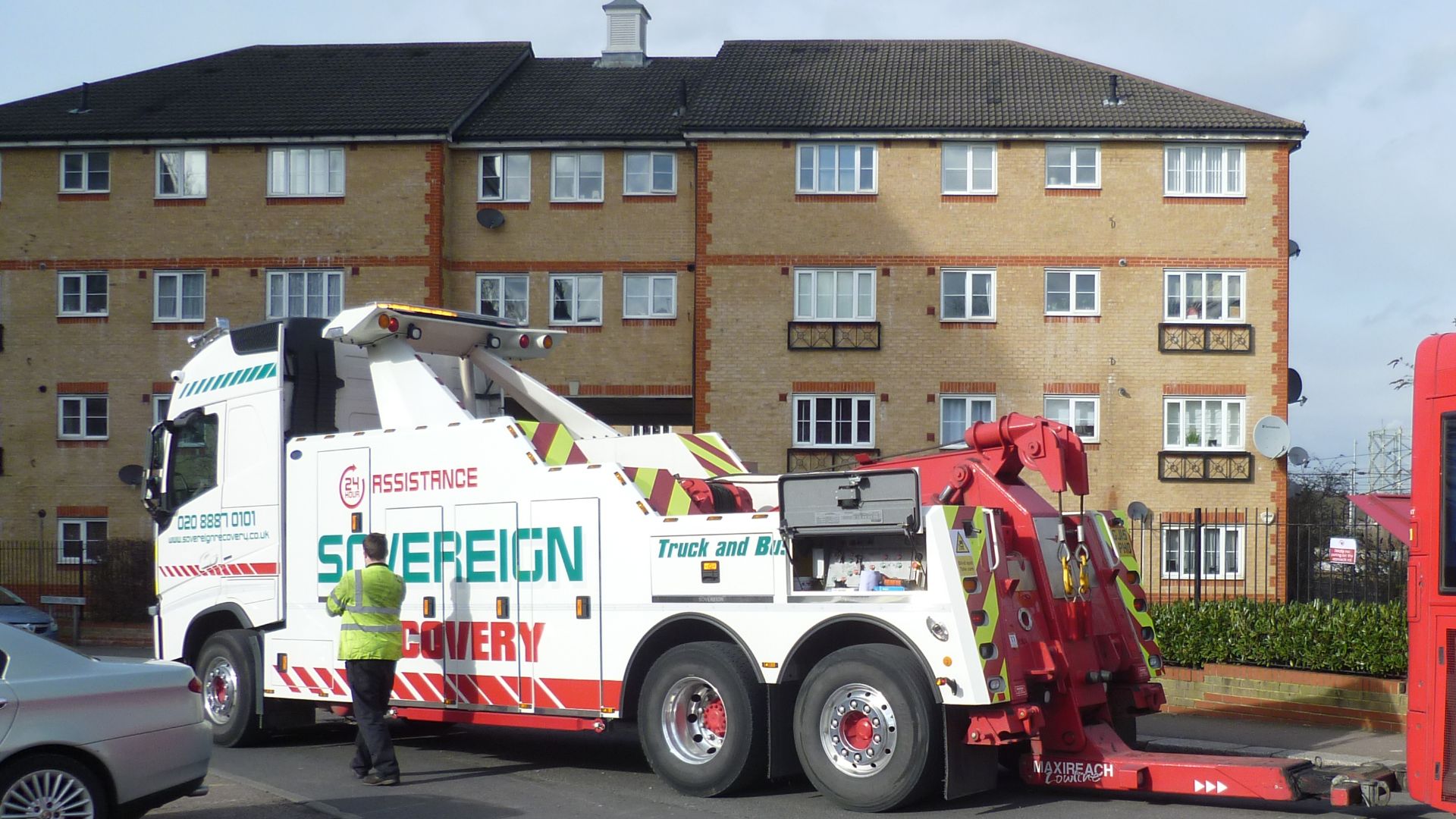
An RV that violates applicable parking or street-storage rules may ultimately face citation or removal, depending on local procedures. Portland expressly allows towing in circumstances that include parking violations, abandoned vehicles, and vehicles stored on the street contrary to its street-storage ordinance.
 Philafrenzy, Wikimedia Commons
Damage Is Another Matter
Suppose the RV rolls into your parked car, clips your fence, or causes other property damage. That becomes an insurance and liability question separate from whether it was legally parked. Auto property-damage liability coverage generally pays for damage an insured driver is legally responsible for causing to someone else's property.
RV Insurance Exists
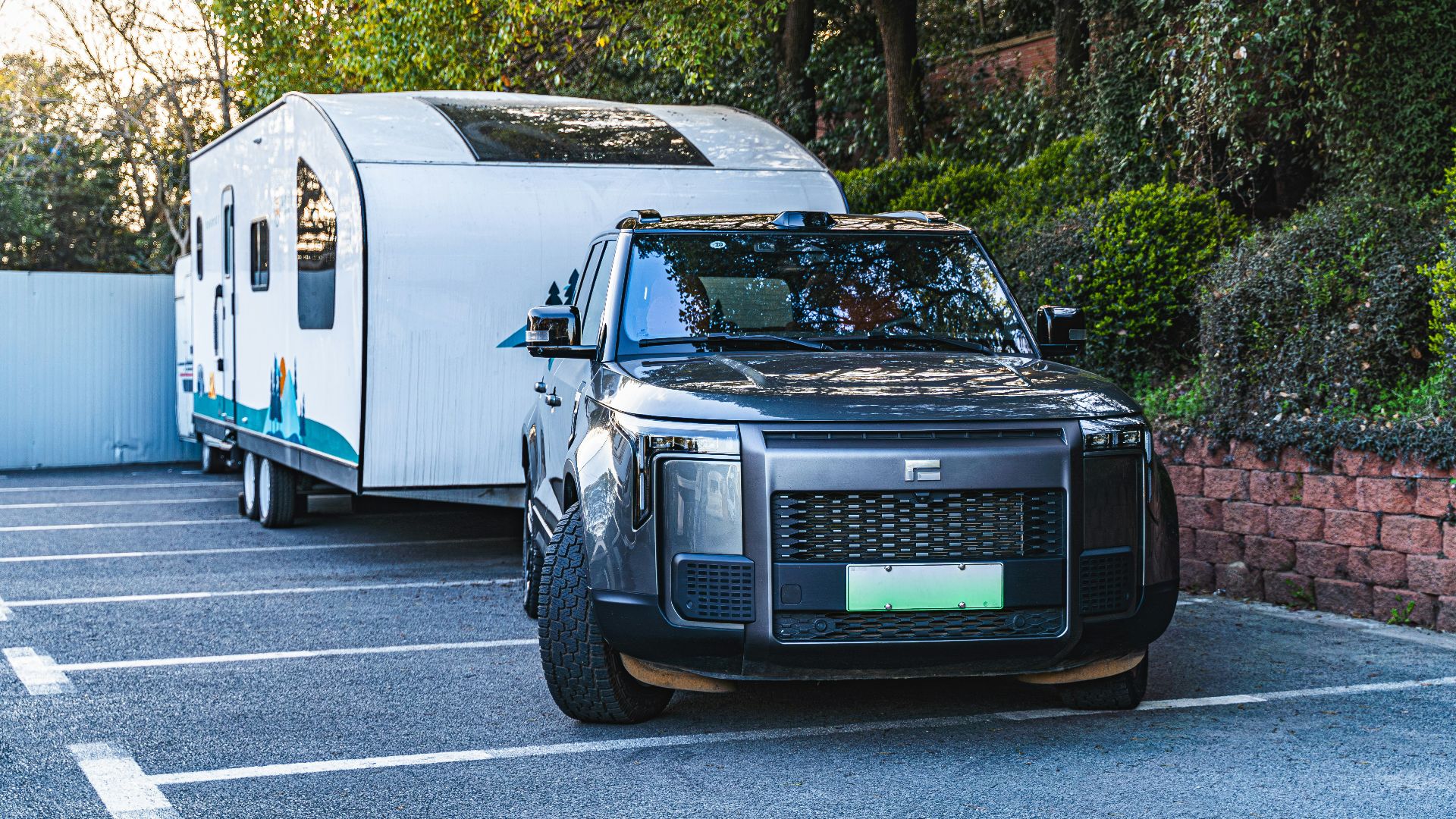
Recreational vehicles are specifically recognized within personal auto insurance classifications. RV coverage can include auto liability, collision, comprehensive, uninsured or underinsured motorist coverage, and other protections depending on the policy and state. Actual coverage following an incident will depend on the circumstances and policy terms.
Try Talking First
If relations are reasonably civil, asking your neighbor why he parks there may solve the problem faster than researching municipal codes. Perhaps his driveway cannot accommodate the RV or he dislikes blocking his own view. You can politely explain that shifting the vehicle would make your daily life easier.
Don't Create Restrictions
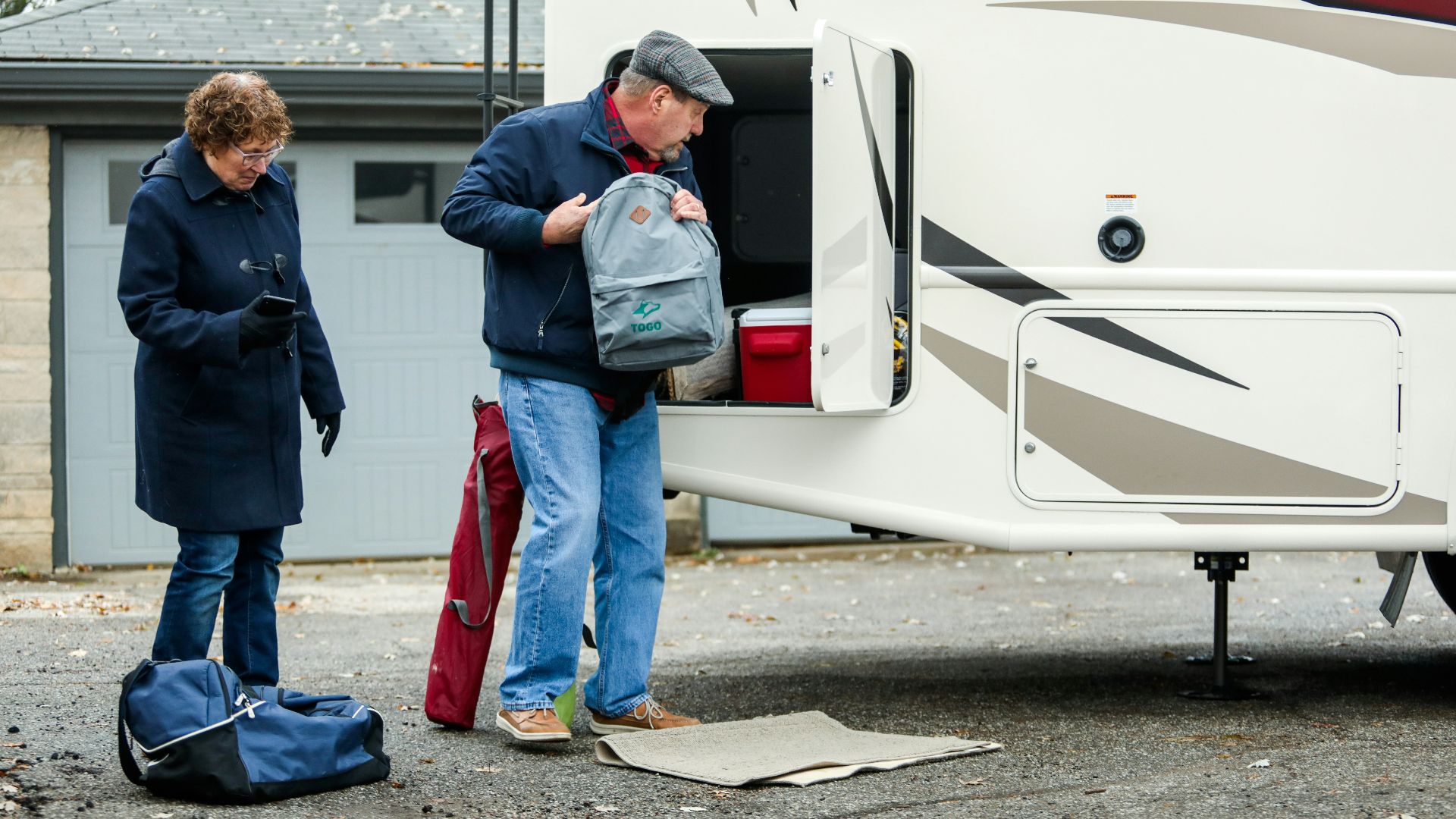
Avoid retaliating with cones, garbage cans, homemade signs, or another vehicle positioned specifically to reserve the curb. Public parking generally cannot simply be converted into your private space. Washington law, for example, expressly prohibits attempting to reserve highway space for parking to exclude other people.
The Answer Is Local
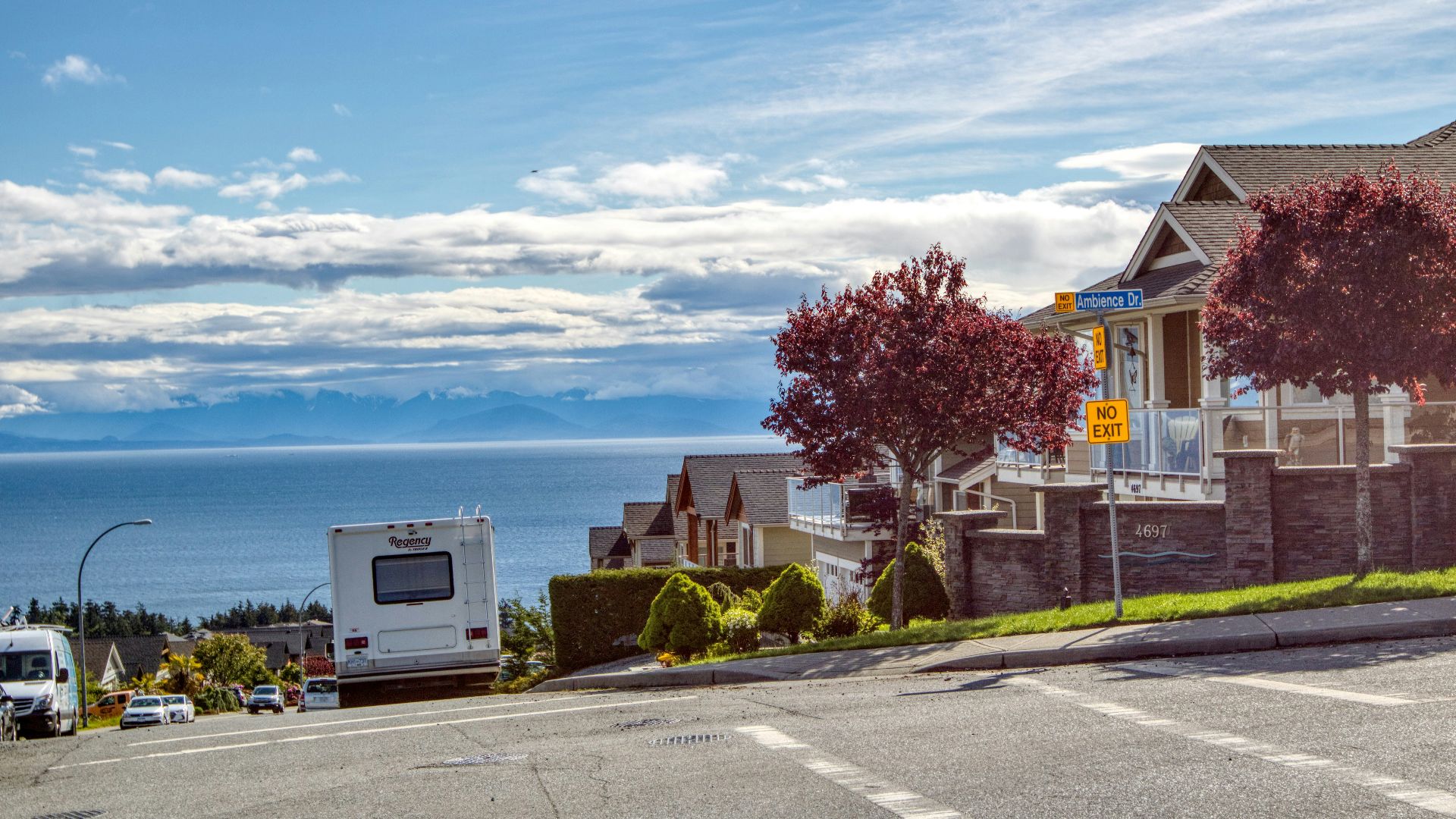
Your neighbor may legally park his RV outside your house if the curb is public and he complies with every applicable rule. But RV-specific restrictions, overnight bans, time limits, safety clearances, or street-storage ordinances may say otherwise. Check the local code before accepting that enormous motorhome as your permanent new view.

You May Also Like:
My neighbor says my EV charger is lowering his property value. Can he complain to the city about it?