Apparently, Paying Them Back Was A Problem
You finally got rid of your car payment. Maybe you used a bonus, dipped into savings, or just kept throwing extra money at the balance. Then the lender charged you for finishing early. Apparently, paying back everything you borrowed wasn’t quite the happy ending you expected.

They Were Counting On More Than Their Money Back
From your perspective, the lender got its money back ahead of schedule. From its perspective, those remaining monthly payments included interest it expected to collect. Paying early cuts that income short—and some lenders put a charge in the agreement for exactly that situation.

There’s A Name For This Particular Surprise
It’s called a prepayment penalty: a charge triggered by paying off a loan ahead of schedule. Depending on the agreement, prepayment provisions can also cover paying off part of the balance early. Yes, that means doing something financially responsible can come with its own fee.

But Putting It On A Statement Doesn’t Settle Anything
Before accepting the lender’s explanation, establish what the charge actually represents, what your paperwork allows, and what rules apply to your loan. A fee appearing on a payoff statement doesn’t, by itself, prove the lender was entitled to collect it. They need more than a line on a bill.

So, Can They Actually Do This?
Sometimes, yes. There isn’t a blanket federal ban covering every American auto loan. The Consumer Financial Protection Bureau says your “contract and state law” determine the answer. Some states prohibit prepayment penalties for certain loans, while other situations allow them subject to the applicable rules.

Your Signature Isn’t The End Of The Discussion
Finding a penalty clause matters, but it doesn’t automatically make the charge enforceable. A contract can’t override an applicable legal prohibition. The question is whether this lender could impose this particular charge on this particular loan—not simply whether you signed a stack of paperwork.

Start With The Prepayment Disclosure
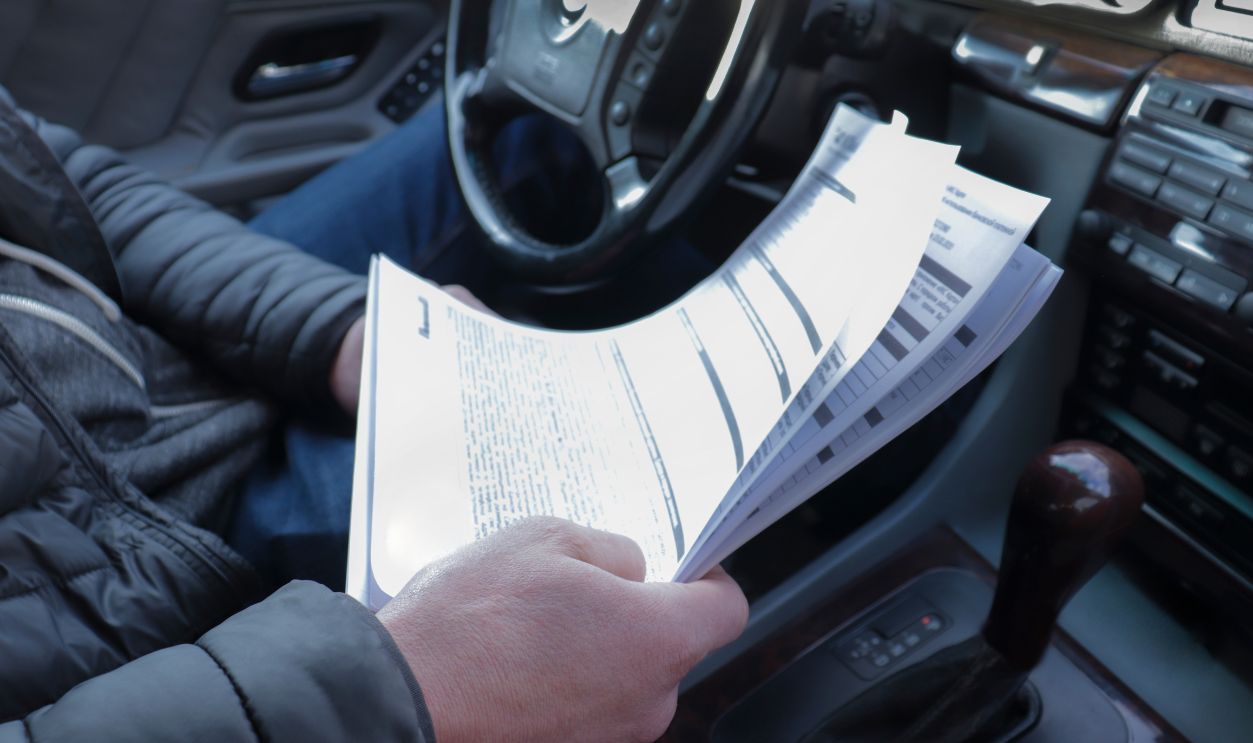
For a typical covered auto loan, federal disclosure rules address prepayment terms. On a simple-interest loan, the disclosures must indicate whether paying principal early may trigger a charge. Pull out the Truth in Lending disclosures and look for the section labeled “Prepayment.”

“No Penalty” Is Something Worth Pointing Out
If your paperwork says you can pay early without a penalty, ask the lender to explain the contradiction in writing. Include a copy of that section. First, though, establish whether the disputed amount really is a prepayment penalty. Another item in the payoff calculation could be causing the confusion.

Even A Listed Penalty Might Be Waived
Check the lender’s current policy, too. Chase, for example, says it doesn’t charge auto-loan prepayment fees “even if your contract lists a fee.” That doesn’t establish what another lender must do, but it gives you another question to ask before accepting the charge.

Your Balance And Your Payoff Aren’t Always Identical
The balance you see online isn’t necessarily the exact amount needed to close the account. Your payoff can include accrued interest and applicable fees. A document fee charged at both early and scheduled payoff isn’t necessarily a prepayment penalty, either. Ask what each charge covers and what authorizes it.

A Few Extra Days Can Cost You
On a daily simple-interest loan, interest keeps accumulating while principal remains outstanding. Several days between your last payment and your payoff can legitimately add to the bill. That’s different from charging interest for time after full repayment; certain charges calculated that way count as prepayment penalties under federal disclosure rules.
 https://kaboompics.com/, Pexels
Ask Them To Show Their Work
Request an itemized breakdown showing remaining principal, accrued interest, the alleged penalty, and any other fees separately. Ask which contract provision authorizes each disputed charge and how it was calculated. “That’s your payoff amount” gives you a total. It doesn’t give you an explanation you can check.

The Type Of Interest Matters, Too
Most auto loans use simple interest, calculated from the outstanding balance. Paying down that balance faster generally reduces future interest. But some loans use precomputed interest, where the finance charge is calculated at the beginning. Those loans can produce a different—and less satisfying—early-payoff calculation.
 Natthawadee Jana, Shutterstock
Precomputed Doesn’t Mean They Automatically Keep Everything
With precomputed interest, ask how the lender calculated the unearned-interest rebate. Federal law generally requires a refund of unearned interest when a covered consumer loan is prepaid in full, except for refunds under $1. Ask whether that adjustment already reduced your payoff or remains due separately.

A Long Loan Doesn’t Automatically Ban Every Penalty
You may find claims online that prepayment penalties are automatically illegal on car loans longer than five years. The federal provision often behind that claim actually restricts interest-refund calculations on precomputed loans exceeding 61 months. It isn’t a blanket ban on every early-payoff charge.
 Natallia Ustsinava, Shutterstock
Federal Credit Unions Have A Different Rule
Here’s an exception worth checking: federal credit unions generally cannot charge borrowers prepayment penalties on their loans. The applicable regulation permits repayment before maturity “without penalty.” Confirm the institution’s charter, because a state-chartered credit union isn’t automatically governed by that same federal prohibition.

Refinancing Can Trigger The Same Issue
You don’t have to write the payoff check yourself for an early-payoff provision to matter. Refinancing pays off the original loan using money from a new lender. If the original agreement has a lawful, applicable penalty, switching lenders can trigger it—even when you’re refinancing to save money.

A Penalty Doesn’t Necessarily Wipe Out The Savings
Suppose paying early avoids $600 in future interest but triggers a valid $150 penalty. You’re still $450 ahead on those figures. The fee is annoying, but the calculation matters. Compare interest actually avoided with the penalty and other costs, rather than assuming any penalty makes early payoff pointless.

Waiting Isn’t Automatically Cheaper, Either
If a penalty expires after a certain date under your agreement, compare the cost of waiting with the cost of paying now. Keeping the loan means continuing to pay interest. Avoiding a $100 fee doesn’t help much if waiting costs you $200 in additional interest.

Already Paid? You Can Still Question The Charge
Since you’ve already paid off the loan, write to the lender or servicer disputing the specific fee and requesting a refund. Attach your agreement, disclosures, payoff quote, and proof of payment. Ask for a written explanation identifying the contractual and legal basis for keeping the money.

Take An Unresolved Dispute Further
If the lender won’t resolve the issue, you can submit a complaint to the CFPB with your supporting documents and the outcome you want. The agency forwards complaints to companies for response and can route them to another agency when appropriate. A complaint doesn’t guarantee a refund.

There Might Also Be Money Coming Back To You
Early payoff may make you eligible for a refund of unused GAP coverage. Ask the lender, dealer, or provider about the calculation and cancellation process. The amount depends on the product and applicable rules; paying off the loan doesn’t mean you automatically get the entire purchase price back.

Make Sure The Loan Is Actually Finished
Get confirmation that the account is paid in full and follow up on the title or lien release. The process depends on your lender and state, including whether titles are electronic. Keep your payoff records and make sure the lender has your current mailing address.

They Need A Better Answer Than “Because We Can”
A lender may be allowed to charge for early repayment, but that depends on the agreement and applicable law. Your next move is to demand the clause, the calculation, and an itemized explanation. You’ve already given them their money back. They should be able to explain why they kept extra.

You Might Also Like:
Auto Parts Stores That Used To Be Everywhere, But Now No One Remembers