A Garage Built Around Living History
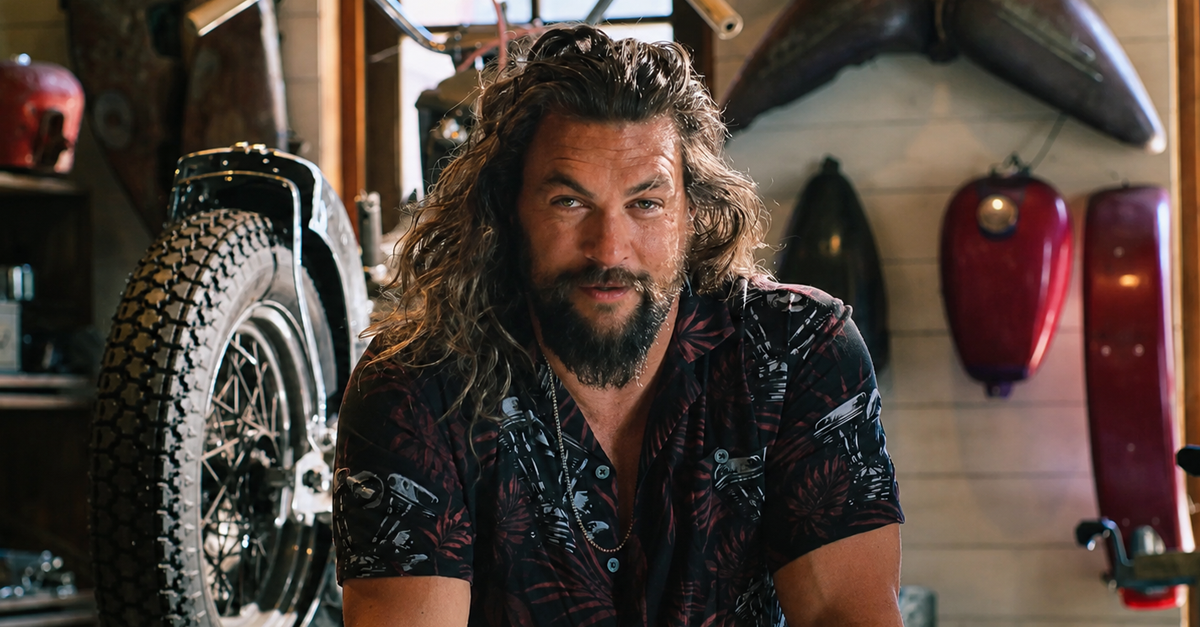
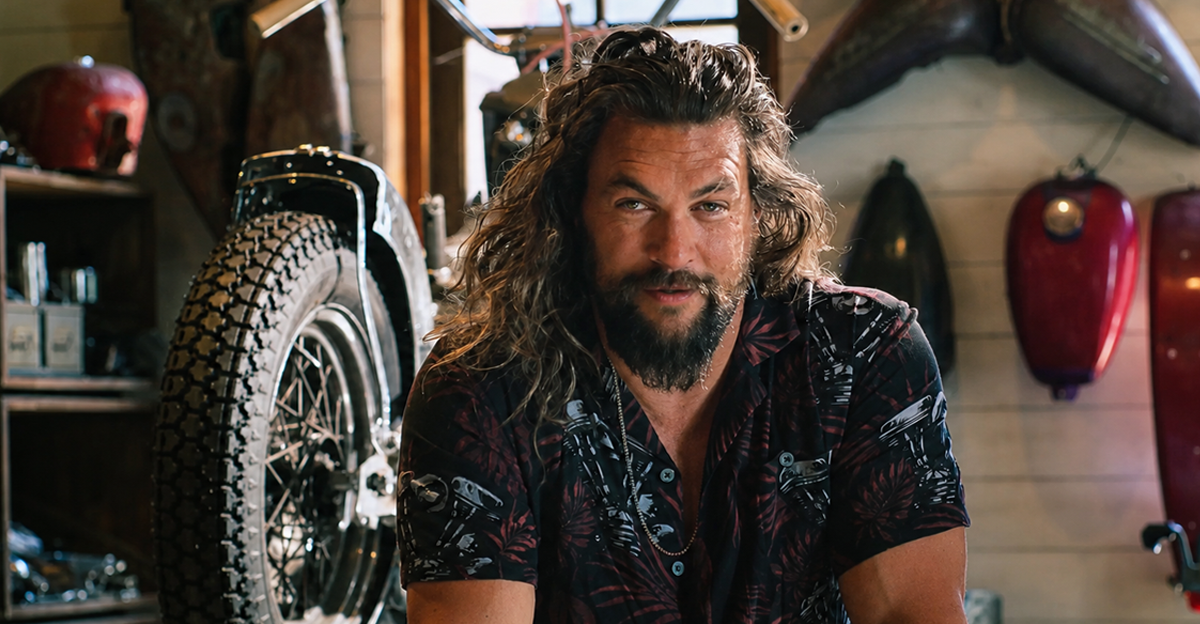
Jason Momoa doesn't collect motorcycles just to admire them. His remarkable garage spans early F-head Harleys, legendary Knuckleheads, a beloved Panhead, rare World War II survivors, and modern electric and adventure bikes. However valuable they become, these machines are meant to be repaired, fired up, and ridden.
 Screenshot from On the Roam, HBO Max (2024–)
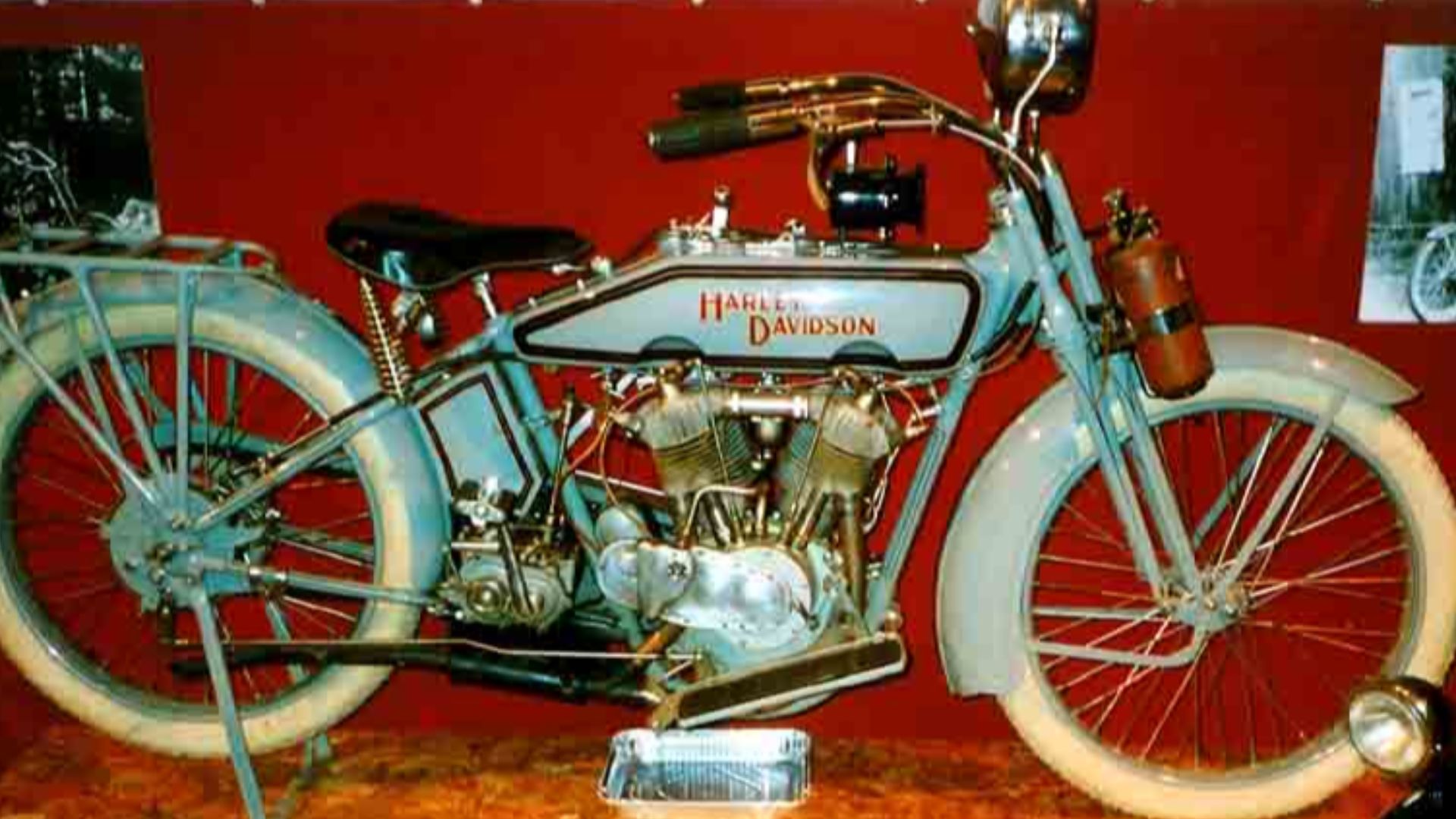
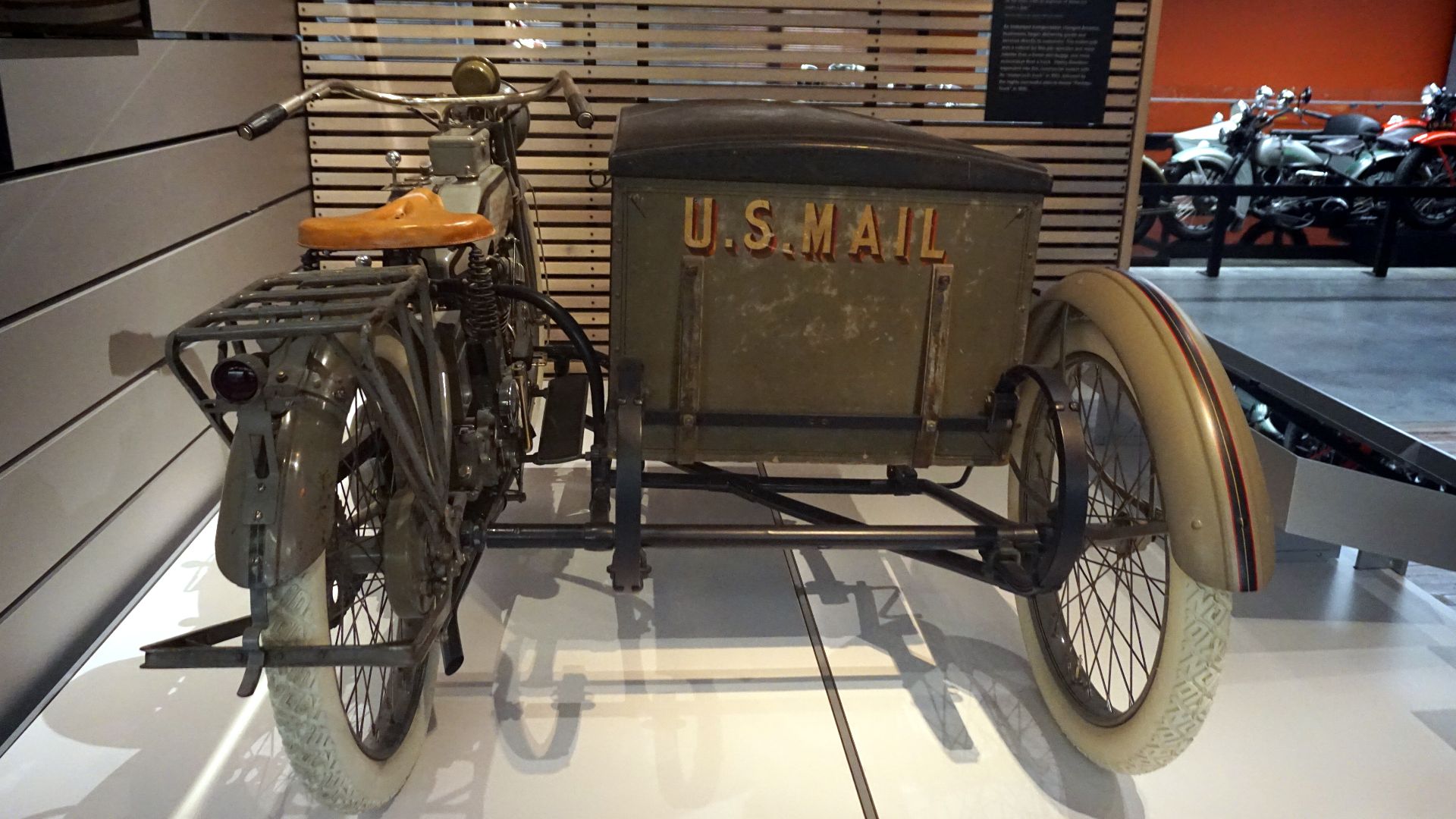
1916 Harley-Davidson Model J
A 1916 Harley-Davidson Model J is among the earliest motorcycles publicly identified in Momoa’s collection. It comes from Harley’s first mature generation of Big Twin road bikes, long before Knucklehead and Panhead became familiar enthusiast terms. The Model J gives his garage a direct connection to motorcycling’s pioneer era.
 Lars-Göran Lindgren Sweden, Wikimedia Commons
Early Big Twin Engineering On Display
The 1916 Model J used Harley-Davidson’s air-cooled, 45-degree F-head V-twin, paired with a three-speed transmission and chain final drive. Operating it involved a hand shifter, foot-operated clutch, manual ignition timing, and careful attention to lubrication. Its rigid rear frame, modest brakes, and spring-supported saddle made riding much more physical than it is on a modern cruiser.
 Michael Barera, Wikimedia Commons
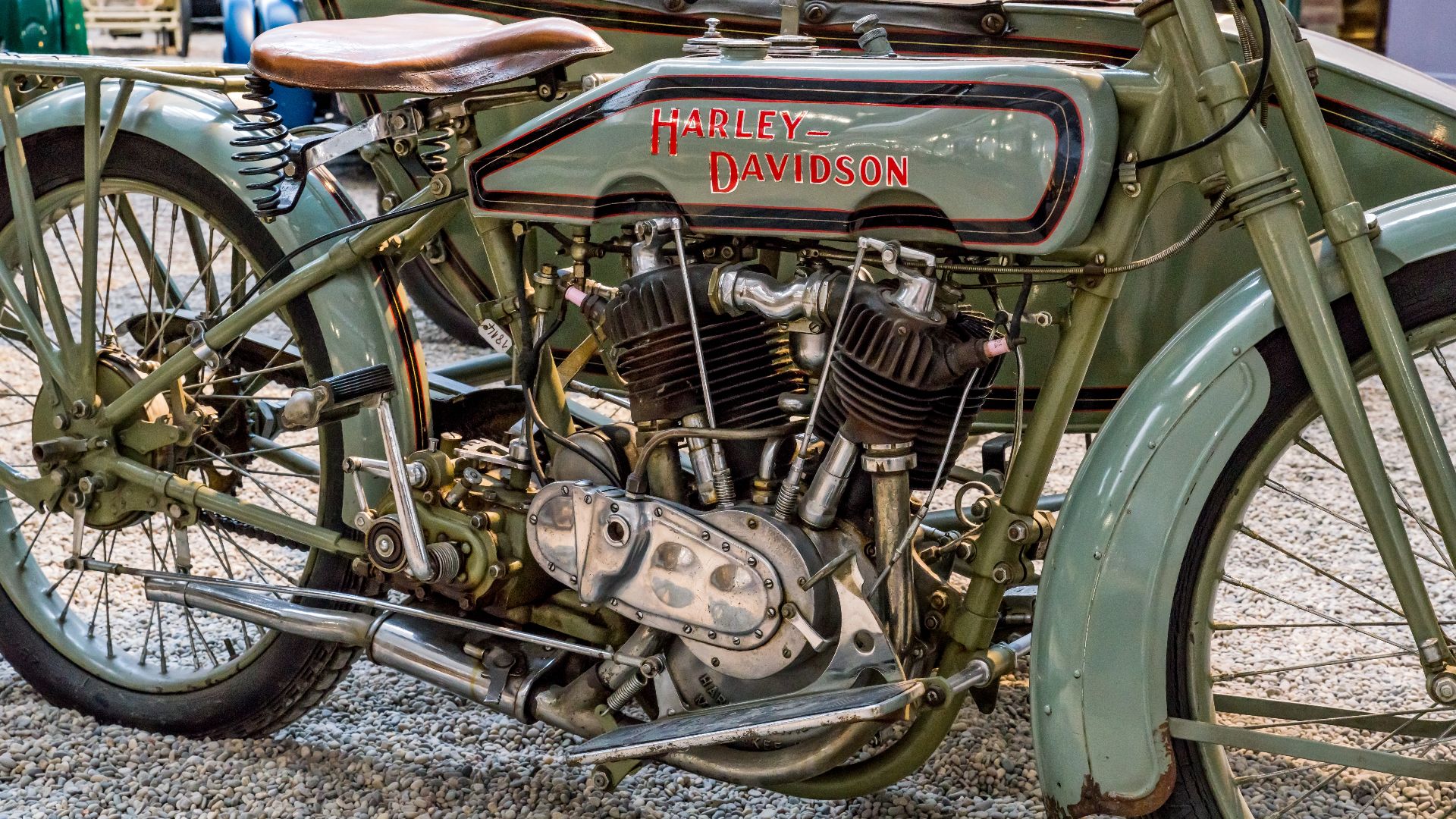
1921 Harley-Davidson Model FD
Momoa also owns a 1921 Harley-Davidson Model FD that became part of an ambitious electrification project. Electrogenic described it as a spares motorcycle with a seized 61-cubic-inch twin-cylinder engine and no gearbox. Those problems made returning the motorcycle to conventional gasoline-powered operation impractical.
 joergens.mi, Wikimedia Commons
A Century-Old Harley Goes Electric
Momoa and Electrogenic transformed the Model FD into a fully electric motorcycle with a 15-horsepower Maeving hub motor in its replacement rear wheel. Its batteries and control equipment were installed inside panniers designed to complement the bike’s period appearance, while a hydraulic rear disc brake improved stopping power. Electrogenic said the reversible conversion required no cutting, drilling, or welding.

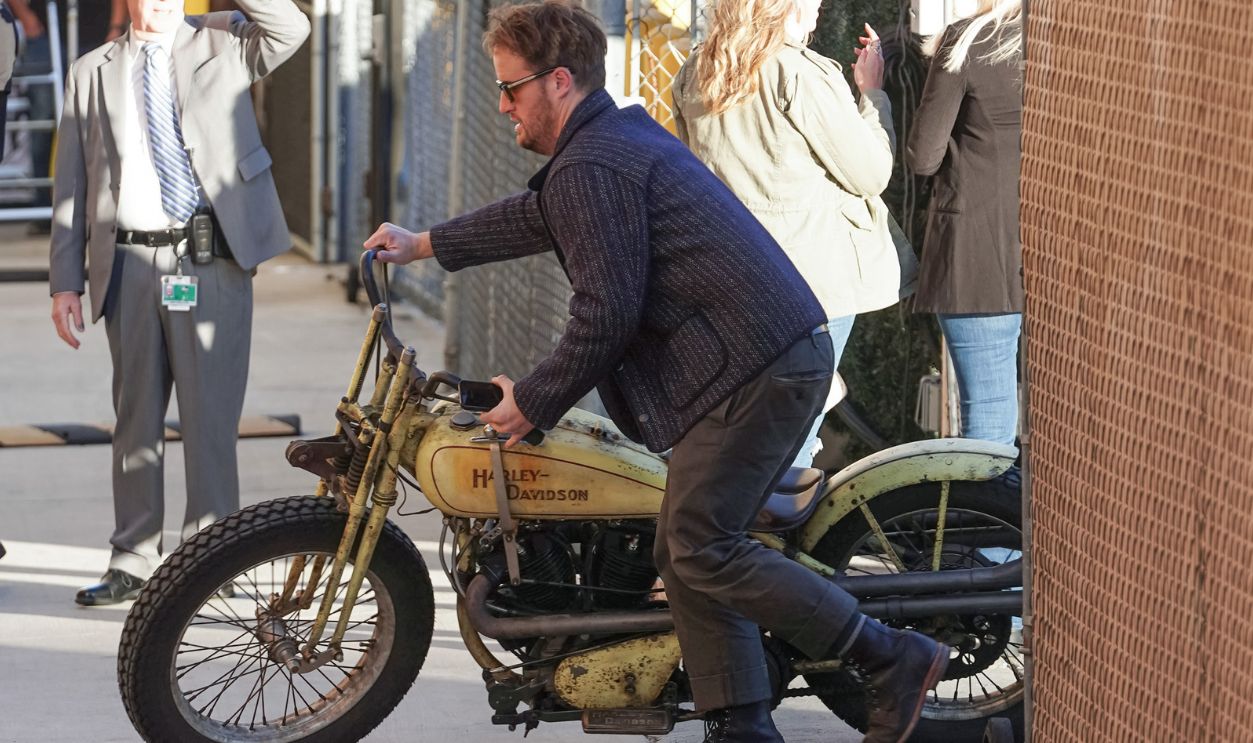
1924 Harley-Davidson Model JD
Another early Harley in Momoa’s collection is a 1924 Model JD. Its 74-cubic-inch F-head V-twin provided greater displacement than the 61-cubic-inch engines found in the Model J and FD. Factory examples combined that engine with a hand-shifted three-speed transmission and a foot-operated clutch.
The 1924 JD Becomes A Hybrid
Electrogenic retained the 1924 JD’s approximately 20-horsepower gasoline engine while adding an electric hub motor. The completed motorcycle can operate on gasoline, electricity, or both power sources simultaneously. Electric assistance can also spin the rear wheel and bump-start the original engine, avoiding a strenuous kick-starting routine.
 JOCE/Bauer-Griffin, Getty Images
1927 Harley-Davidson Model JD
Momoa’s 1927 Harley-Davidson JD became one of the standout motorcycles in the first season of On the Roam. He said the motorcycle had fewer than 800 miles, retained its original parts, and had been preserved with vegetable oil inside its fuel tank. That oil produced plenty of smoke when the engine was finally started.
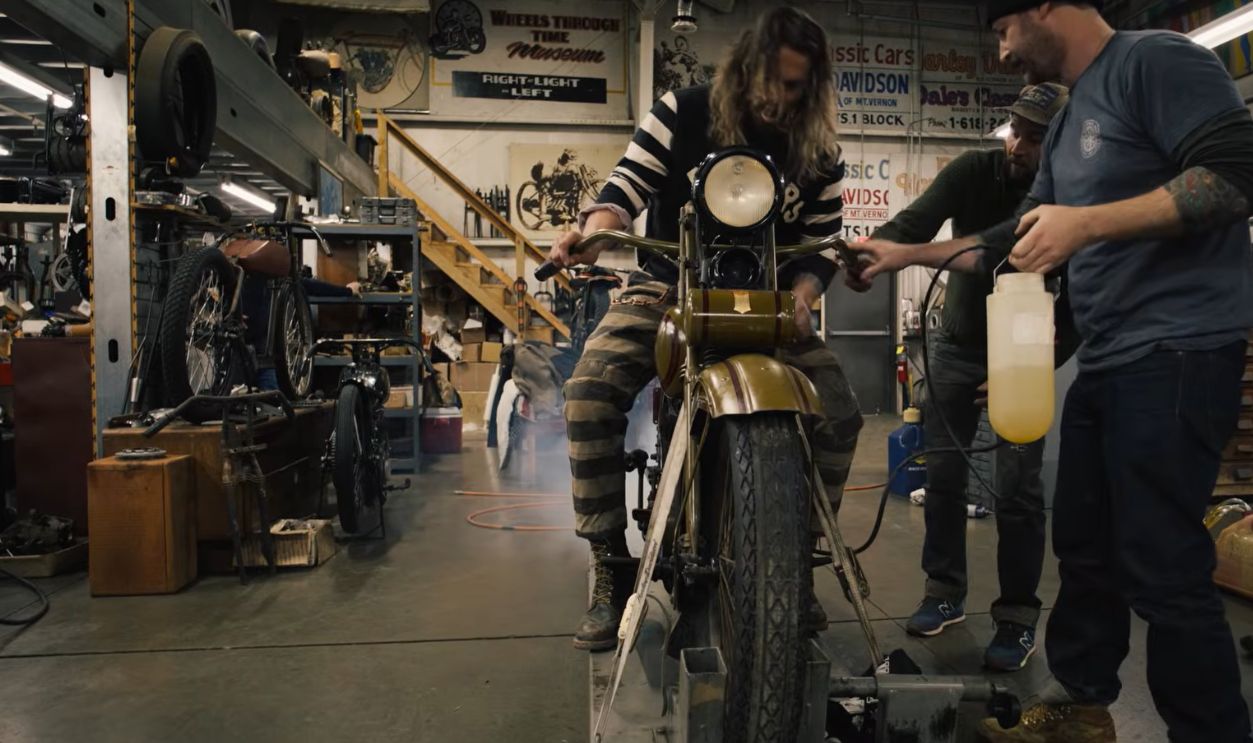 Screenshot from On the Roam, Max (2024–)
Preservation Meets Electric Assistance
Momoa described the unusually original JD as a time capsule, but simply displaying it did not appeal to him. Electrogenic later retained its 74-cubic-inch gasoline engine while adding a reversible electric hub motor and an electric-only range of roughly 50 miles. The arrangement lets Momoa alternate between quiet electric riding and the sound and controls of the vintage engine.
 Gage Skidmore from Peoria, AZ, United States of America, Wikimedia Commons
Brough Superior
Harley-Davidson dominates Momoa’s publicly documented collection, but a weathered Brough Superior broadened the mix. He discovered the rare British motorcycle while filming the first season of On the Roam. Momoa said he immediately knew the original-paint machine was the one he wanted.
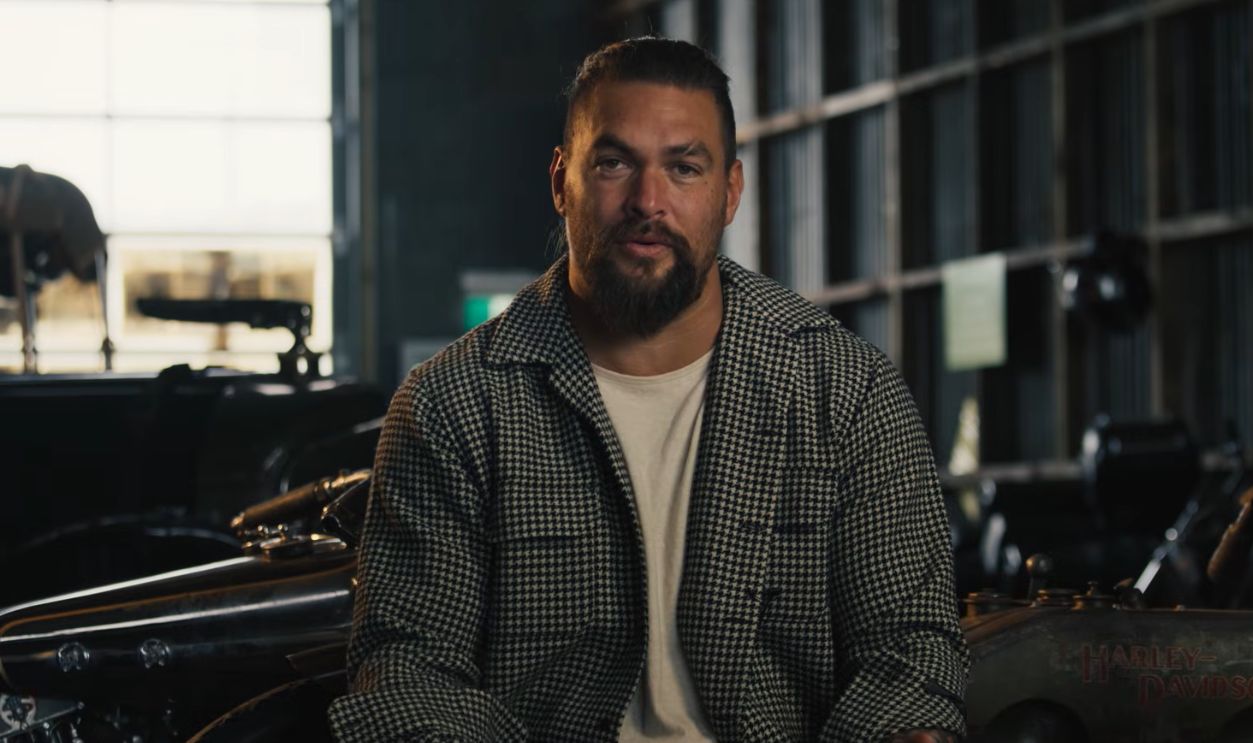 Screenshot from On the Roam, Max (2024–)
Original Paint Sealed The Deal
Momoa was particularly excited because the Brough’s aged factory finish had survived, preserving an irreplaceable part of its history. Its exact year and model have not been publicly confirmed, so it should not automatically be identified as an SS100 or Brooklands racer. Momoa brought the motorcycle to Los Angeles so his friend Nick could attempt to get it running again.
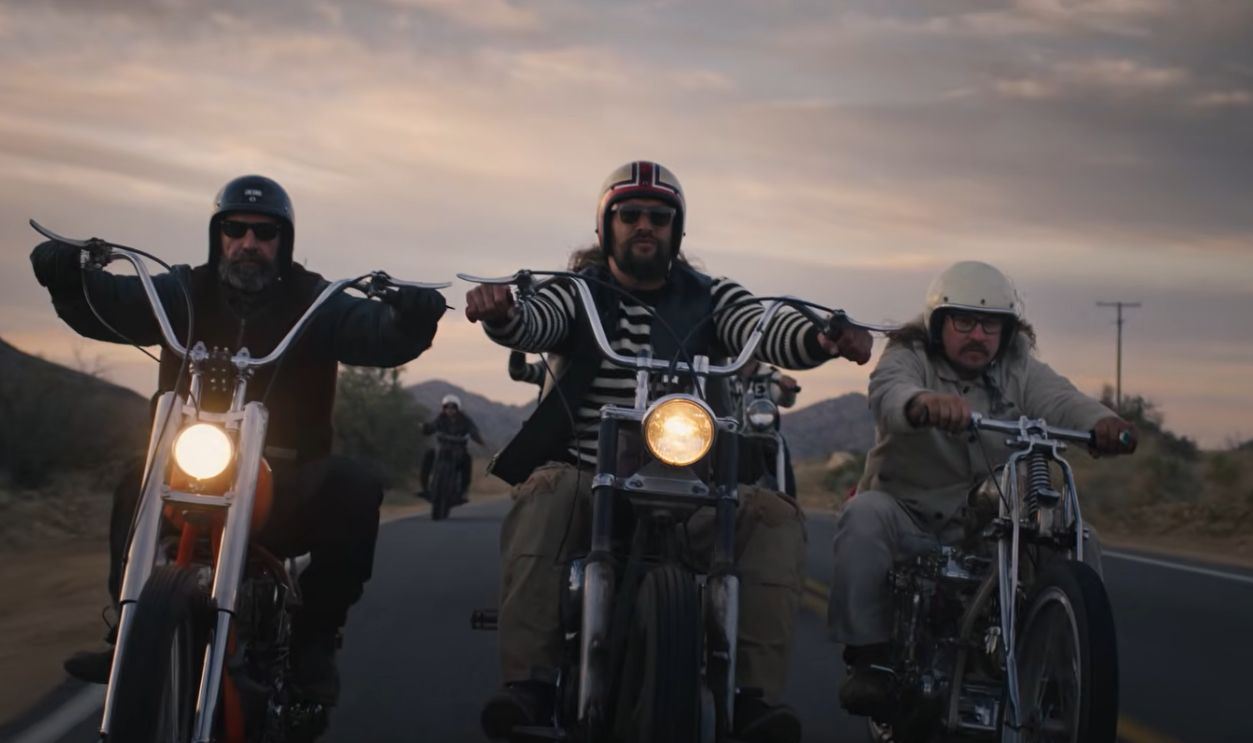 Screenshot from On the Roam, Max (2024–)
1936 Harley-Davidson Knucklehead
Few motorcycles in Momoa’s collection are more recognizable than his pink 1936 Harley-Davidson Knucklehead. Pink is his favorite color, and he specifically wanted a first-year Knucklehead finished in that shade. Its revival by veteran rider and collector Buzz Kanter became part of the opening episode of On the Roam.
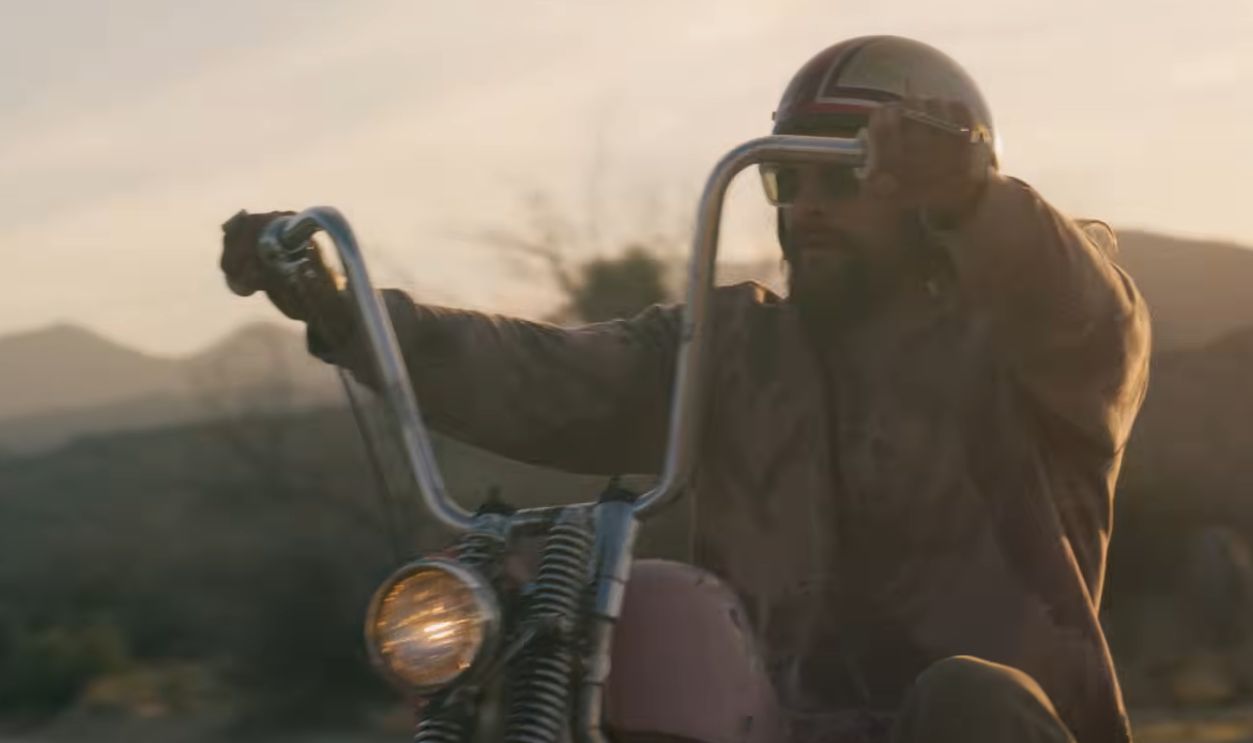 Screenshot from On the Roam, Max (2024–)
Harley Introduces A Landmark Engine
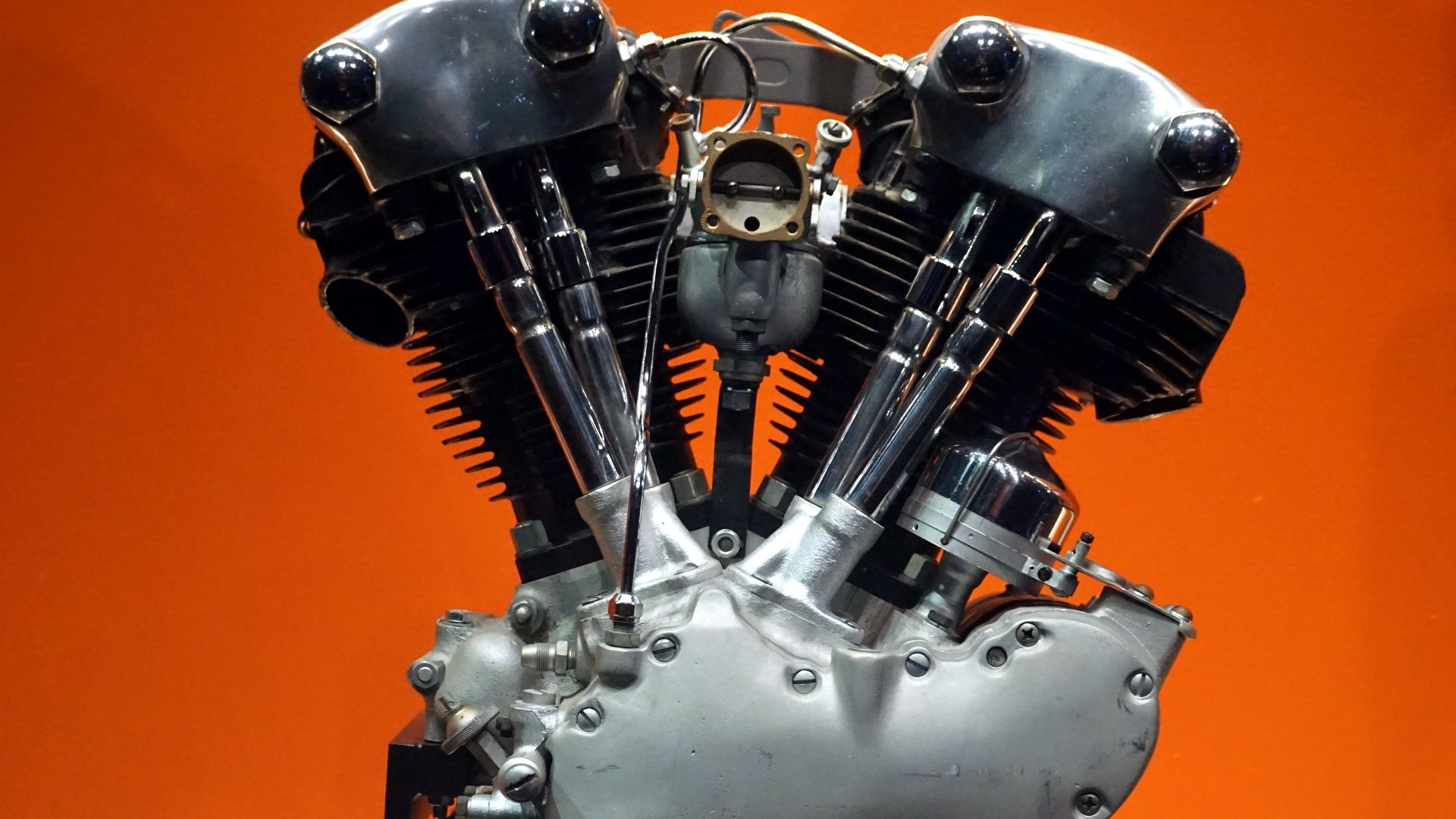
The 1936 E-model introduced Harley-Davidson’s first production overhead-valve V-twin, with distinctive rocker covers that inspired the Knucklehead nickname. Its 61-cubic-inch engine produced a claimed 40 horsepower and used a four-speed, hand-shifted transmission. Early mechanical problems required factory improvements and dealer repairs, adding another layer to the history surrounding Momoa’s colorful example.
 Michael Barera, Wikimedia Commons
1937 Harley-Davidson Knucklehead
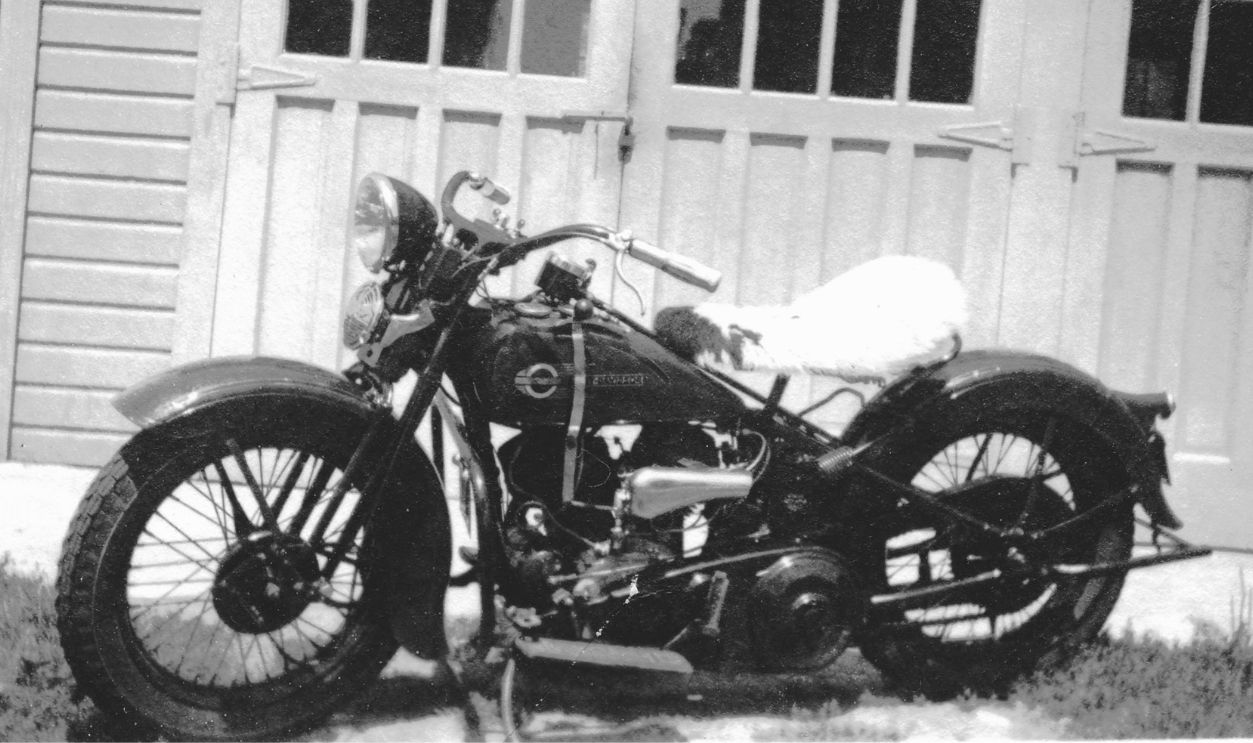
Momoa has also confirmed owning a 1937 Knucklehead chopper. It represents the second model year of Harley’s overhead-valve Big Twin, when the company was refining the ambitious design introduced one year earlier. Having examples from both years connects his collection to separate stages of the Knucklehead’s early development.
More Than A Factory-Correct Artifact
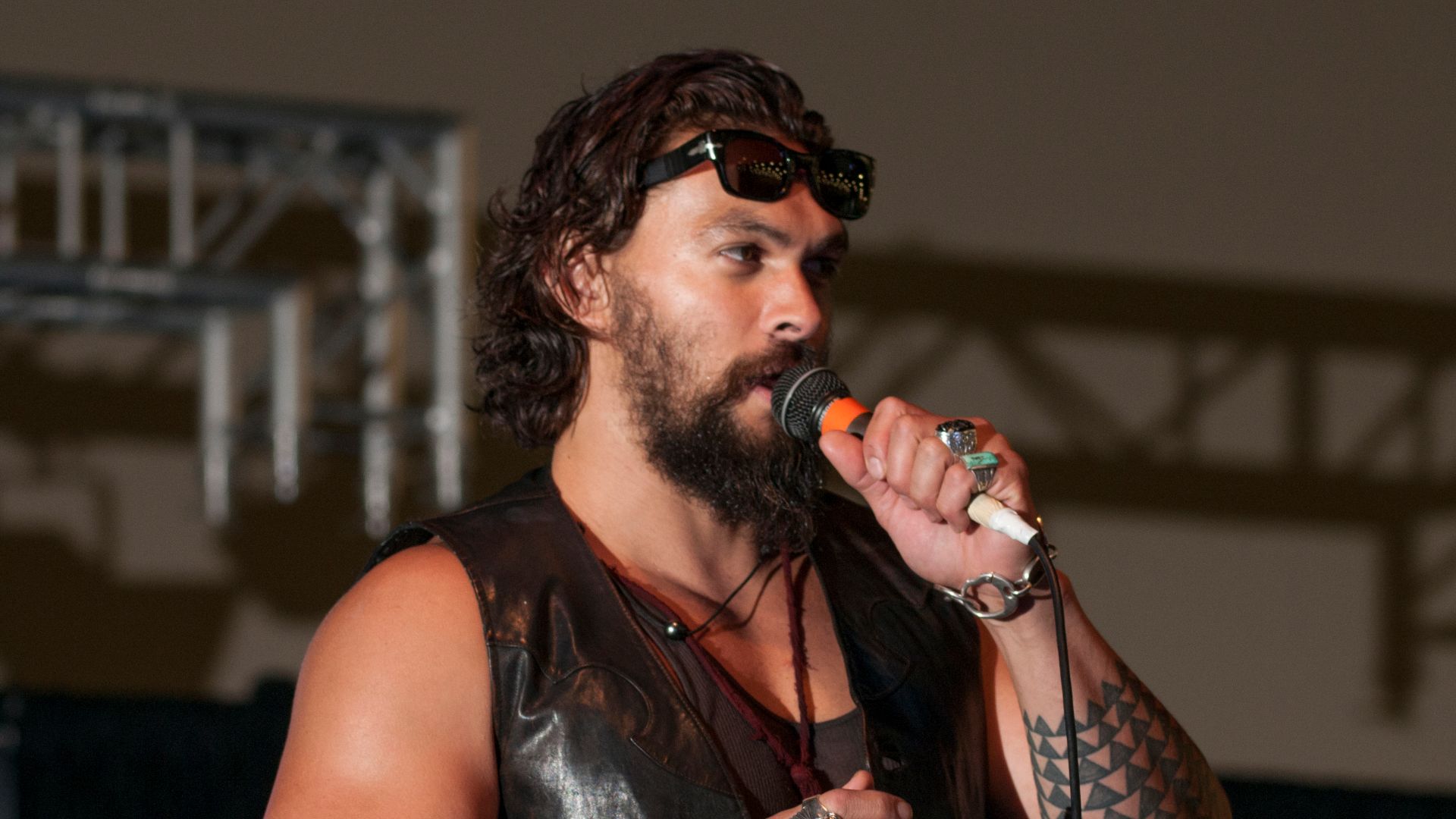
Momoa has referred to his 1936, 1937, and 1939 Knuckleheads as choppers. A chopper may combine vintage mechanical parts with a modified frame, altered bodywork, or components from different years, so these motorcycles should not automatically be treated as factory-correct survivors. His interest covers both Harley-Davidson history and the American custom-building tradition.
 Super Festivals, Wikimedia Commons
1939 Harley-Davidson Knucklehead
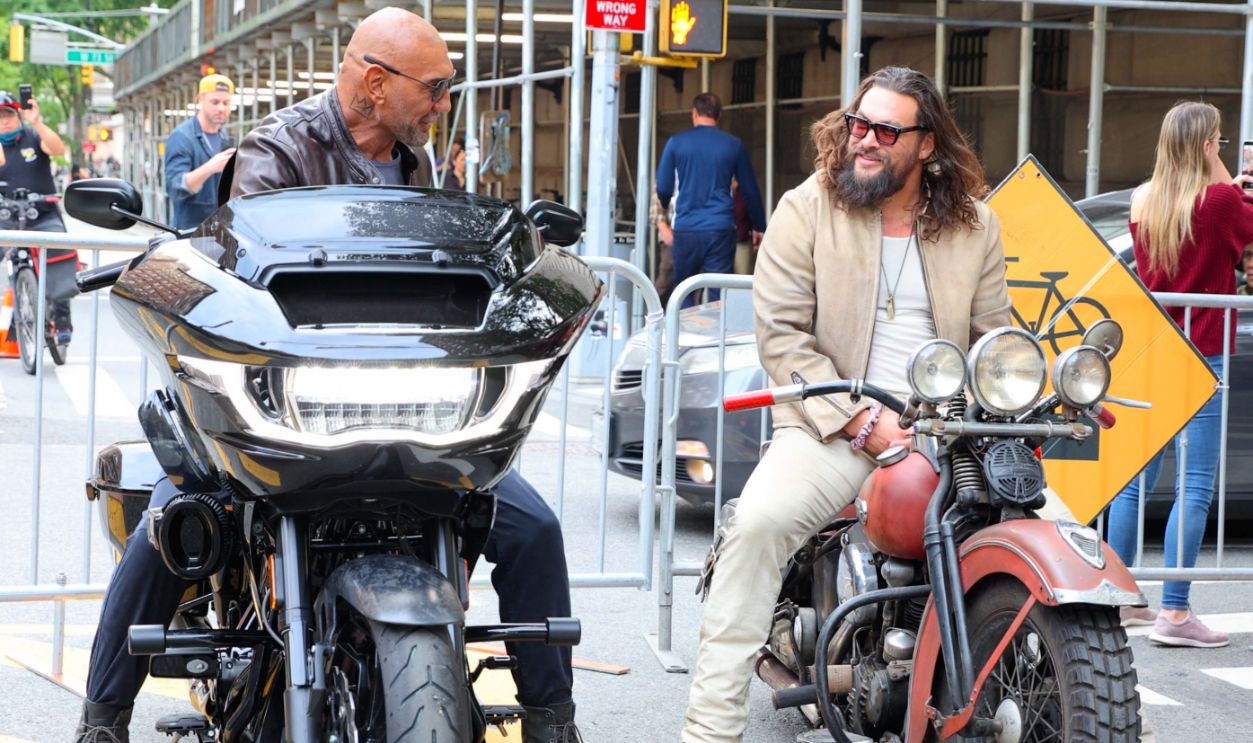
The third Knucklehead year specifically documented in Momoa’s collection is 1939. By then, Harley-Davidson had spent several seasons improving the overhead-valve engine introduced in 1936. The motorcycle sits naturally between his earliest Knuckleheads and the postwar Panhead that began his personal Harley story.
 Jose Perez/Bauer-Griffin, Getty Images
Three Years Show An Evolving Obsession
Factory 1939 Knuckleheads belonged to Harley’s striking prewar design period, when the Art Deco-inspired Comet tank emblem was still used. Momoa’s motorcycle has been described as a chopper, so its present configuration should not be assumed to match an untouched 1939 model. Together, his 1936, 1937, and 1939 machines reveal a deep interest in the Knucklehead engine family and its custom potential.
 https://www.flickr.com/photos/greg2600/, Wikimedia Commons
1956 Harley-Davidson Panhead
Momoa’s 1956 Harley-Davidson Panhead, known as Mabel, was the first motorcycle he purchased. He bought it at 19 while working on Baywatch Hawaii, after saving money while living with his father and borrowing his father’s car. Momoa later named the Harley after his grandmother.
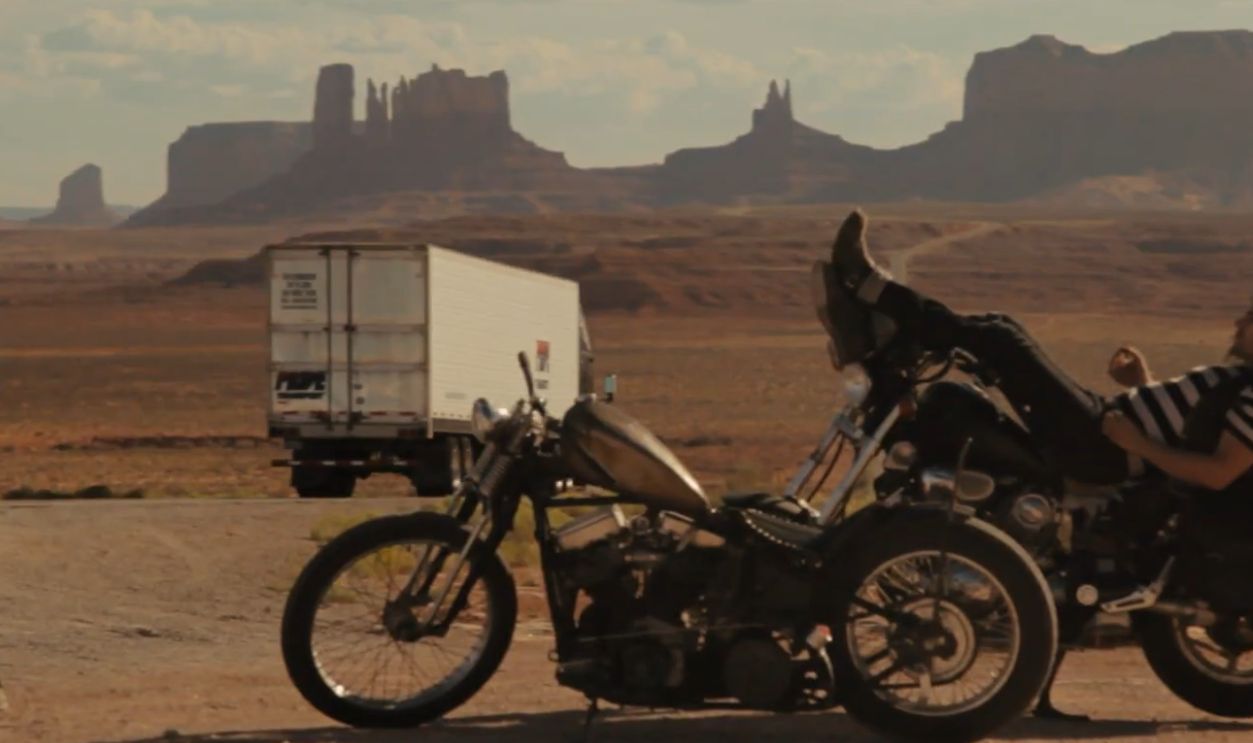 Screenshot from Road to Paloma, Anchor Bay Entertainment (2014)
Mabel Became A Movie Star
Mabel combines a 1956 Panhead with a 1948 front end, bringing together parts from two Harley-Davidson eras. Momoa featured the motorcycle in his 2014 film Road to Paloma and has ridden it from the West Coast to the Midwest. Of all the machines in his collection, Mabel remains the one most closely connected to the beginning of his life as a rider.
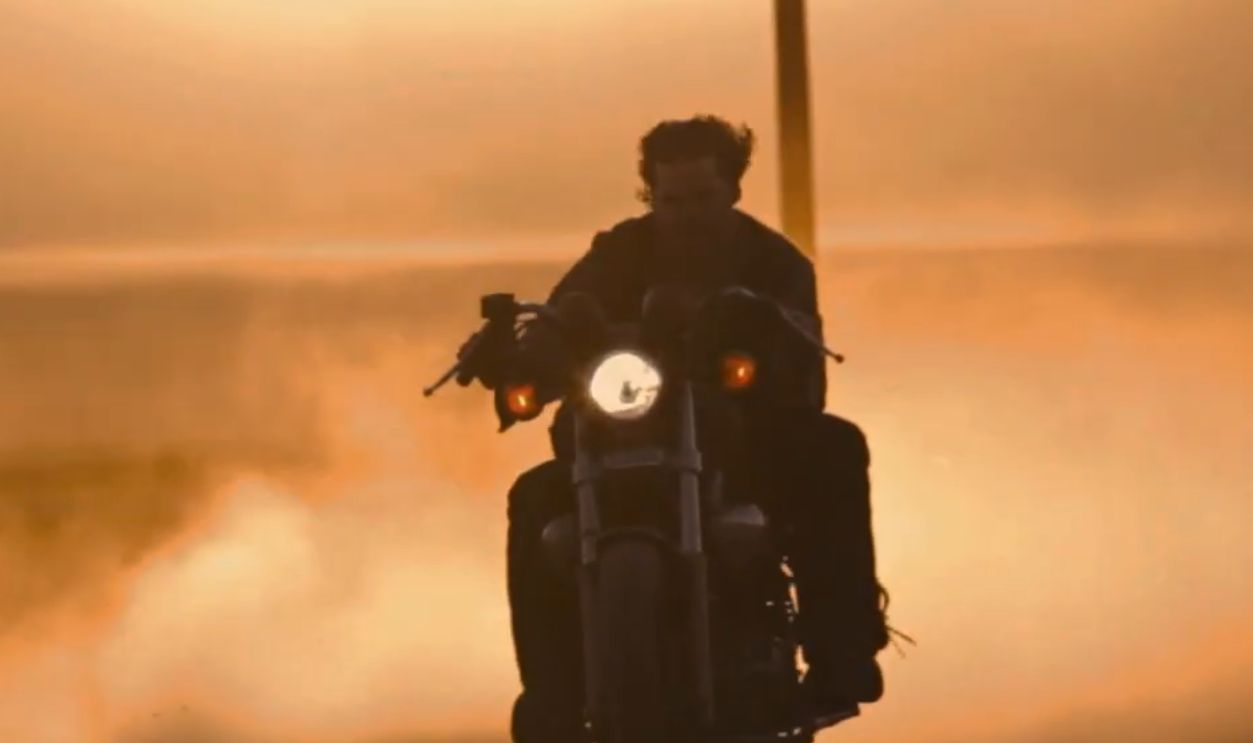 Screenshot from Road to Paloma, Anchor Bay Entertainment (2014)
Six Survivors From The World War II Era
Momoa assembled six survivor-condition Harley-Davidsons from the World War II era. The collection includes a 1941 TA, 1943 FL, 1943 EL, 1944 E, 1944 U, and a 1941 EL that was later transformed into a 1949 service truck. Together, they document a period when Harley-Davidson’s civilian production was increasingly restricted by America’s wartime manufacturing demands.
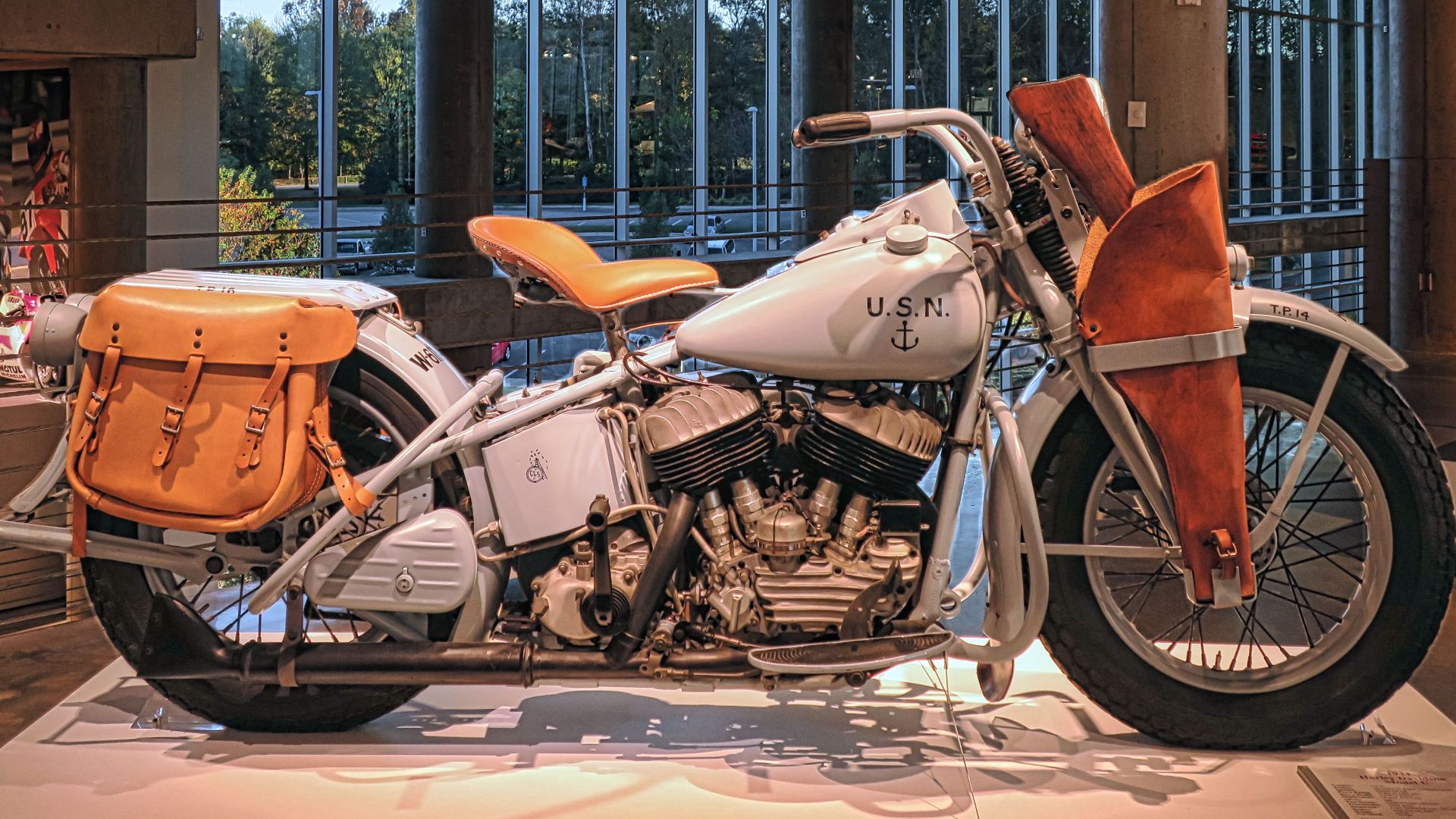
Their Scars Tell The Story
Rather than seeking fully restored showpieces, Momoa pursued motorcycles that retained their faded paint, worn controls, and accumulated patina. Each machine carries visible evidence of the roads it traveled and the people who used it. That emphasis on preservation closely matches his appreciation for the original finish on his Brough Superior and low-mileage 1927 JD.
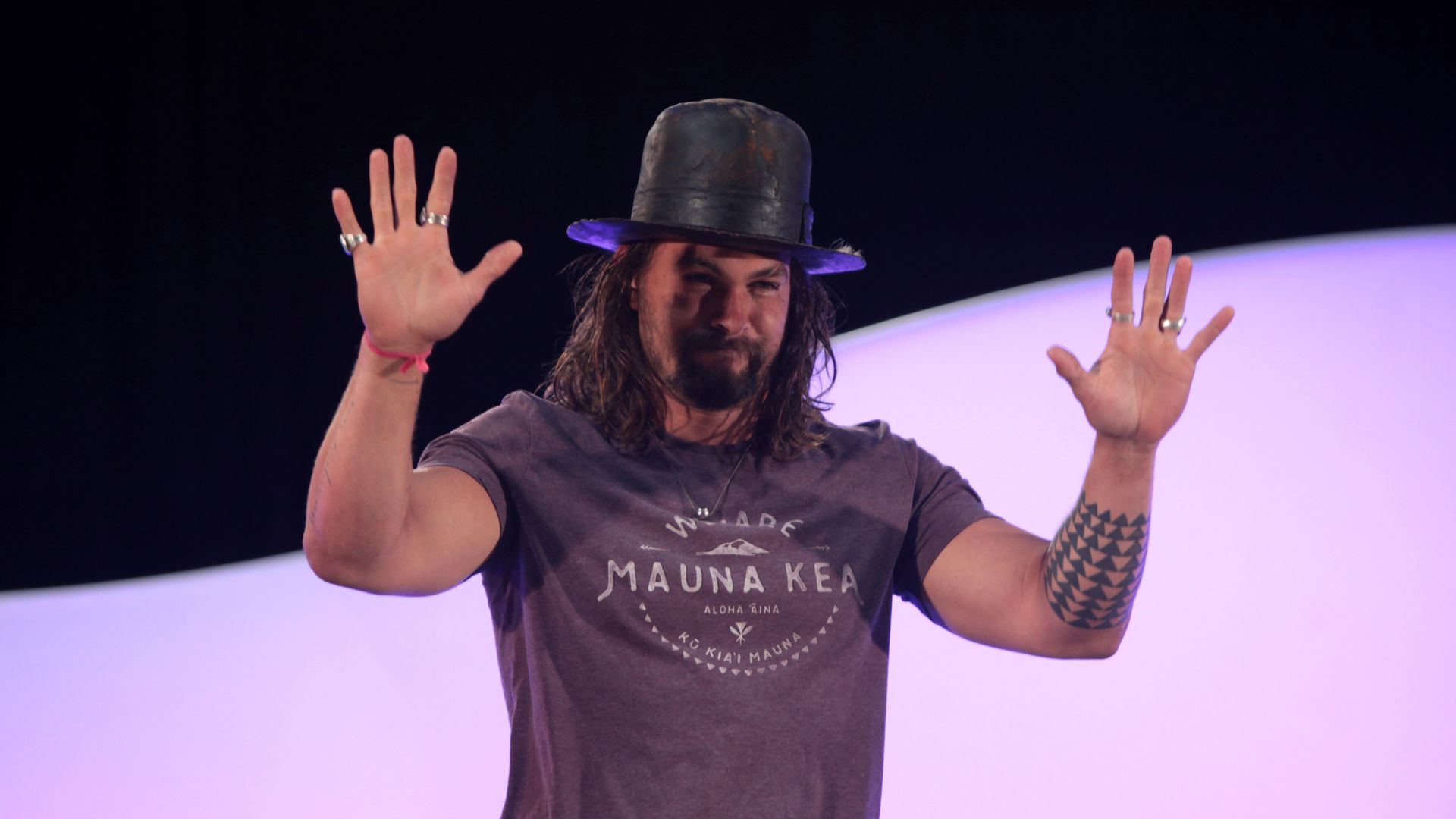 Gage Skidmore from Surprise, AZ, United States of America, Wikimedia Commons
The Survivors Enter The Museum
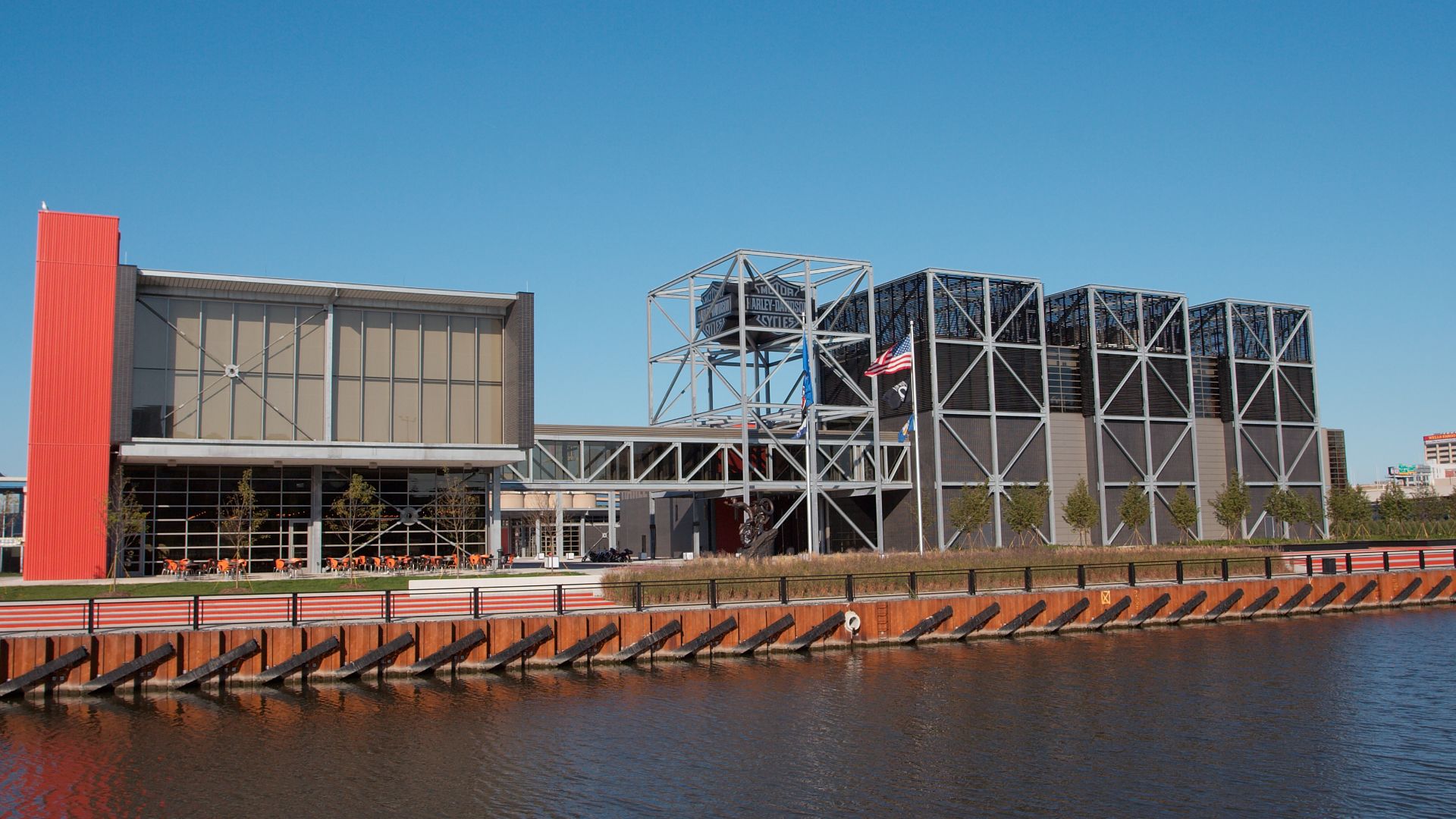
Momoa loaned all six motorcycles to the Harley-Davidson Museum for its Survivors: WWII-Era Collection exhibition. The display opened in June 2026 and is scheduled to remain at the museum through June 2027. It explores Harley-Davidson’s wartime history, the changing availability of civilian motorcycles, and the difference between preservation and complete restoration.
His Collection Refuses To Stay In One Era
Momoa’s oldest motorcycles demand hand controls, mechanical knowledge, and plenty of planning, but his enthusiasm is not limited to century-old machinery. He has also embraced electric performance and modern adventure riding. That range shows that craftsmanship and riding experience matter more to him than any single technology or period.
 steve cranston, Wikimedia Commons
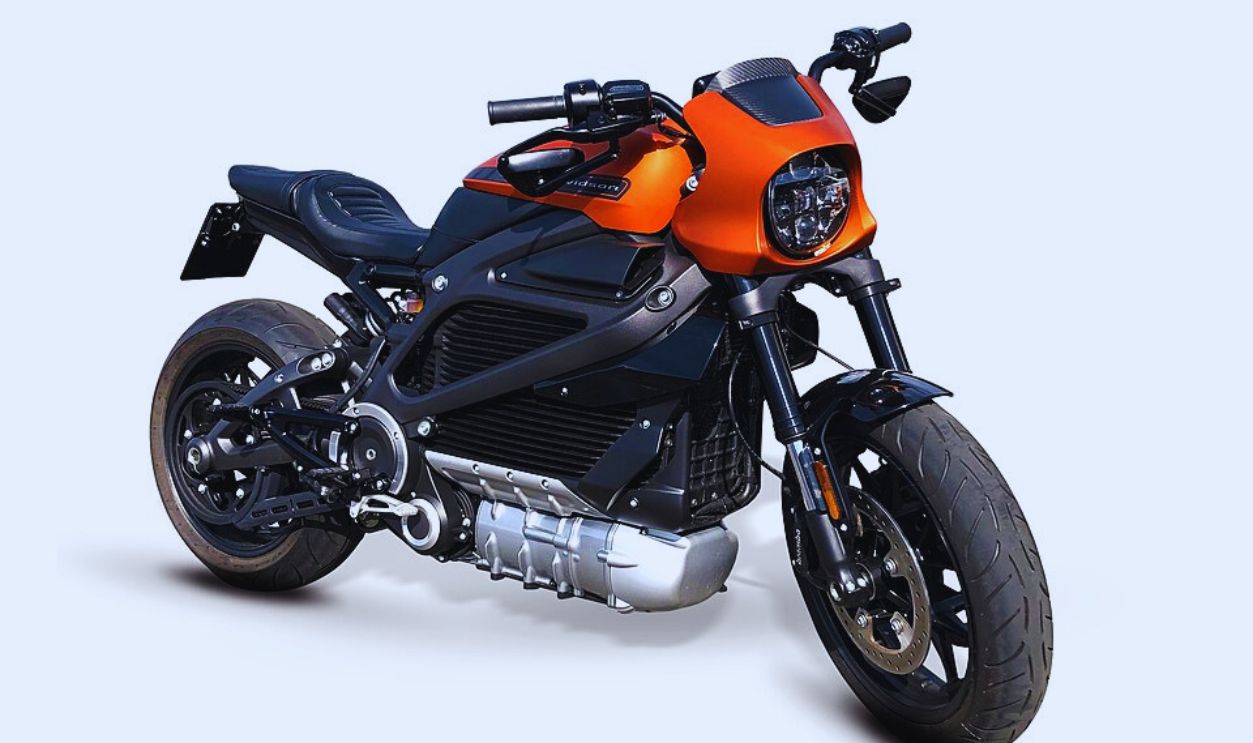
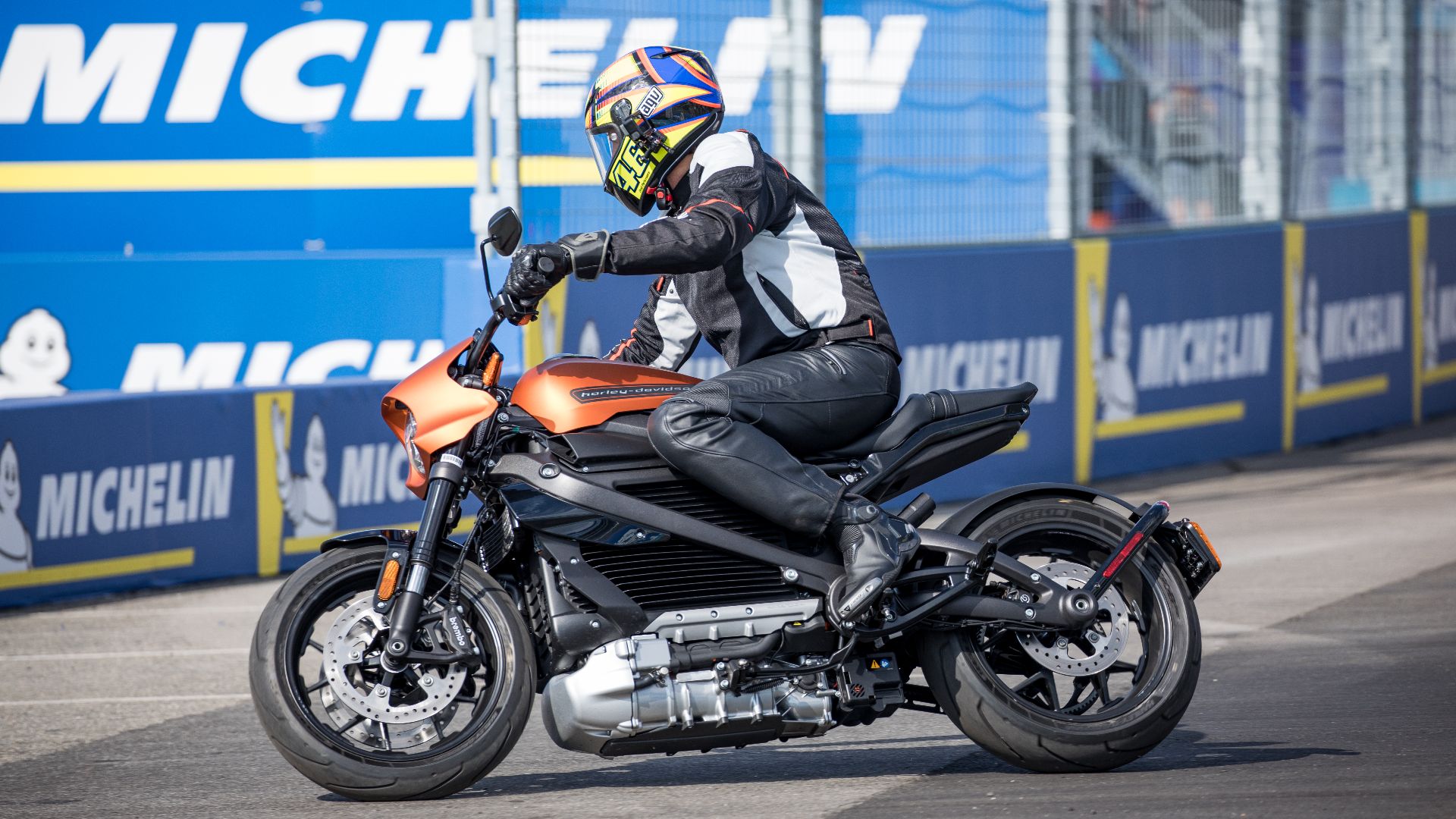
2020 Harley-Davidson LiveWire
Momoa’s collection has also included a 2020 Harley-Davidson LiveWire, the company’s first production electric motorcycle. The LiveWire traded the familiar rumble and manual transmission of his vintage Harleys for immediate electric acceleration and a nearly silent powertrain. It represented a dramatically different kind of performance inside his otherwise history-heavy collection.
 Auge=mit, CC BY-SA 3.0, Wikimedia Commons
Electric Power Wins Over The Skeptics
Momoa said he placed deeply committed traditional motorcyclists on the LiveWire and watched them return smiling. He praised its ability to accelerate toward 100 mph in only a few seconds and described electric riding as an entirely different sport. His enthusiasm for the LiveWire also anticipated the electric and hybrid conversions later performed on his vintage vehicles.
2021 Harley-Davidson Pan America 1250
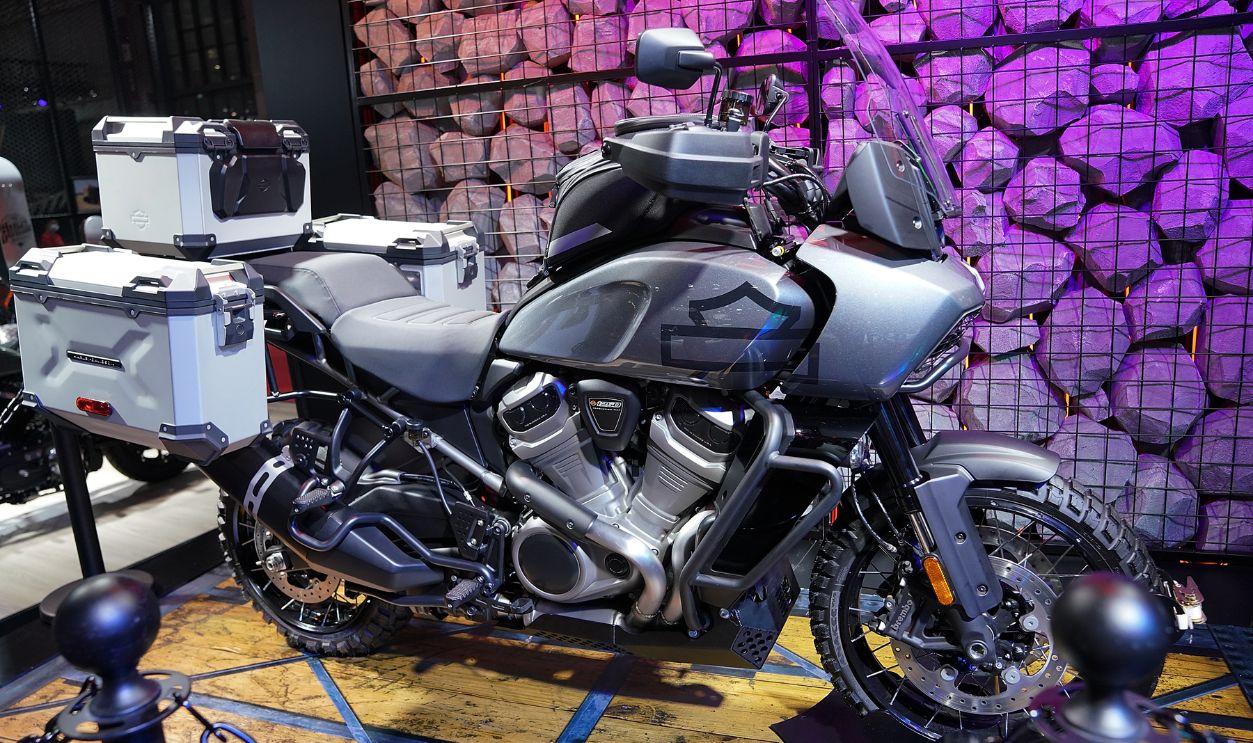
Momoa’s modern collection has also included a 2021 Harley-Davidson Pan America 1250 adventure motorcycle. Introduced as Harley-Davidson’s entry into the adventure-touring category, it paired a 1,250cc liquid-cooled Revolution Max V-twin with equipment intended for paved roads and off-road travel. Momoa partnered with Harley-Davidson during the motorcycle’s launch after receiving an early opportunity to ride it.
A Harley Built For Bigger Adventures
Momoa said the Pan America allowed him to combine his passion for Harley-Davidson with his love of outdoor exploration. He called it the best adventure-touring motorcycle he had ridden and praised its ability to travel beyond conventional roads. Unlike his rigid-frame classics, it gave him a modern Harley designed for long journeys, variable terrain, and remote destinations.
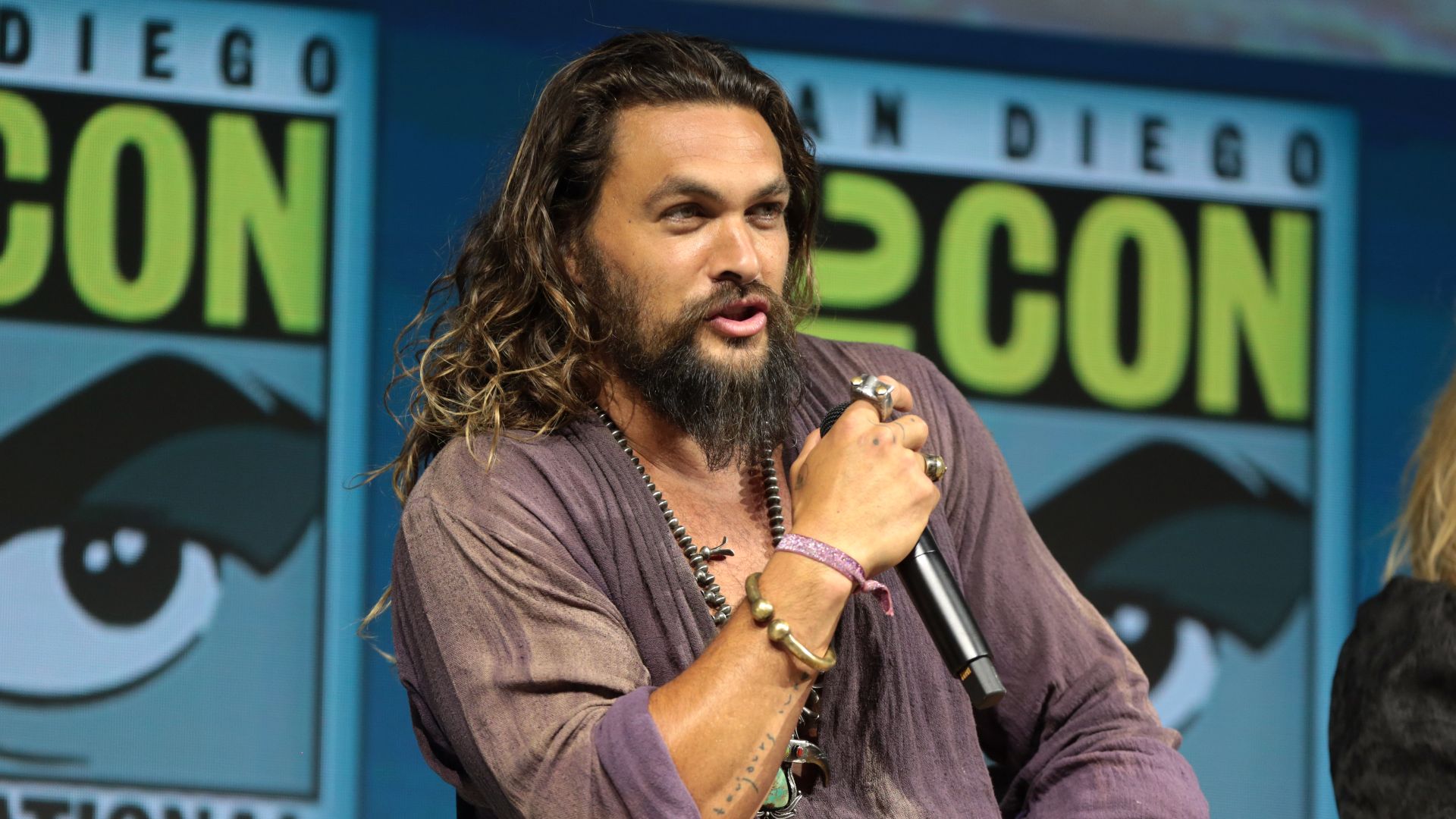 Gage Skidmore from Peoria, AZ, United States of America, Wikimedia Commons
The Collection Was Made To Move
From Mabel and the early F-head Harleys to the LiveWire and Pan America, Momoa’s collection consistently balances history with use. He appreciates original paint and important engineering, yet he also works with builders who can return dormant motorcycles to the road or adapt them to new technology. The result is a collection defined by craftsmanship, mechanical history, and the belief that motorcycles should still have adventures ahead.
You May Also Like:
The Rarest Muscle Cars In Wrestling Legend Bill Goldberg’s Collection—Ranked
Inside Rock Legend Eric Clapton's Incredible Ferrari Collection
The 25 Greatest Bikes In Billy Joel’s Legendary Motorcycle Collection