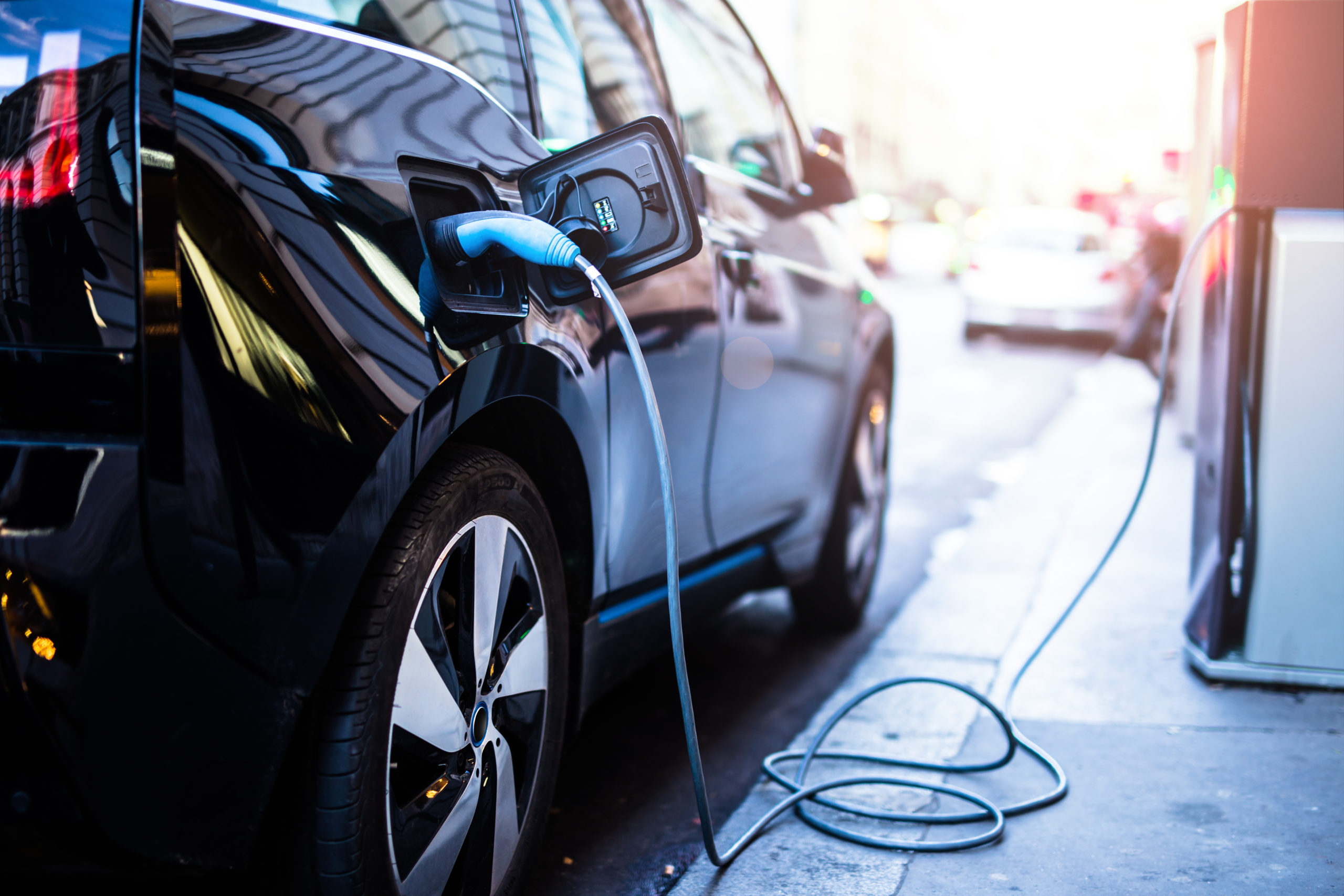
I Love My EV—But Not My Neighbor’s Charging Habits
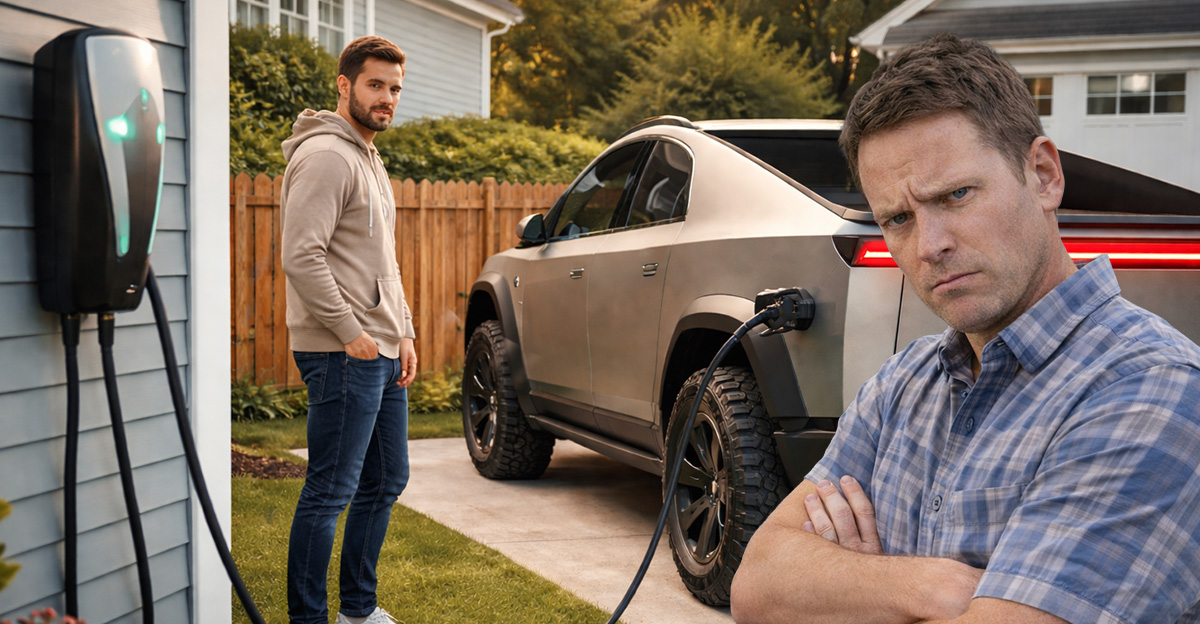
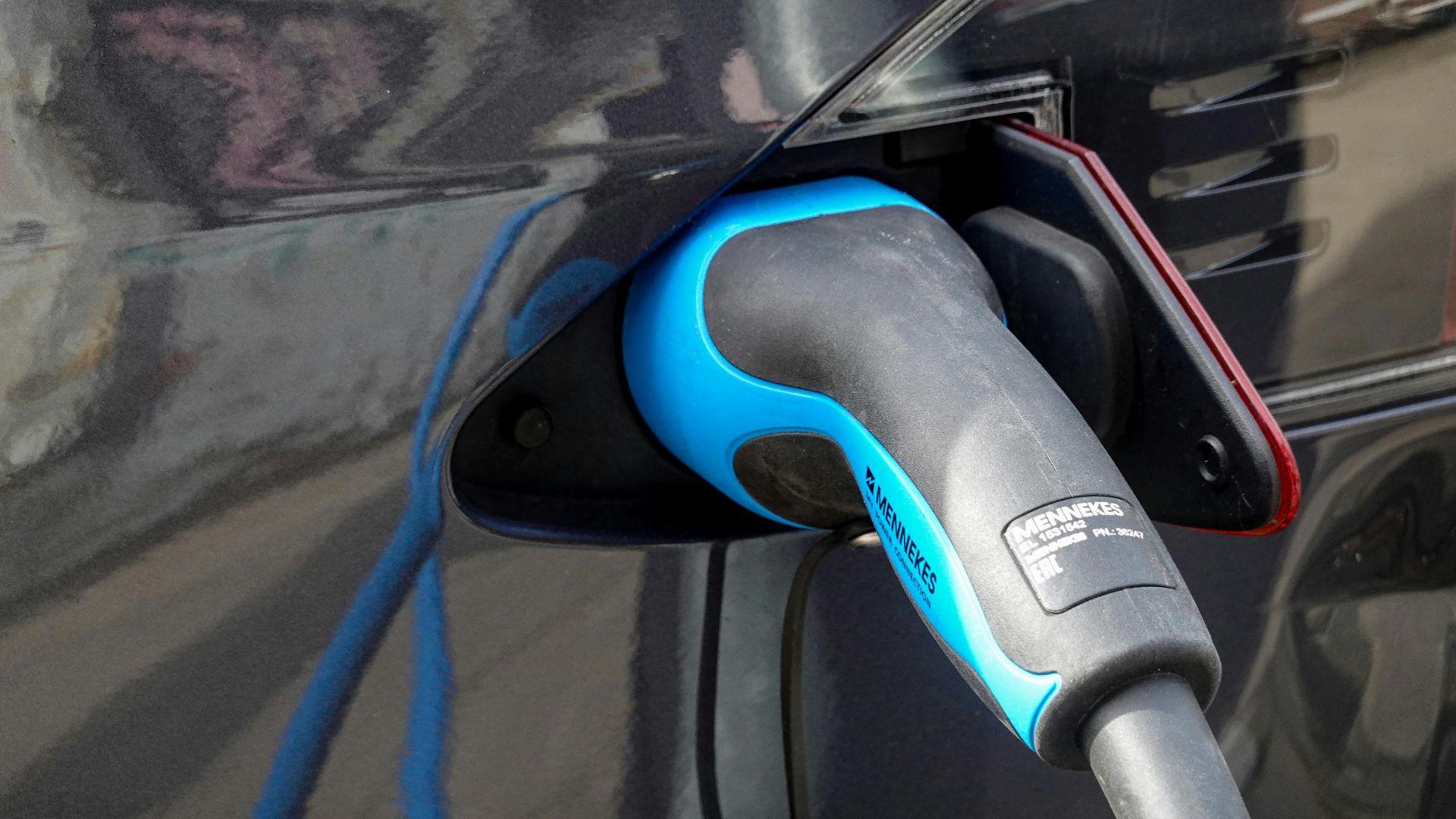
You did the responsible, eco-friendly thing and bought a compact EV. You installed a home charger. You pat yourself on the back every time you skip the gas station. Then one day, you glance outside and see your neighbor’s massive Cybertruck plugged into your charger like it pays rent. At first, you assume it’s a one-time emergency. Then your electric bill arrives. It’s not an emergency—it’s a pattern. And it’s costing you hundreds. So what can you actually do about it?
When Goodwill Turns Into A Utility Bill
Let’s be honest: most of us want to be good neighbors. Maybe he asked once, and you said yes. Maybe he didn’t ask at all, and you didn’t notice right away. But electricity isn’t free, and Level 2 home chargers can deliver serious power. What feels like a casual favor can quietly turn into a recurring expense—one you never agreed to subsidize.
Why Charging A Cybertruck Isn’t Cheap
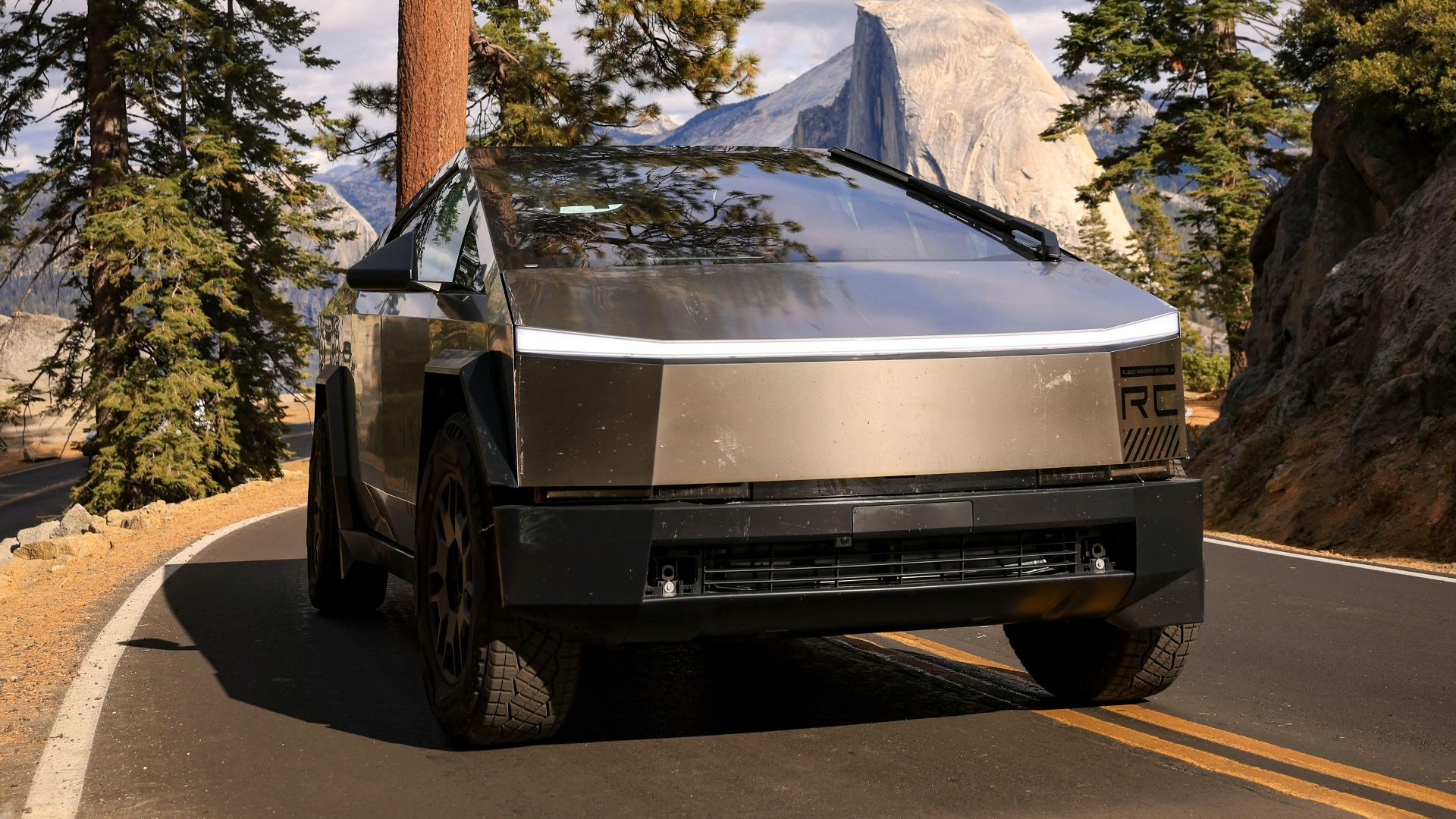
Here’s the uncomfortable math. A compact EV might have a 40–60 kWh battery. A Cybertruck? Depending on the model, it can easily be 120 kWh or more. If your electricity rate is $0.20 per kWh, a full charge on that beast could cost $24 or more. Multiply that by a few charging sessions a week, and suddenly your “neighborly kindness” is funding someone else’s commute.
Check Your Electric Bill For Clues
Before confronting anyone, confirm what’s actually happening. Compare recent electric bills to previous months. Many utility providers offer usage breakdowns by day or hour through online dashboards. If you see spikes that line up with when the Cybertruck is plugged in, you’ve got data—not just suspicion.

Review Your Charger’s App Data
Most modern home chargers come with companion apps that track charging sessions, energy delivered, and timestamps. This data can show exactly how much electricity has been used—and when. If your neighbor has been plugging in regularly, the charger’s history may provide a neat, itemized record of just how generous you’ve been.

Start With A Calm Conversation
Before you escalate, talk. It’s awkward, but it’s necessary. Keep it factual and non-accusatory: “Hey, I’ve noticed my electricity bill has jumped quite a bit when your truck charges here. It’s adding up to hundreds. We need to figure something out.” You’re not attacking—you’re addressing a shared reality.

Decide What Outcome You Want
Do you want him to stop entirely? Or are you open to him paying his share? Be clear in your own mind first. It’s easier to negotiate when you know your preferred solution. There’s a big difference between “please don’t use it anymore” and “I’m happy to share if you cover the cost.”

Calculate What He Owes
If you’re open to reimbursement, do the math. Pull charger data and multiply kWh used by your electricity rate. Present a simple breakdown. “Over the last month, your charging used 380 kWh at $0.22 per kWh, which is about $83.” Concrete numbers reduce drama and increase clarity.

Set Up A Payment Arrangement
If he agrees to pay, decide how. Monthly Venmo? Zelle after each charge? A flat monthly estimate? Simplicity is key. You don’t want to become your neighbor’s accountant. Some chargers even allow you to assign costs per kWh and track totals automatically.

Lock Your Charger With A PIN
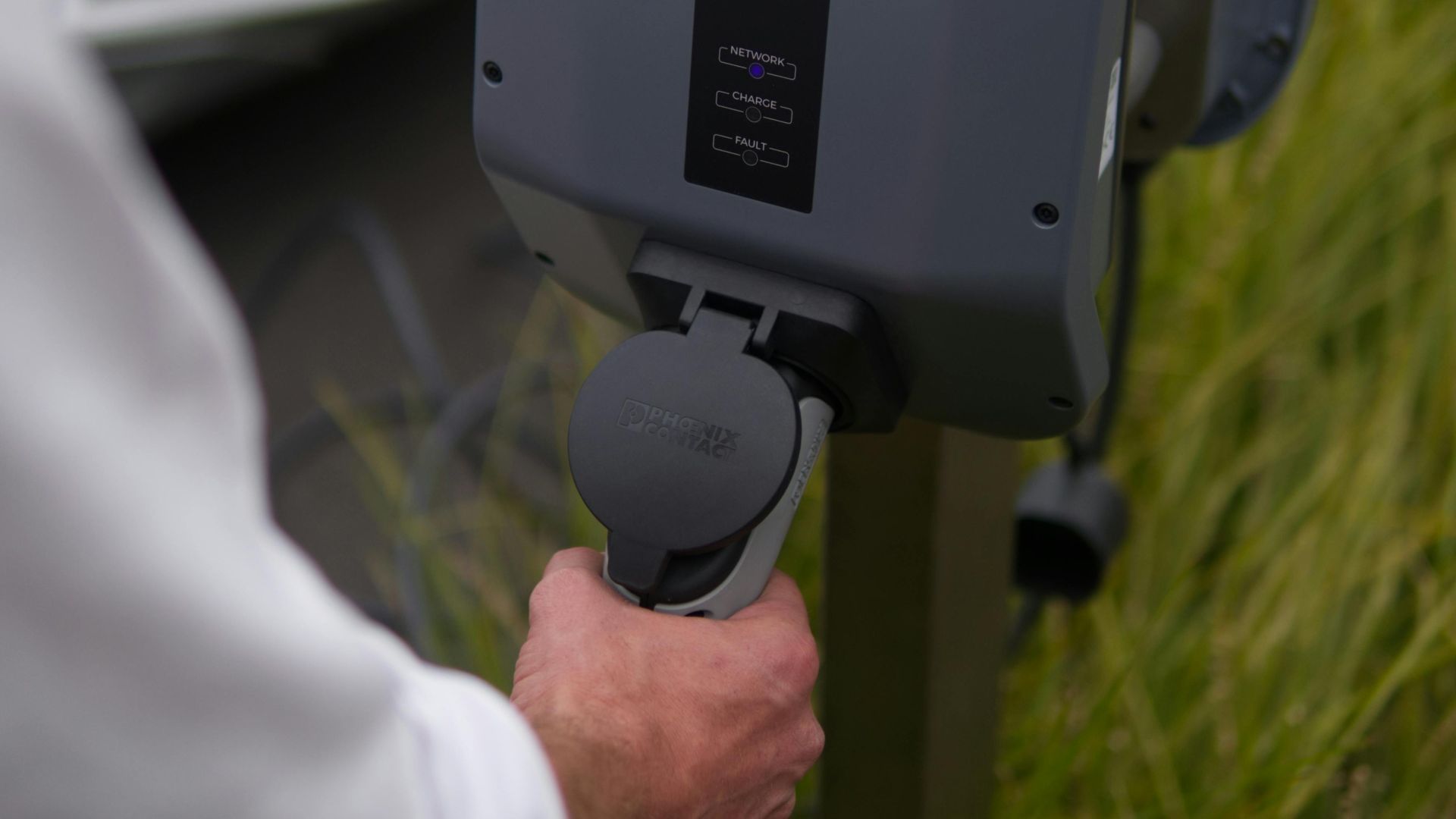
Many home chargers allow you to restrict access through a PIN code or RFID card. If you’d prefer to end the free-for-all entirely, enable these features. It’s not rude—it’s practical. Think of it like locking your Wi-Fi. You’re protecting your resource.

Schedule Charging Hours
Some chargers allow you to schedule when they’re active. If you disable charging during hours when you’re not home, you reduce the opportunity for unauthorized use. It’s a subtle but effective boundary-setting tool.

Consider Installing A Physical Lock
If your charger doesn’t have digital security, you can install a lockable enclosure or even remove the charging cable when not in use. It may feel extreme, but so does paying someone else’s fueling costs.
Know The Legal Landscape
Electricity theft—yes, that’s what unauthorized use can become—is illegal in many jurisdictions. If someone is using your power without permission, that may qualify as utility theft. Laws vary, but knowing your rights gives you leverage if the conversation turns sour.

Check HOA Or Property Rules
If you live in a community with an HOA or shared parking, there may be rules about EV charger use. Some associations require individual metering or prohibit using someone else’s dedicated outlet. It’s worth reviewing your governing documents.

Don’t Ignore Liability Issues
There’s another layer beyond money: liability. If something goes wrong while his vehicle is charging on your property—electrical malfunction, fire, damage—you could potentially be dragged into a messy situation. Limiting access protects not just your wallet, but your legal exposure.

Document Everything
If you suspect ongoing misuse, document dates, times, and energy usage. Take screenshots from your charger app. Keep copies of bills. You may never need them—but if things escalate, having records strengthens your position.

Avoid Passive-Aggressive Moves
Resist the urge to yank the plug mid-charge or post a snarky note on his windshield. It might feel satisfying in the moment, but it rarely leads to productive outcomes. Clear communication beats silent resentment every time.
When A Friendly Chat Doesn’t Work
If you’ve asked him to stop and he continues, you’ll need firmer action. Enable charger locks. Install physical barriers. If necessary, send a written request to cease using your electricity. It doesn’t have to be dramatic—just clear.

Small Claims Court Is An Option
If you’re out hundreds and he refuses to reimburse you, small claims court may be viable. With documented energy usage and bills, you may be able to recover costs. It’s not neighborly—but neither is freeloading.

Talk To Your Utility Company
Some utilities offer separate EV metering or time-of-use plans that can reduce your overall charging costs. While this won’t solve the neighbor problem directly, it may cushion the financial hit if sharing continues temporarily.

Install A Dedicated Meter
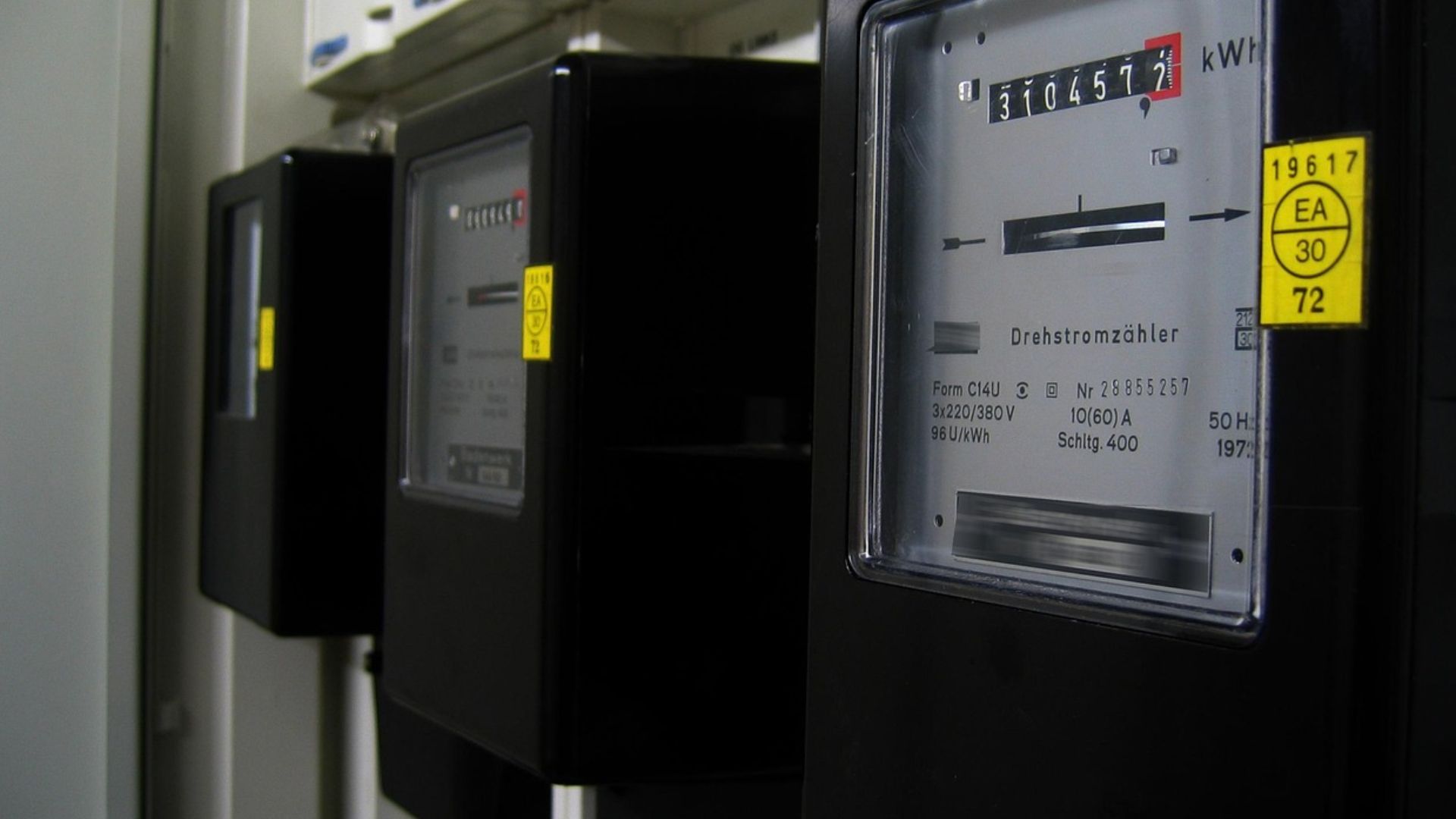
If sharing becomes formal, consider installing a submeter that tracks only the charger’s consumption. This makes billing transparent and avoids disputes. It’s an upfront expense but may preserve the relationship long-term.
Reflect On Boundaries
Sometimes this situation reveals something bigger: difficulty saying no. It’s okay to help someone once. It’s not okay to feel taken advantage of. Healthy financial boundaries are part of being a responsible adult—just like paying your own electric bill.

The Hidden Cost Of Being “Nice”
Many financial leaks start with small favors—co-signing loans, covering dinners, sharing subscriptions. They feel minor until they snowball. Your charger isn’t just a plug; it’s a reminder that resources cost money, even when they’re invisible.

Protecting Your Investment
Your home charger wasn’t free. Your EV wasn’t free. Your electricity certainly isn’t free. Protecting those investments doesn’t make you stingy—it makes you financially aware. And awareness is the foundation of smart money management.
Turning Conflict Into Cooperation
Handled well, this could actually improve the relationship. You might agree on a fair payment plan. He might install his own charger after realizing the cost. Clear expectations can turn tension into mutual respect.

What Not To Do
Don’t ignore it and hope it stops. Don’t secretly stew while bills pile up. Don’t assume he understands the cost difference between your compact EV and his power-hungry truck. Silence is expensive.

The Bottom Line
You bought a compact EV to save money and reduce your carbon footprint—not to bankroll someone else’s electric behemoth. Whether you choose reimbursement, restrictions, or a hard stop, the solution starts with clarity and boundaries. A charger is a utility, not a community freebie. And the sooner you treat it that way, the sooner your electric bill—and your sanity—will return to normal.
You May Also Like:
Car-Free Cities Seem Impossible To Americans—But From New York To Paris, The Car Era Is Ending
They're Called Hypercars For A Reason—The Fastest Production Vehicles Ever Released