What's The Catch?
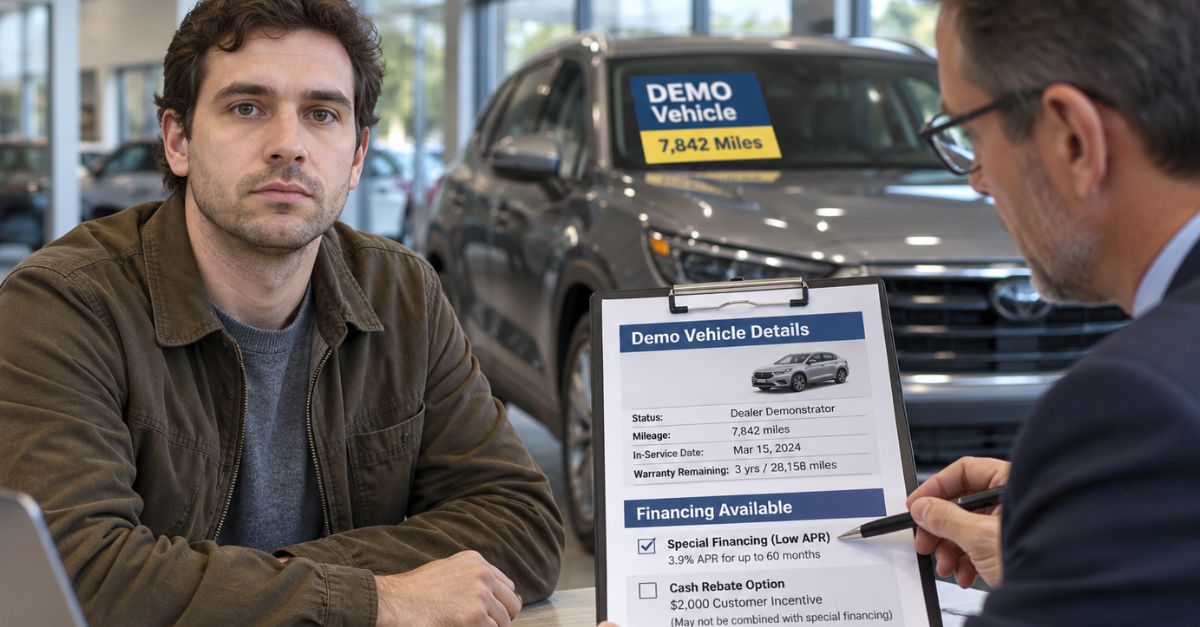
New-car financing on a demo car can sound pretty tempting. You get a much lower price than a brand-new car, but the financing still comes in like a new-car deal. Sometimes that really is a bargain and sometimes it just sounds like one.
The difference really comes down to the fine print, the warranty start date—and how much those miles knock off the price.
What A Demo Car Usually Means
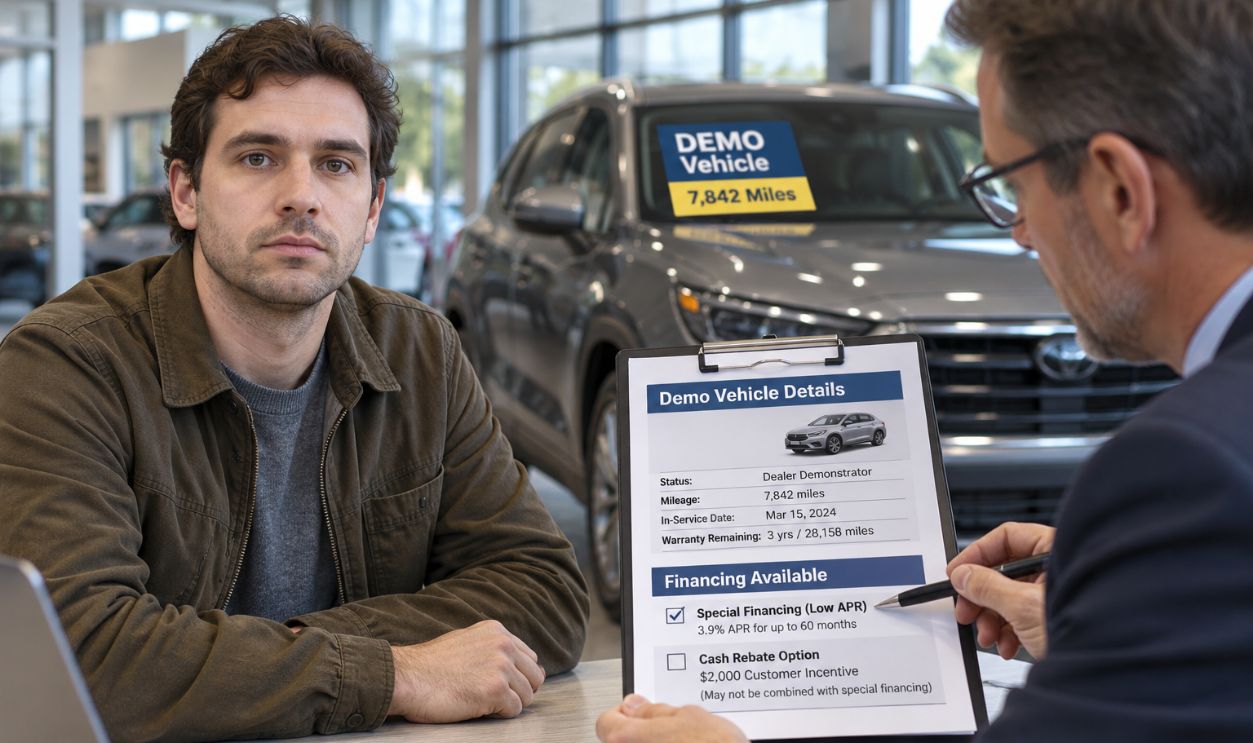
A demo car, short for demonstrator, is usually a vehicle the dealership used for test drives, manager use, or display purposes. It has not been titled to a retail buyer, which is why it can sometimes still be sold as new. Consumer Reports says a demo may count as new if it has never been titled, even if it has picked up a fair amount of mileage.

Why The Financing Pitch Sounds So Good
New-car financing often comes with lower rates than used-car financing. That matters because even a small rate gap can add up to hundreds or thousands of dollars over the life of the loan. If a demo qualifies for new-car financing, the dealer is leading with one of the strongest selling points possible.
 Natthawadee Jana, Shutterstock
Thousands Of Miles Changes The Math
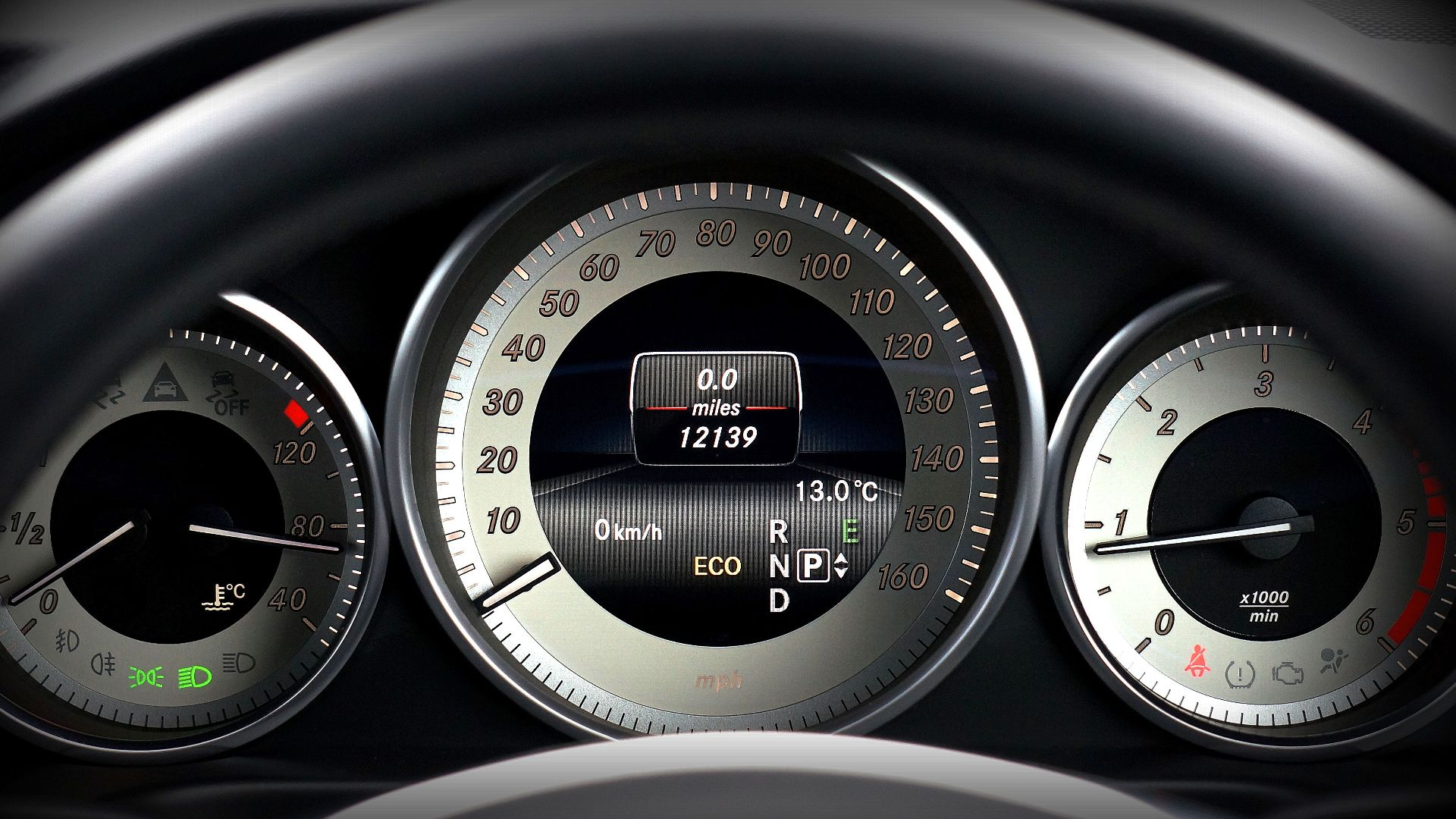
Here is the catch. Miles matter. Every extra mile on a demo cuts into the car’s remaining life and future resale value. Kelley Blue Book notes that demo cars can save you money, but the discount should match the mileage and wear.
New On Paper Does Not Mean New In Real Life
This is where a lot of buyers get thrown off. A demo can legally be sold as a new vehicle if it has never been titled, but that does not make it the same as a car with only delivery miles. It has already spent part of its life on the road, and the price should reflect that.

The First Big Question To Ask
Start by asking whether the car has ever been titled or registered to anyone outside the dealership. That is the key line between new and used in most real-world deals. If it has already been titled, it is generally a used car no matter what the salesperson calls it.

Warranty Timing Can Be A Sneaky Gotcha
One of the biggest details is when the warranty clock started. Consumer Reports warns buyers to check this because some demo cars have warranty coverage that began before the retail sale. If the in-service date started months ago, your “new” car may already have less warranty left than you expected.

Ask For The In-Service Date In Writing
Do not take a verbal answer and move on. Ask the dealer to show you the vehicle inquiry report or other manufacturer paperwork that lists the in-service date or warranty start date. If the car was put into service early, that lost coverage should show up as a lower price.

Federal Law Requires A Buyer’s Guide On Used Cars, Not Usually On New Demos
The Federal Trade Commission’s Used Car Rule requires a Buyer’s Guide on used vehicles sold by dealers. A demo sold as new usually will not have that used-car form because it has not been titled to a consumer. That means you have to be even more careful, because some of the usual used-car signals are not there.

Look Beyond The Monthly Payment
Dealers know a low interest rate gets attention fast. A nice monthly payment can distract you from the actual selling price of the car. Focus on the out-the-door price first, then look at the financing terms on their own.

How Much Discount Should You Expect
There is no set rule, but the discount should be real. J.D. Power says demo vehicles are often sold at a discount because they have already been used and have built up miles. If the savings are barely different from a truly new car, the deal probably is not strong enough.

Mileage Is Only Part Of The Wear Story
The odometer is not the whole story. Condition matters just as much. Test drives can mean cold starts, short trips, hard braking, and a long list of different drivers. A manager-driven demo may have had easier use, but you should not assume that until you inspect it closely.

Pay Extra Attention To Tires And Brakes
Tires and brakes can show wear even when the car still looks spotless. Thousands of miles of stop-and-go driving can wear those parts faster than steady highway miles. If the tires look worn or the brakes feel off, ask the dealer to replace them or cut the price.

Inspect The Interior Like It Is Already A Used Car
Open and close everything. Check the driver’s seat bolsters, steering wheel, touchscreen, cupholders, rear seats, and cargo area for wear. A fresh detail job can hide a lot at first glance, but scuffs and trim damage usually tell the real story.
 Hryshchyshen Serhii, Shutterstock
Paint Chips And Wheel Rash Matter More Than You Think
Cosmetic flaws hurt resale value and can cost real money to fix later. Walk around the car in daylight and look closely at the front bumper, hood, windshield, and wheels. If you are not getting a zero-mile car, you should not be paying zero-mile money.
 Volodymyr Dobrovolskyy, Unsplash
Ask About Incentives And Rebates By Name
Some demo cars qualify for the same factory incentives as new cars, while others do not. Incentives can change by model, region, and date, and they can also depend on whether the vehicle has already been put into service. Ask for a printed breakdown of every rebate, finance offer, and discount being applied.

Confirm Whether The Interest Rate Costs You Other Discounts
Special financing and cash rebates do not always go together. Sometimes buyers have to choose between a low APR and a cash incentive. The better deal depends on the price, your down payment, and how long you plan to carry the loan.

Get A Quote On A Truly New Car Too
This is one of the best ways to keep the numbers honest. Ask for the out-the-door price on the demo and on a comparable new car with only delivery miles. Sometimes the discount on the demo is so small that the fresh car ends up being the better buy once incentives are added in.

Compare Insurance Before You Sign
Insurance companies usually do not care much about the dealer’s sales pitch. They tend to rate the car based on the VIN, trim, repair costs, and your own profile, not on whether the dealer called it a demo. Still, it is smart to get a quote on the exact VIN because “new” does not always mean lower ownership costs.

Understand The Depreciation Hit
The moment you buy the demo, the market sees it as a used car. Future buyers will notice the earlier mileage and any early in-service date. That means the lower price today needs to be big enough to make up for the resale hit later.

Why A Vehicle History Report May Not Tell The Full Story
A vehicle history report can help, but it does not tell you everything with a demo car. If the car was never titled, the report may look perfectly clean even if it spent months being driven by staff or shoppers. Use the report as one tool, not as proof that the car had an easy life.

Ask Who Used The Car And How
This is one of the most useful questions you can ask. Was the car assigned to a sales manager, used as a service loaner, or taken out again and again for customer test drives? That answer can give you a much better read on whether the miles were fairly easy or especially rough.

Service Loaner And Demo Are Not Always The Same Thing
Some dealers blur the line between demos, executive cars, and service loaners. Those categories can carry different warranty, incentive, and registration issues depending on the manufacturer and state rules. Ask for exact language and paperwork, not broad sales labels.

Check Your State Paperwork Carefully
State rules on registration, titling, and taxes can affect how the car is classified and what fees you pay. Your paperwork should clearly show the vehicle’s status and mileage. If anything looks fuzzy, get it fixed before you sign.

Negotiate Like The Car Already Has A Story
A demo with several thousand miles is not a blank-slate new car. It has prior use, less tire life, some depreciation already baked in, and maybe even a shorter warranty window. Those are solid reasons to push for more than the first discount the dealer offers.

When It Really Is A Good Deal
A demo can be a smart buy when three things line up. It qualifies for favorable new-car financing, the discount is substantial, and the warranty coverage is still basically intact or clearly made up for in the price. When all three are there, the numbers can work in your favor.

When You Should Walk Away
Walk if the dealer cannot clearly explain the warranty start date, previous use, incentive eligibility, or how they set the price. Walk if the discount is small and the miles are high. Walk if the sales pitch keeps circling back to the APR while avoiding the out-the-door total.

The Bottom Line
Yes, a demo car with thousands of miles can still qualify for new-car financing, and sometimes even new-car incentives, if it has never been titled. That alone does not make it a bargain. It is only a real deal when the price, warranty, mileage, and condition all make sense together.