The Texts Start Almost Right Away
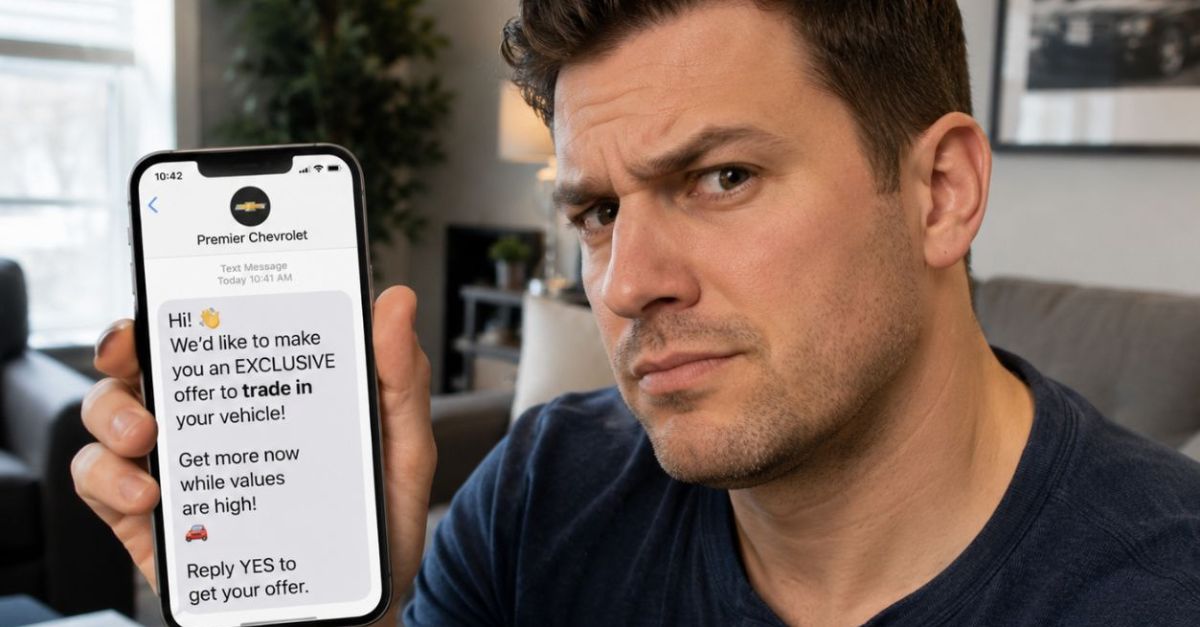
You buy a car, sign the papers, and finally relax. Then, not long after, your phone buzzes with a dealership text saying they want to buy your car back or move you into something newer. It feels strange, but it usually is not a sign of some hidden problem. But it is definitely a sales tactic, and a very common one.
What The Message Usually Says
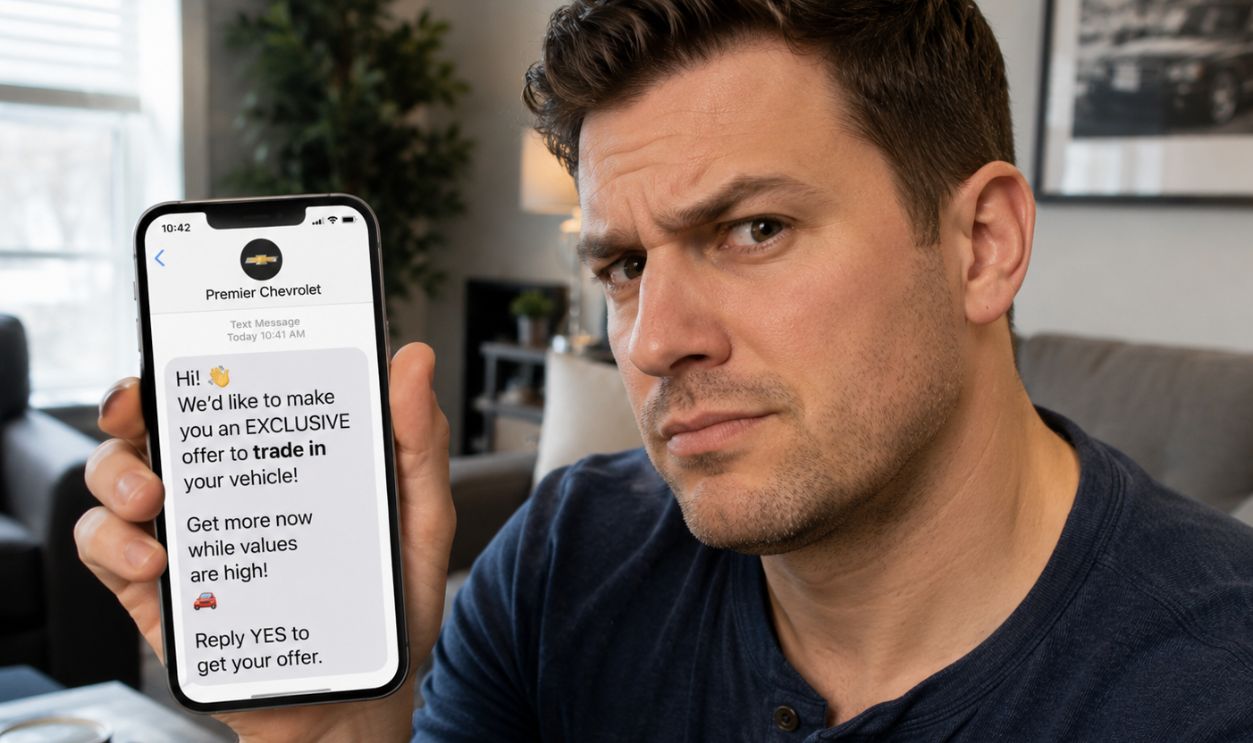
The wording is meant to sound personal and urgent. The dealer might say they have a buyer for your exact vehicle, that your trade is in high demand, or that you may be able to lower your payment by trading now. The point is to get you talking to the dealership again. The real goal is usually another sale, not doing you a favor.

The Main Reason Is Pretty Simple
Dealers need a steady supply of used cars and a steady stream of sales appointments. A recent buyer is one of the easiest people to contact because the dealership already has your phone number, your purchase details, and proof that you responded to sales outreach once before. That makes you a strong lead. In plain English, you are both a past customer and a likely future one.

Used Cars Became A Bigger Deal In Recent Years
This got especially intense during the inventory crunch after the pandemic began. In 2021, J.D. Power and LMC Automotive kept reporting tight new vehicle supply, while Cox Automotive tracked unusually strong used vehicle values. When used cars are worth more, dealers push harder for trade-ins. That pressure did not vanish overnight, even after the market started to shift.

The Inventory Shortage Changed Dealer Behavior
New car production took a hit starting in 2020 as factories shut down and later ran into semiconductor shortages. The result was fewer new cars on dealer lots through 2021 and into 2022. Cox Automotive and J.D. Power both reported lean inventory during that stretch. When new supply gets tight, dealers look harder at used cars because they still need something to sell.

Your Car Is A Data Point, Not A Mystery
When a dealership texts you, it is often reacting to market data, not to anything unusual about your specific loan or vehicle. Dealers can estimate your car's current wholesale and retail value using pricing tools and auction data. Cox Automotive, through Manheim and Kelley Blue Book, regularly publishes market reports dealers watch closely. If your model is popular, the store sees an opening.

Trade-In Marketing Is Nothing New
This is not some new trick from the smartphone age. Dealers have long sent mailers, emails, and made phone calls telling owners they can get into a new vehicle with similar payments. The text message is just the modern version. It feels more intrusive because it lands right on your phone and often sounds oddly specific.

Why Recent Buyers Get Targeted
A recent buyer has something dealers really want: a known vehicle and a known payment history. The store has a rough idea of what you owe, what you bought, and whether you financed it. It also knows you completed a deal recently, which makes you more likely than a random stranger to respond. That makes recent buyers prime targets for upgrade and equity campaigns.

The Hook Is Usually Your Monthly Payment
Many dealership texts steer the conversation toward your monthly payment, not the total cost. That is on purpose. A dealer can make a newer car seem affordable by stretching the loan term, changing the down payment, or rolling negative equity into the next loan. The Federal Trade Commission has repeatedly warned buyers to focus on the full deal, not just the monthly number.

Sometimes There Really Is Positive Equity
There are cases where the message is not completely empty. If you bought before values rose, made a big down payment, or chose a model with especially strong resale value, you might have equity sooner than expected. Kelley Blue Book and Edmunds both explain that trade-in equity happens when your car is worth more than your loan payoff. Even then, that does not automatically mean trading now is a smart move.

Negative Equity Is The Bigger Danger
For many buyers, especially soon after purchase, the more likely situation is negative equity. That means you owe more than the car is worth. Consumer Financial Protection Bureau guidance on auto loans warns that rolling old debt into a new loan can leave people paying for a car they no longer own. That is where a flattering trade-in text can get expensive fast.

Dealers Also Want Your Used Car On Their Lot
If your car is a clean, late-model used vehicle, it may be exactly what the dealership wants to resell on its own lot. Used cars can bring strong profit opportunities through financing, add-ons, and the gap between what the dealer pays and what it sells for after reconditioning. So the store may truly want your vehicle. The catch is that wanting your car does not mean they are offering you a great deal for it.

The Message May Be Automated
A lot of these texts are generated by customer relationship management systems, not by a manager sitting at a desk thinking about your exact car. Dealerships use CRM and equity-mining software to spot owners who might be ready for another transaction. That is why the outreach can sound personal while really being mass marketing. It is targeted, but it is often automated.

What Equity Mining Means
Equity mining is the industry term for finding customers who may be able to trade into another vehicle. The idea is simple. Software compares estimated trade value, loan balance, and current incentives to find people who might be persuaded to buy again. The pitch is framed as convenience or savings, but the dealership is also mining its own customer list for more business.

The Pandemic Supercharged The Pitch
In 2021 and 2022, stories about sky-high used car values made these messages sound more believable than ever. Manheim's Used Vehicle Value Index hit record territory during that period, and the headlines followed. Some owners really could sell for surprisingly high prices. Dealers knew that and pushed even harder for trade-ins and upgrades.
But The Market Did Not Stay There
Used car prices later cooled from their peak, even if they stayed high compared with pre-pandemic norms. Cox Automotive tracked that shift through the Manheim index and other market reports. That matters because an old text strategy can keep circulating even after the numbers change. A message that made sense in one stretch of the market may be much less convincing now.

Urgency Is Part Of The Script
Watch for phrases like limited-time appraisal, shortage of your model, or immediate buyer demand. These are classic urgency cues. Sometimes they reflect a dealership's sales goals for the month more than any real shortage of your exact vehicle. End of the month, end of the quarter, and holiday sales periods are especially common times for aggressive outreach.

What The Dealer Gets If You Respond
If you answer the text, the dealership gets another shot to sell a vehicle, arrange financing, sell a warranty or other products, and take in your current car. That is several possible profit opportunities from one conversation. Even if all they get is your visit for an appraisal, that still has value to them. The message is marketing because it works often enough.

Could It Ever Be Worth Listening
Yes, but only if you treat it like any other car deal and run the numbers carefully. If your needs changed, your current car no longer fits, or incentives on another model are unusually strong, a trade might make sense. You should check your payoff amount, your vehicle's trade-in and private-party value, and the out-the-door price of the replacement. Without those numbers, you are negotiating in the dark.

Start With Your Loan Payoff
Before answering any trade pitch, find out exactly what you still owe. Your lender can give you a current payoff quote, which may be a little different from the principal balance because of interest timing and fees. Compare that number with real-world estimates from sources like Kelley Blue Book and Edmunds. That will tell you whether you have equity or a shortfall.

Check More Than One Value Source
No single trade estimate tells the whole story. Look at Kelley Blue Book, Edmunds, and, if possible, real instant offers or local listings for similar vehicles. Condition, mileage, trim, and region all matter. The more comparisons you make, the harder it is for a flattering text to pull you into a weak deal.

Do Not Get Distracted By Payment Talk
If the dealer quickly says they can keep your payment about the same, slow down. Similar monthly payments can hide a longer loan term, a higher total price, or rolled-in debt from your current loan. The FTC advises buyers to look at the total amount financed and all loan terms. That is where the real story is.

Watch For Rolled-In Debt
If you owe more than your car is worth, the dealership may offer to add that shortfall to your next loan. This is called rolling over negative equity. The CFPB warns that this can leave buyers upside down again on the replacement car. It is one of the fastest ways to stay stuck in expensive auto debt.

You Can Ask One Very Direct Question
If you want to cut through the sales pitch, ask the dealership to email a written breakdown. Request the trade allowance, payoff, amount of any negative equity, selling price of the new vehicle, fees, taxes, and financing terms. A serious store can lay out the structure clearly, even if final numbers depend on inspection and credit approval. If they dodge that request, that tells you plenty.

There Is Also A Privacy And Consent Side
Dealership marketing texts fall under broader consumer-protection rules for advertising and communications. The Federal Communications Commission and the FTC both offer guidance on unwanted marketing messages and how consumers can limit them. If you do not want the texts anymore, reply with the store's opt-out word if one is provided, such as STOP, and keep a screenshot. You can also ask to be removed from marketing lists directly.

When The Text Is Harmless And When It Is Not
Most of the time, the message is just a routine attempt to generate another deal. It becomes a problem when it nudges you into ignoring depreciation, loan balance, or total ownership cost. A new purchase usually brings fresh taxes, fees, and financing costs all over again. That can wipe out any supposed benefit very quickly.

The Real Answer
So what is really happening when your dealership keeps texting you trade-in offers right after you bought your car? Usually, the store wants inventory, another sale, and another chance to make money on financing and add-ons, and your data makes you an easy target for that pitch. The message may contain a grain of truth about market demand, but it is still advertising. Treat it as an invitation to do the math, not as proof that trading now is a smart move.