The Branch Came From Next Door. The Bill May Not
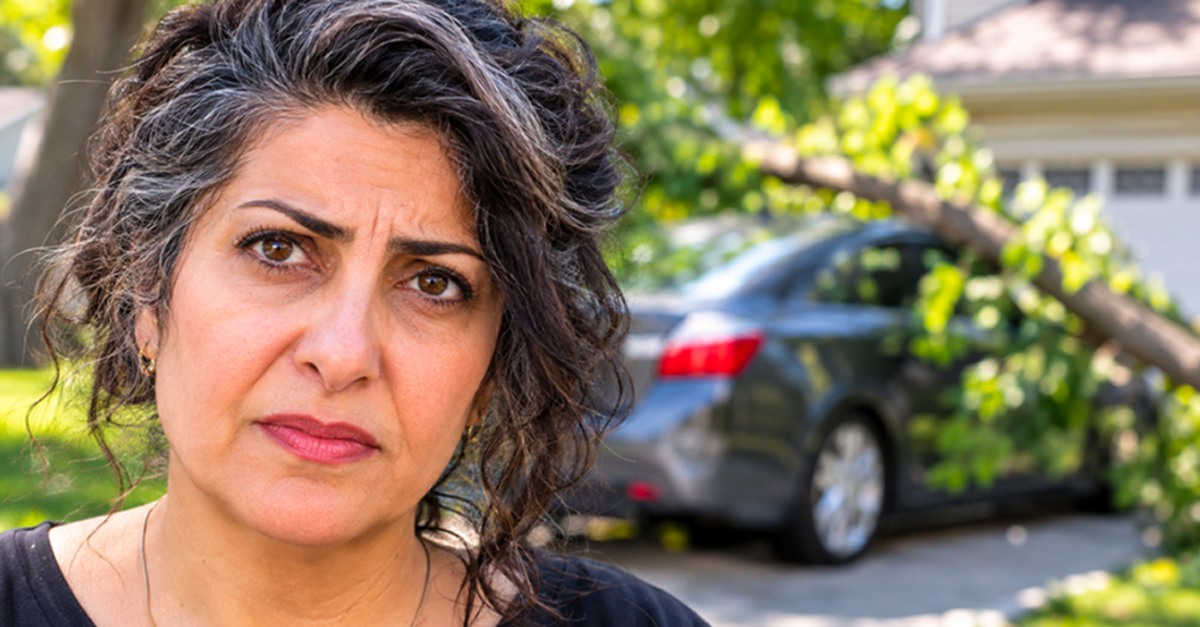
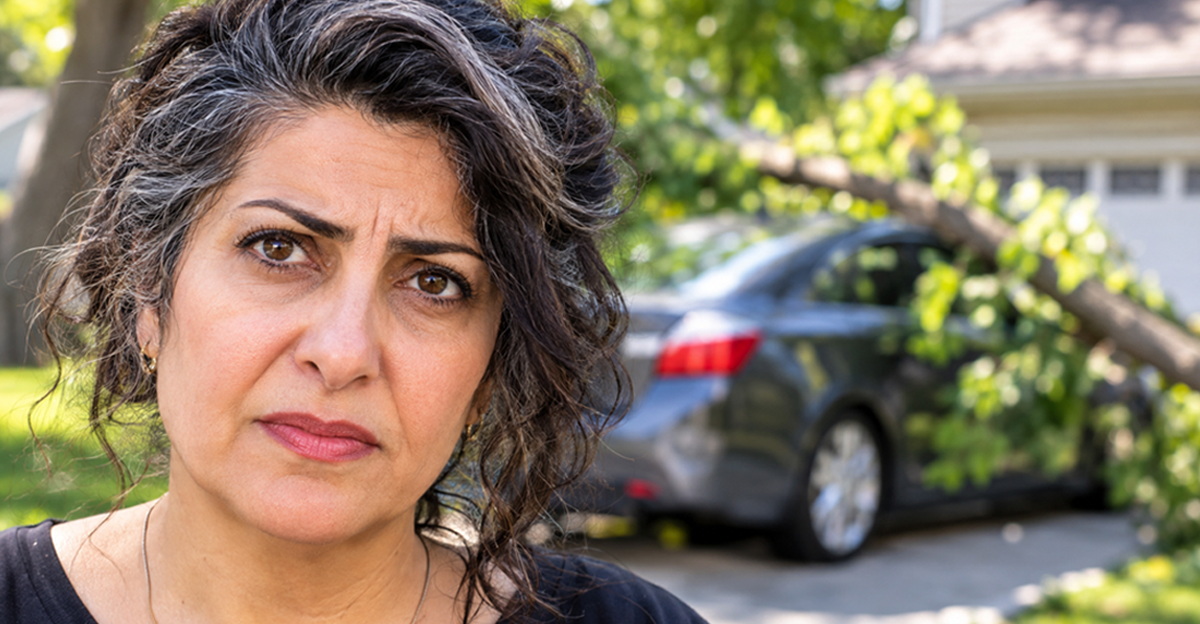
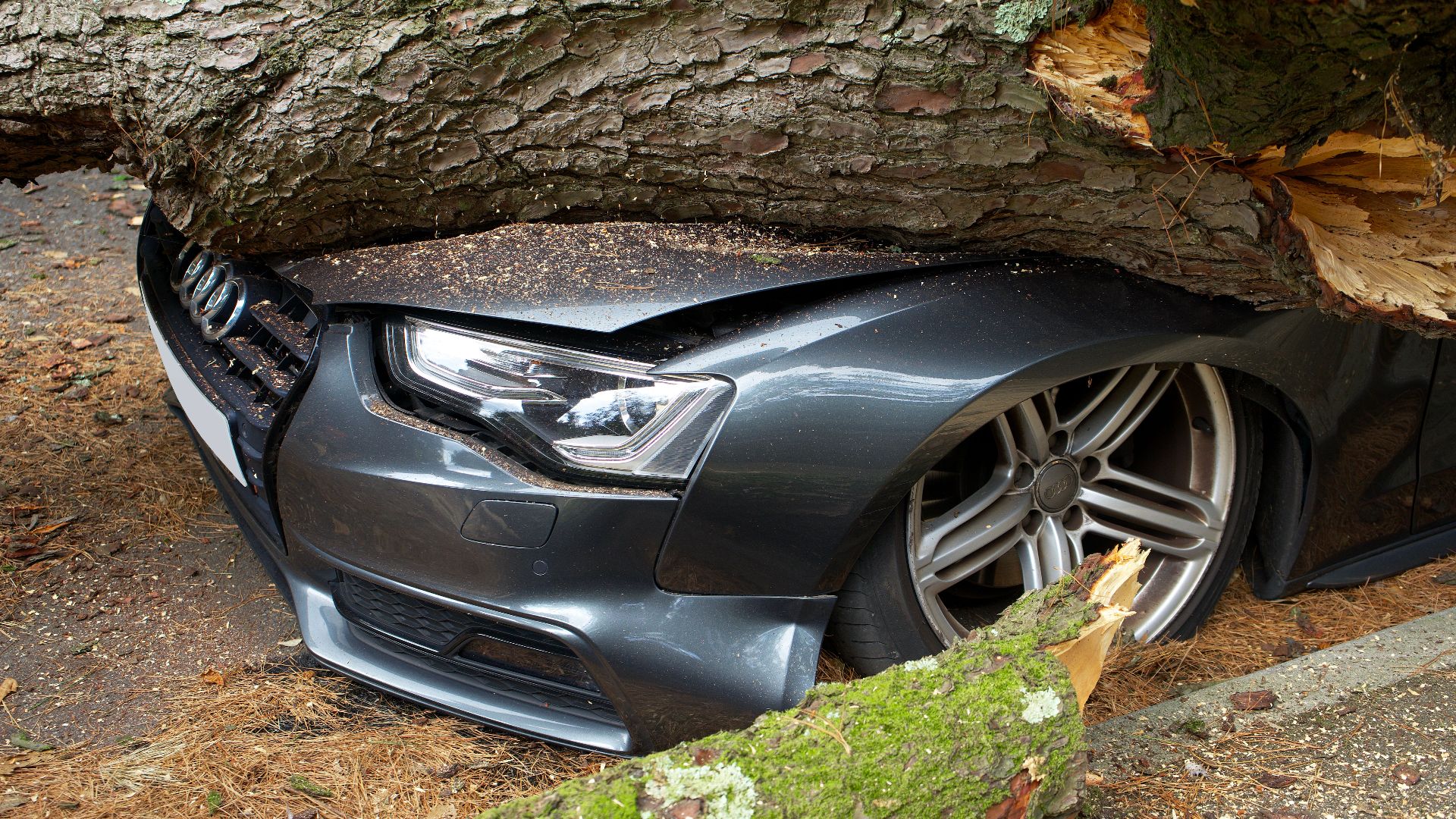
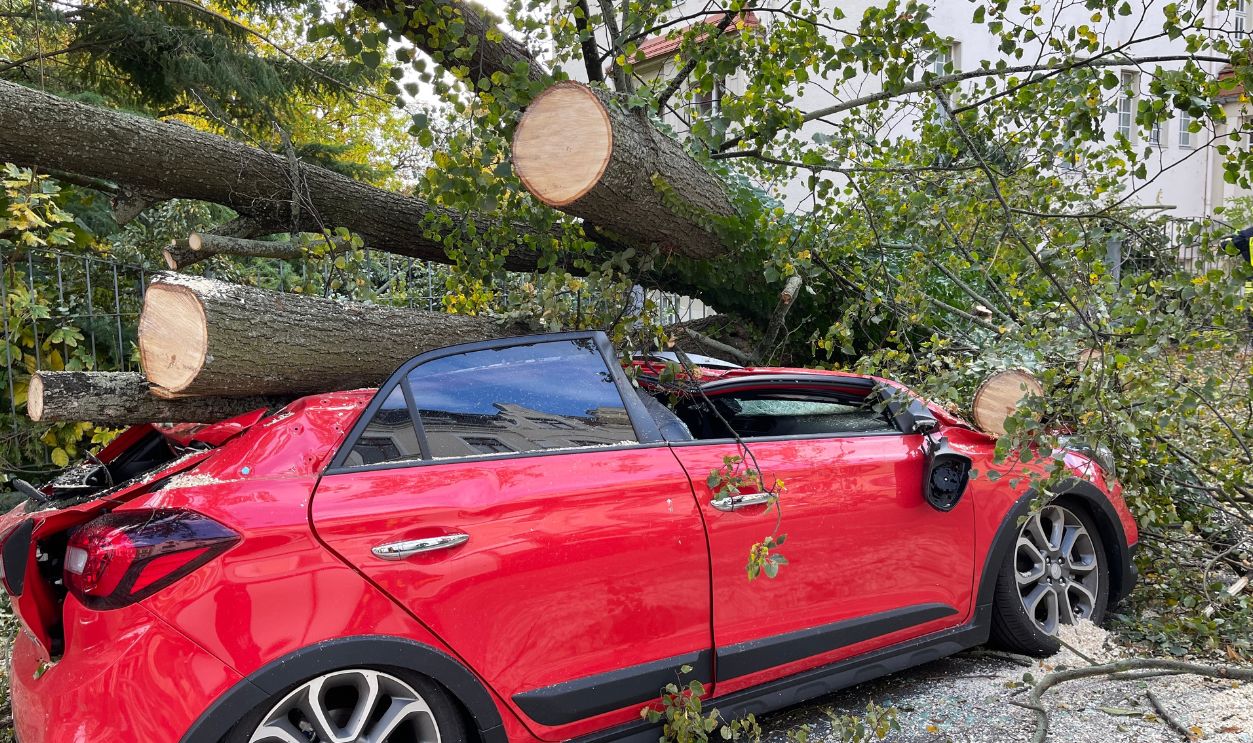
You walk outside after a storm and find a massive branch from your neighbor’s tree sitting on your car. The roof is crushed, the windshield is gone, and your first thought is probably that your neighbor has to pay. In many cases, however, responsibility doesn't work that way.
The Short Answer Depends On Why It Fell
If an apparently healthy tree loses a branch because of severe weather, the neighbor who owns it often is not automatically responsible for the damage. Your own comprehensive auto insurance may be the coverage that pays instead. The answer can change dramatically if the tree was already dangerous and the owner ignored obvious warning signs.
Tree Law Is Not Identical Everywhere
Property and negligence laws vary from state to state, so there is no single rule that resolves every fallen-tree dispute in America. Different states can apply different standards to tree-related property damage. Still, the condition of the tree and whether its owner acted reasonably are recurring issues in many jurisdictions.
First, Make Sure It Really Was Their Tree
Tree ownership generally follows the location of the trunk rather than where the branches happen to extend. If the trunk sits entirely on your neighbor’s land, the tree normally belongs to the neighbor. Trees whose trunks actually cross a boundary line can involve shared ownership and more complicated rules.
A Storm Does Not Automatically Make Your Neighbor Liable
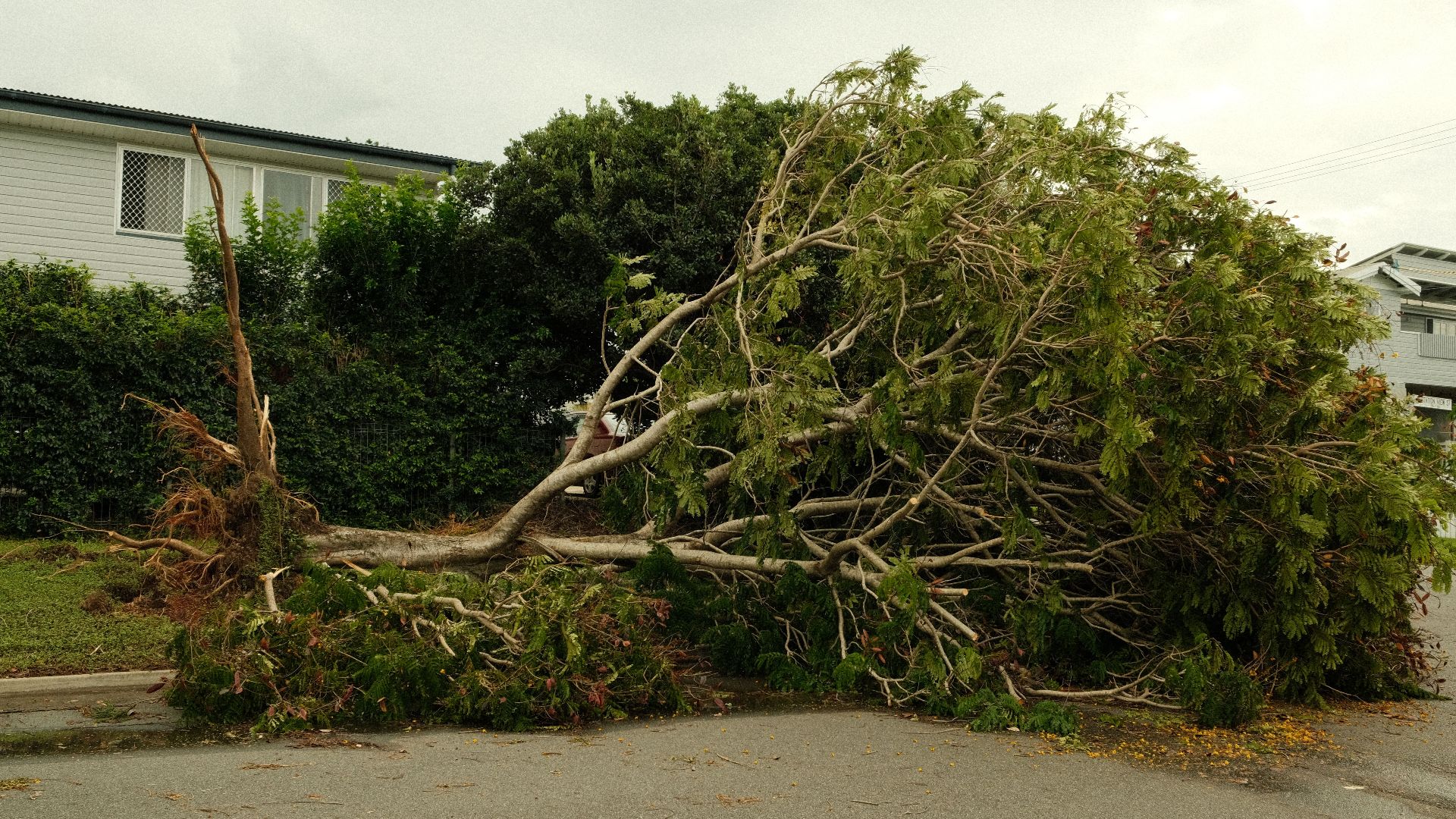
Wind, ice, and severe storms can bring down even a healthy tree or branch. If there was no reasonable warning that the tree was dangerous, the neighbor may not be considered negligent. The fact that the branch came from their property is not enough by itself to make them responsible for the damage.
Negligence Changes The Entire Situation
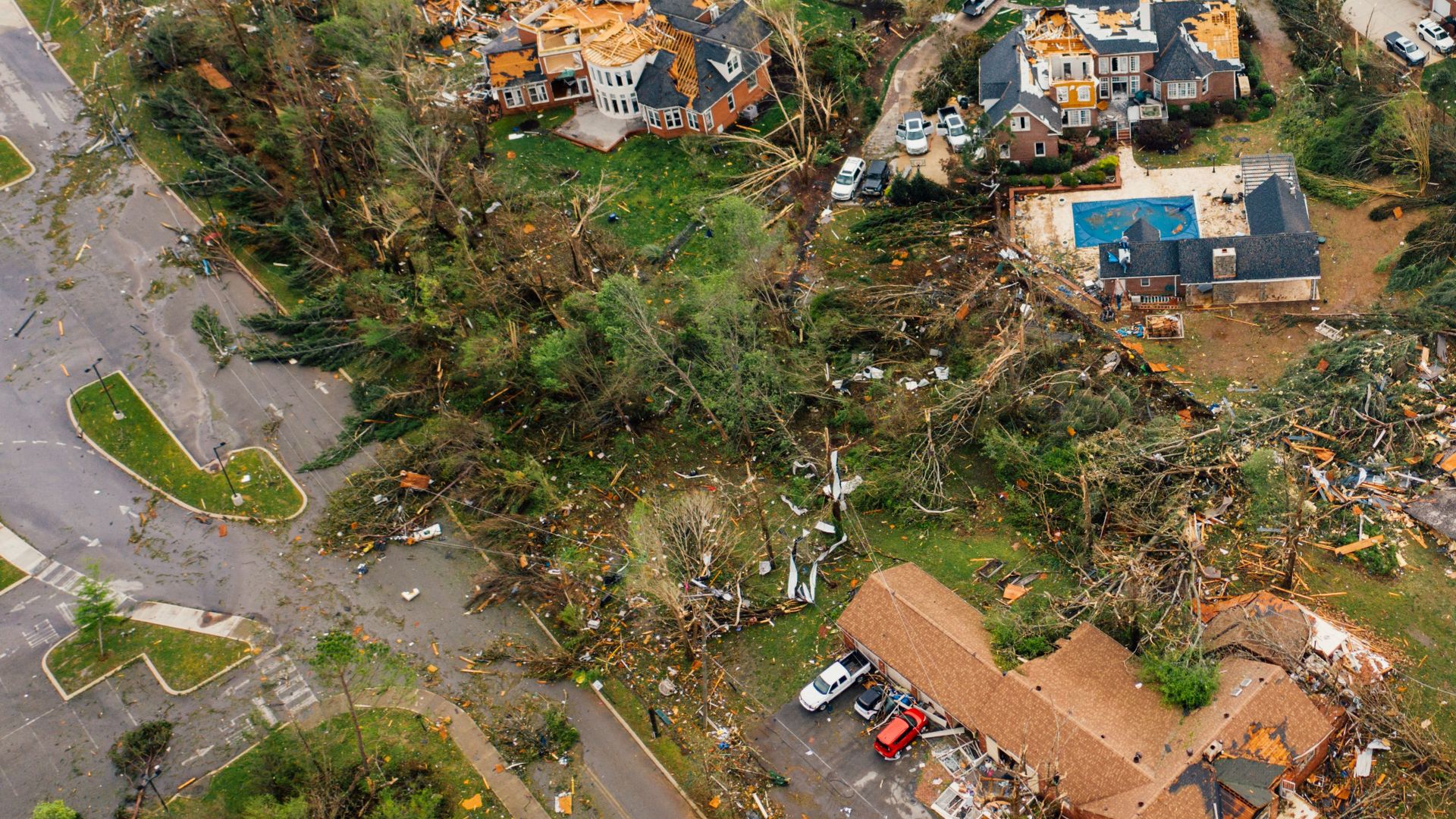
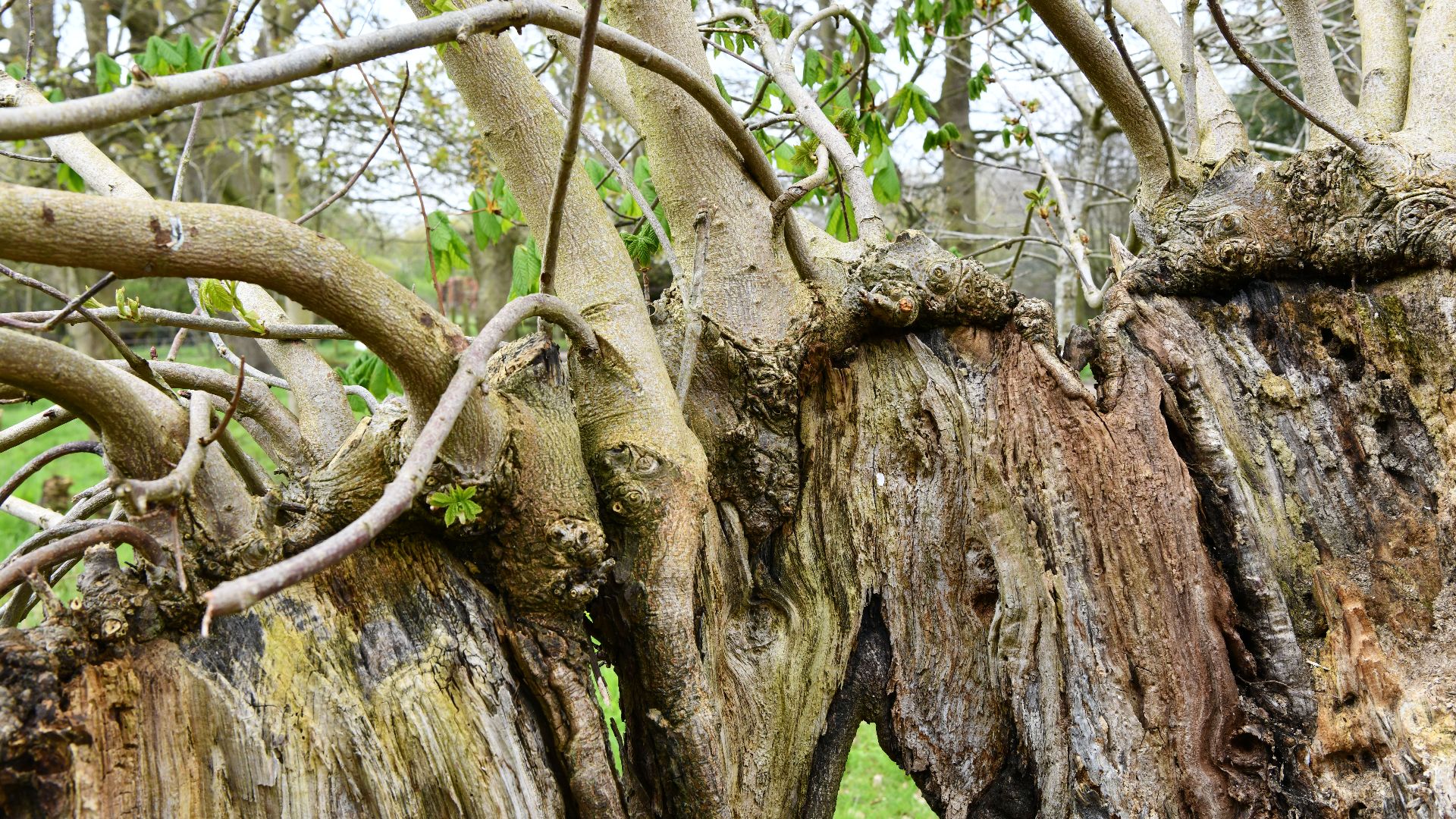
The calculation becomes very different when the tree was dead, badly decayed, or otherwise obviously hazardous before the branch fell. A tree owner can potentially face liability when they knew, or reasonably should have known, that the tree presented a dangerous condition. Ignoring a foreseeable hazard can turn an unfortunate weather event into a negligence dispute.
 Michael Garlick , Wikimedia Commons
What The Neighbor Knew Can Be Crucial
Imagine the tree had been shedding large dead limbs for months, or an arborist had already said it needed to come down. Those facts can help show that the danger was known before your car was damaged. Evidence that the owner had prior notice can therefore become far more important than simply proving where the branch came from.
Some Warning Signs Are Hard To Ignore
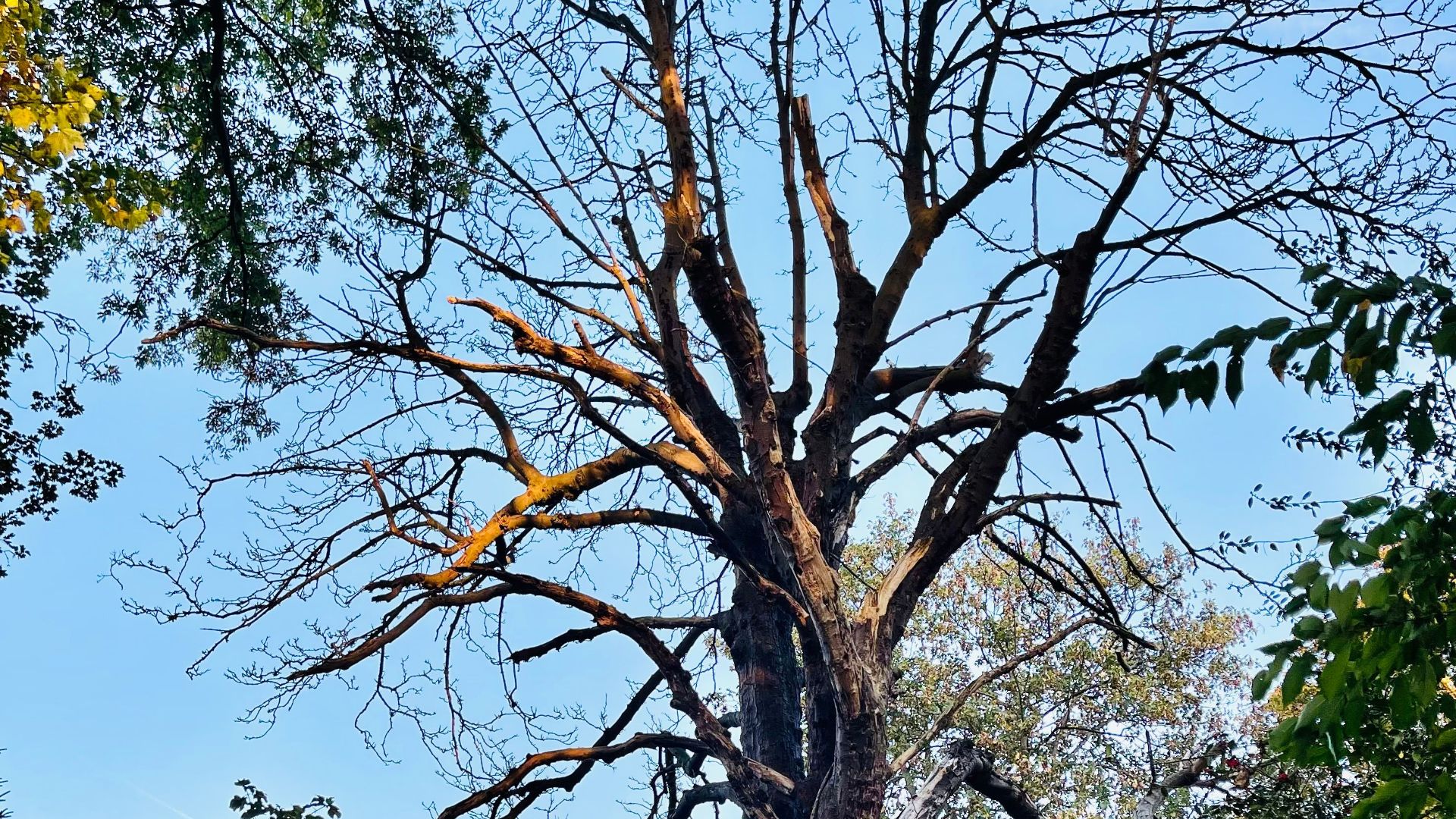
Tree defects can include cavities, fungal growth, cracks, splits, and abnormal areas that may indicate decay. Colorado State University Extension recommends having concerns about tree risk evaluated by a qualified professional because determining the likelihood of failure can be complicated. A damaged tree is not automatically dangerous, but visible deterioration can become important evidence after an accident.

Your Old Complaints Could Suddenly Become Valuable
If you previously told your neighbor that a limb looked dangerous, find the email, text, letter, or other record. Progressive specifically notes that a prior request to remove a hazardous tree, especially when backed by a tree specialist, can support an argument that the neighbor was negligent. A documented warning is far stronger than remembering a conversation over the fence.

An Arborist’s Report Can Strengthen The Evidence
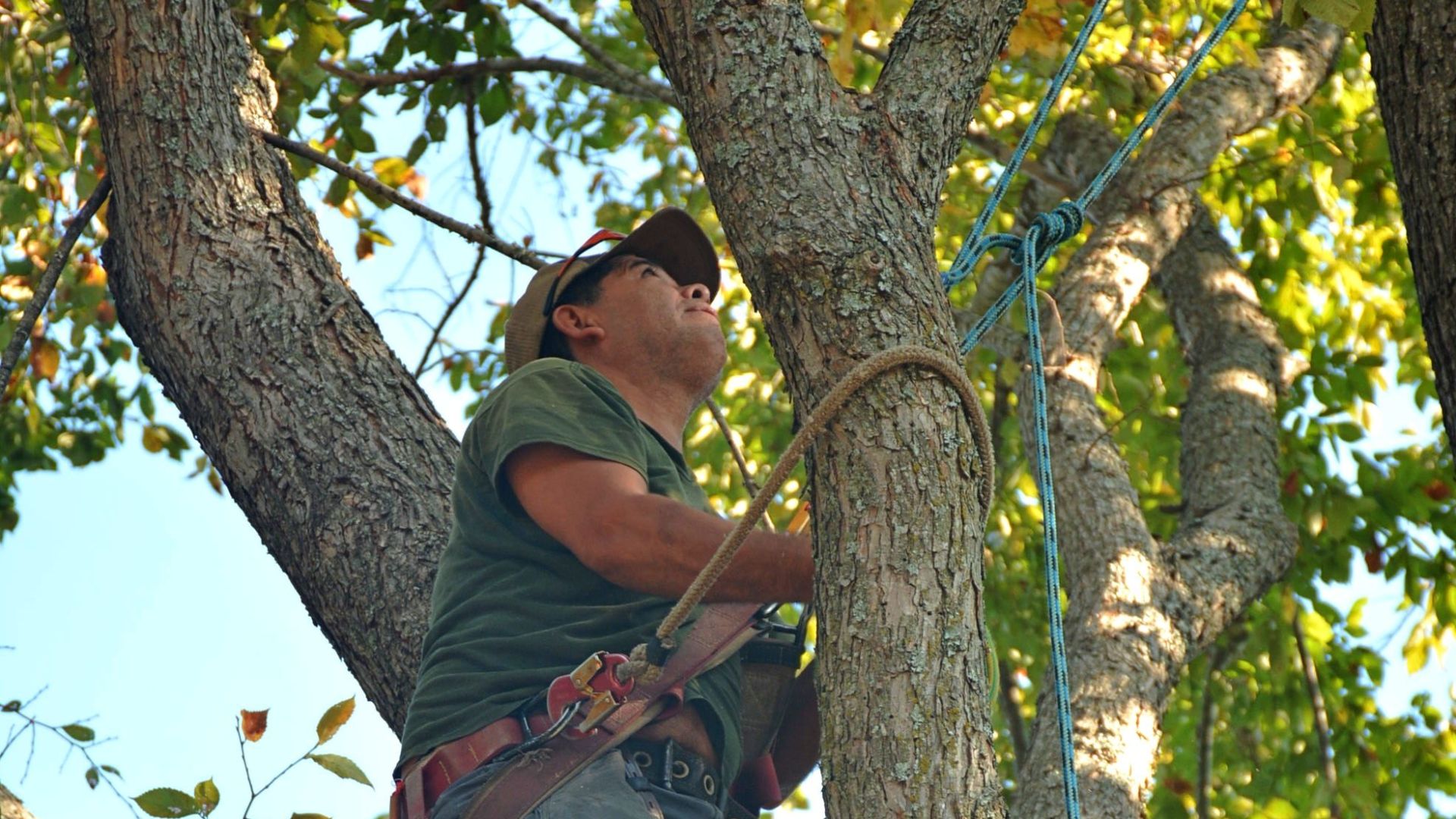
Photos may show something was wrong, but an arborist can provide professional information about decay, structural weakness, and the tree’s condition. Tree-risk assessments examine factors such as the likelihood of failure, possible targets, and the consequences if the tree or branch comes down. An earlier professional report can be especially useful when determining what the owner knew before the accident.
Comprehensive Coverage Is Usually The Big One
If a falling branch damages a parked car, comprehensive auto insurance is typically the coverage designed for this type of loss. Comprehensive covers many kinds of damage that are not collisions, including windstorms and falling objects. This coverage is separate from the liability insurance drivers carry to pay for damage they cause to others.

Liability-Only Coverage Can Leave You Exposed
Drivers who carry only liability insurance may discover that their own policy does not cover a branch crushing their vehicle. Liability coverage generally pays for injuries or property damage you cause to someone else, not this kind of damage to your own car. Without comprehensive coverage, establishing that somebody else was legally responsible can become much more important.

Your Deductible Still Comes Into Play
Having comprehensive insurance does not necessarily mean the repair costs disappear completely. You usually remain responsible for the comprehensive deductible listed in your policy before insurance pays the covered remainder. If the damage costs less than the deductible, there may be little or nothing for the insurer to pay.

Filing With Your Own Insurer May Be The Fastest Route
You do not necessarily have to prove your neighbor was negligent before using your own comprehensive coverage. Your insurer can evaluate the vehicle damage and process a covered claim according to your policy. Questions about somebody else’s responsibility can sometimes be dealt with after your claim is underway.
Your Insurer May Chase The Neighbor Later
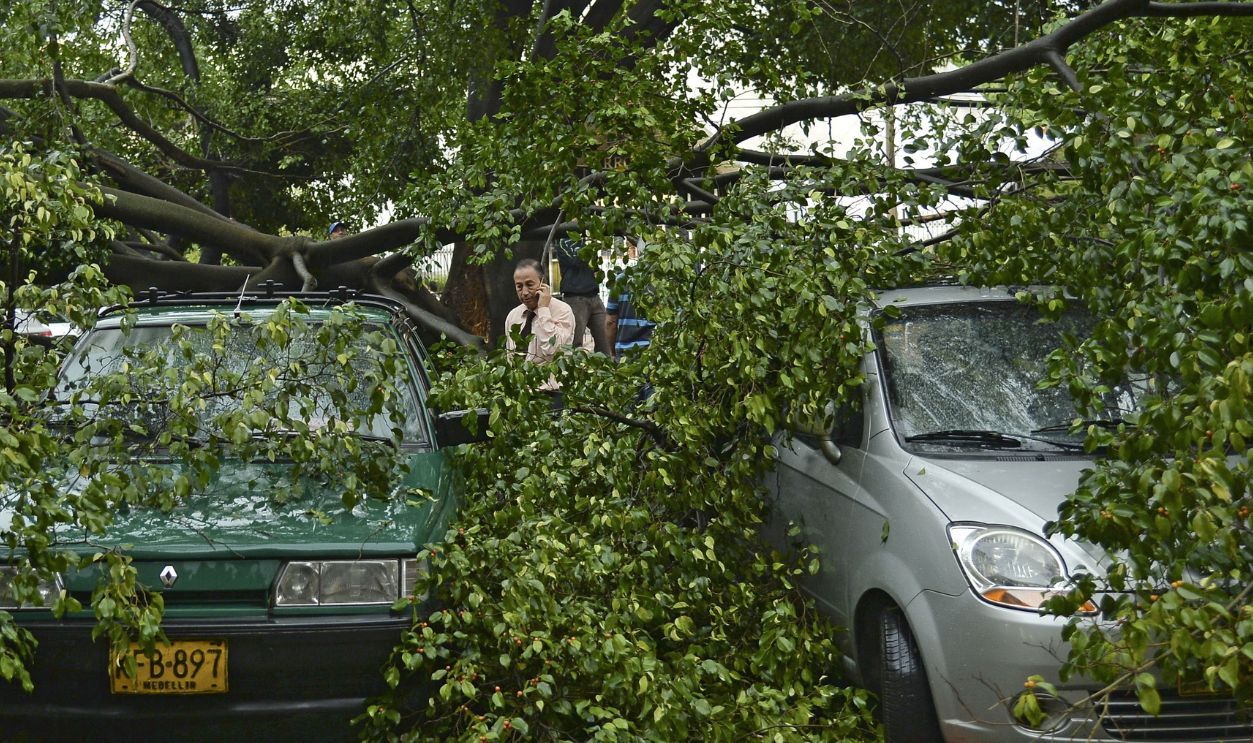
Insurance companies have a process known as subrogation that allows them to seek repayment from a responsible third party after paying a covered claim. If evidence shows that your neighbor was negligent, your insurer may attempt to recover what it paid from the neighbor or the neighbor’s insurance company. Successful recovery can sometimes also result in some or all of your deductible being returned.

The Neighbor’s Homeowners Policy Could Become Involved
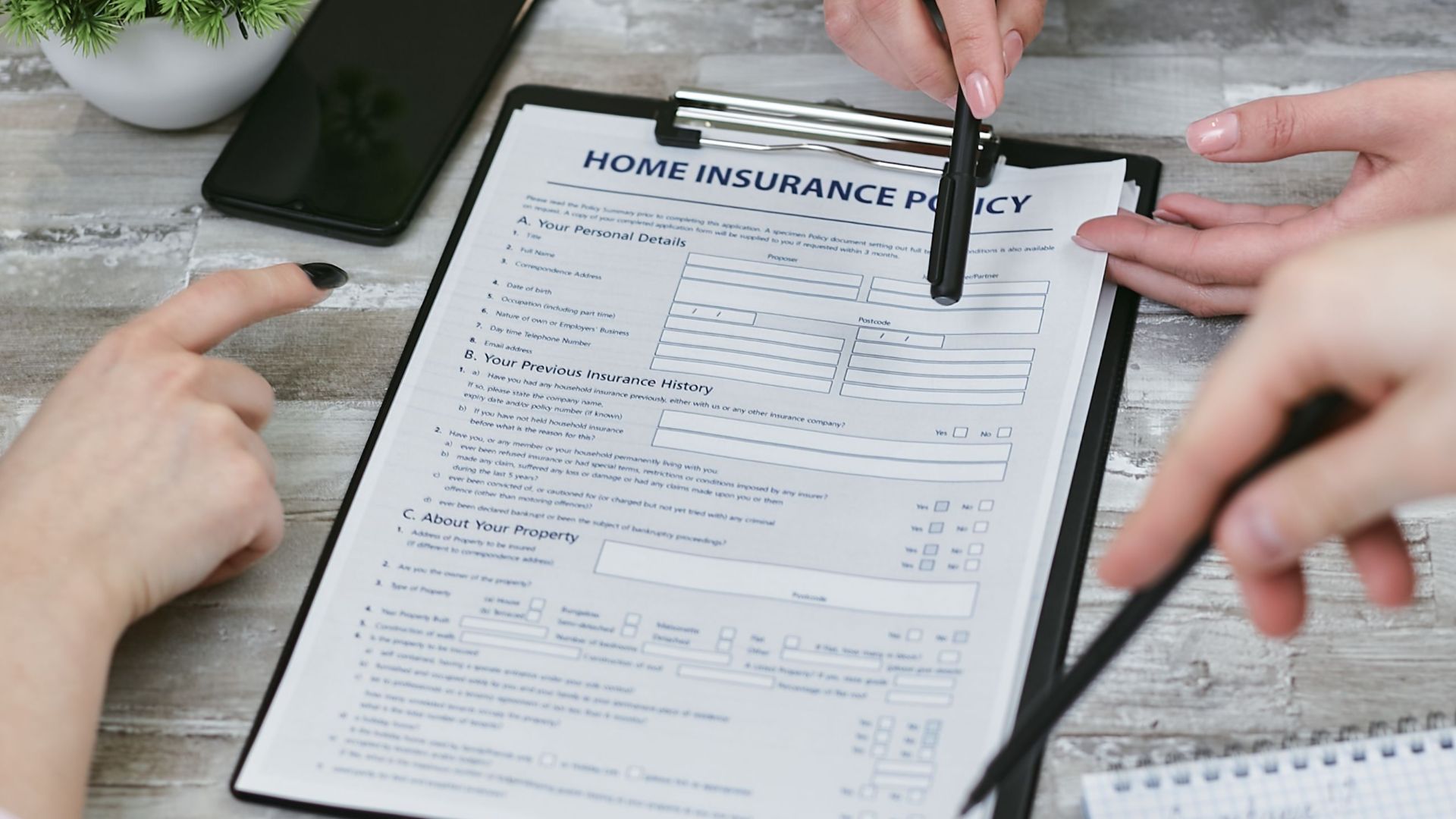
A neighbor’s homeowners liability coverage may potentially respond if the neighbor is legally responsible for the tree damage. If negligence contributed to the tree or branch falling, their insurer may become involved in the claim. Without negligence, however, you will often be looking to your own comprehensive auto coverage instead.
A Tree Company Creates A Different Scenario
Suppose the branch did not fall naturally at all. A tree service may have been cutting limbs next door and accidentally dropped one onto your vehicle. Progressive says that when a third party such as a tree removal company causes the tree to fall, that company’s insurance may be responsible for the resulting damage.

Falling Onto Your Car Is Different From Hitting A Fallen Tree
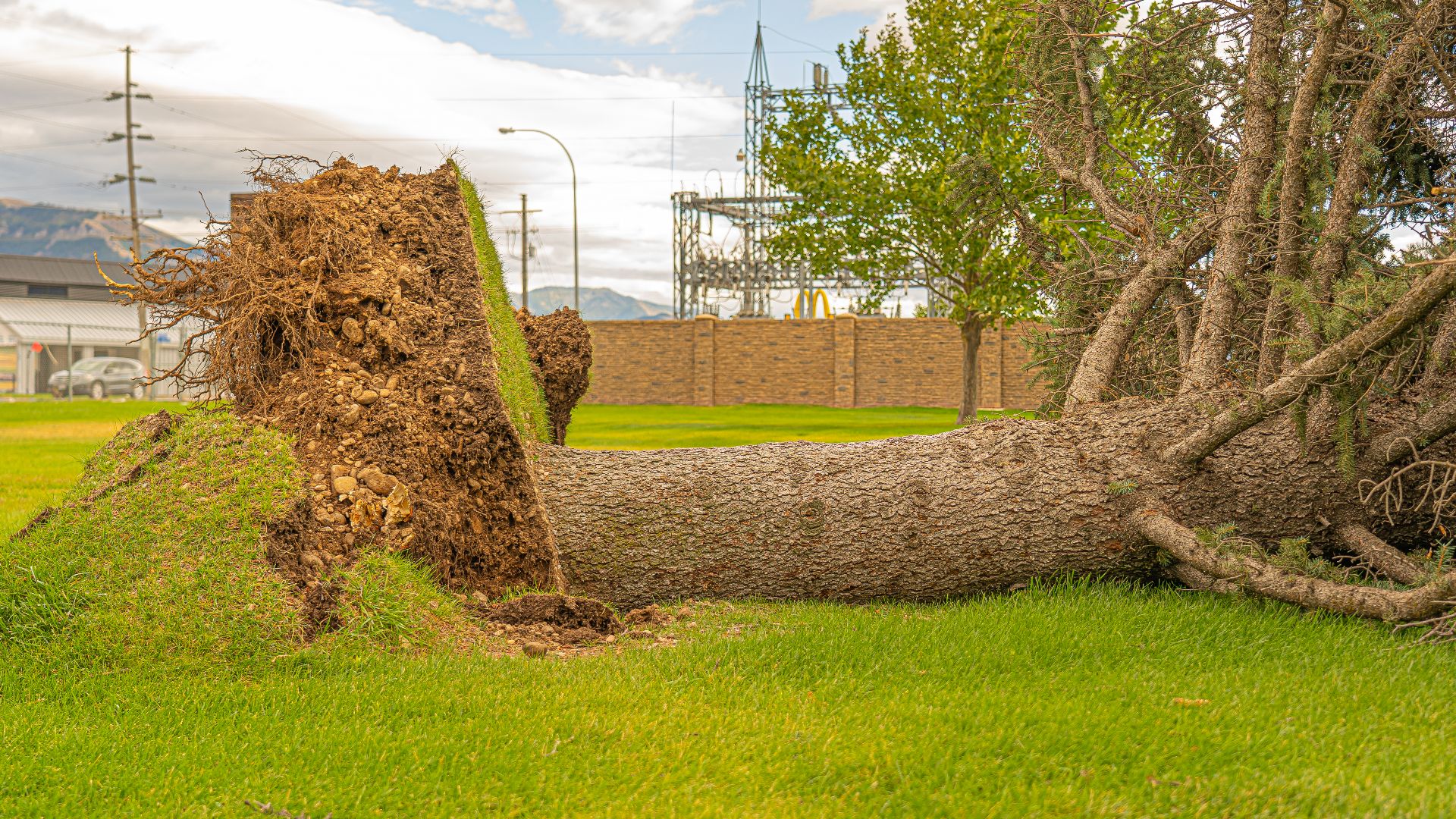
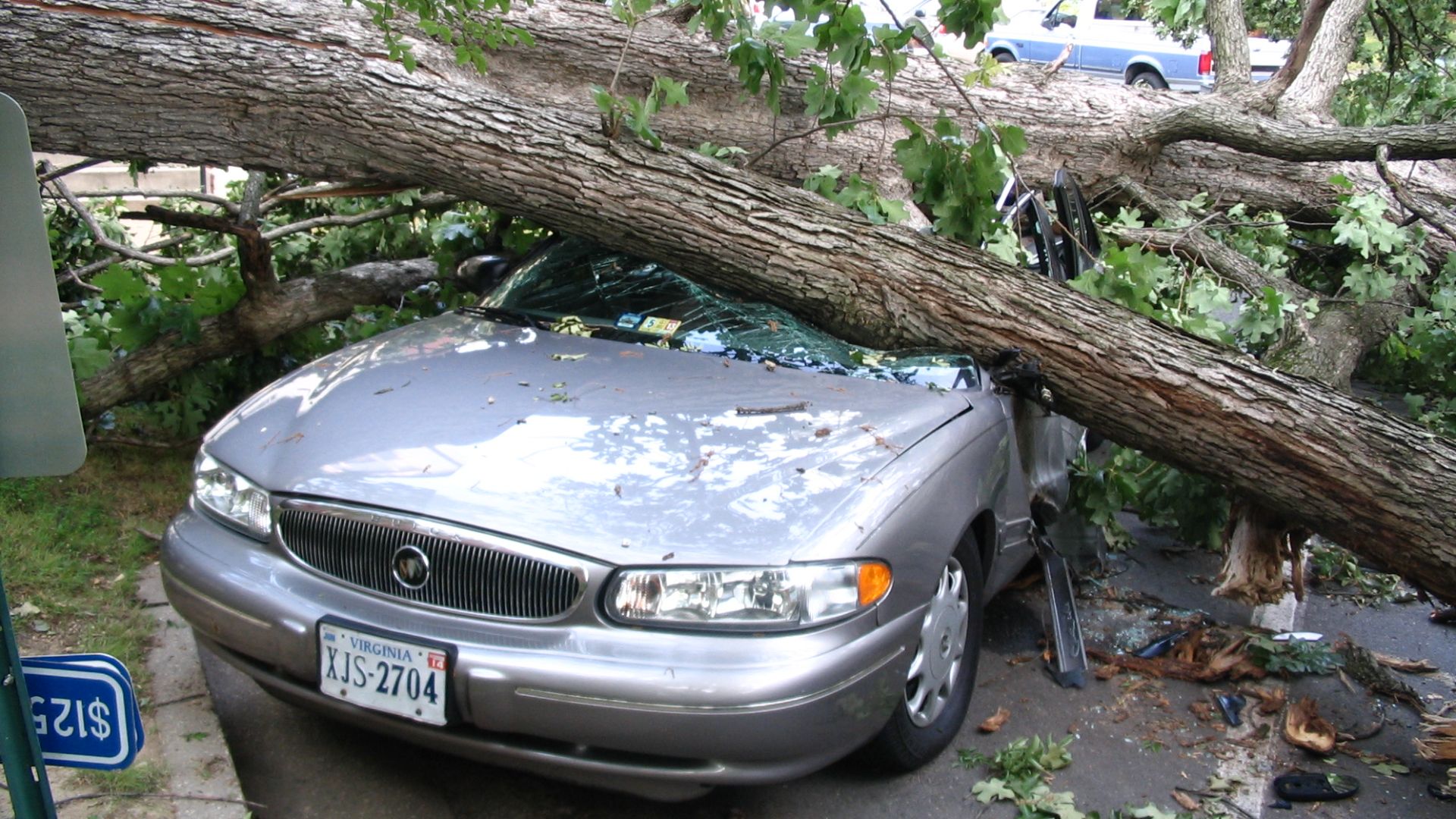
There is also an important insurance distinction if you are driving when the incident happens. A tree or limb that falls onto a moving vehicle is generally treated as a comprehensive loss. If the tree is already lying in the road and you drive into it, the resulting claim may instead fall under collision coverage.
 Arlington County, Wikimedia Commons
Photograph Everything Before Cleanup Begins
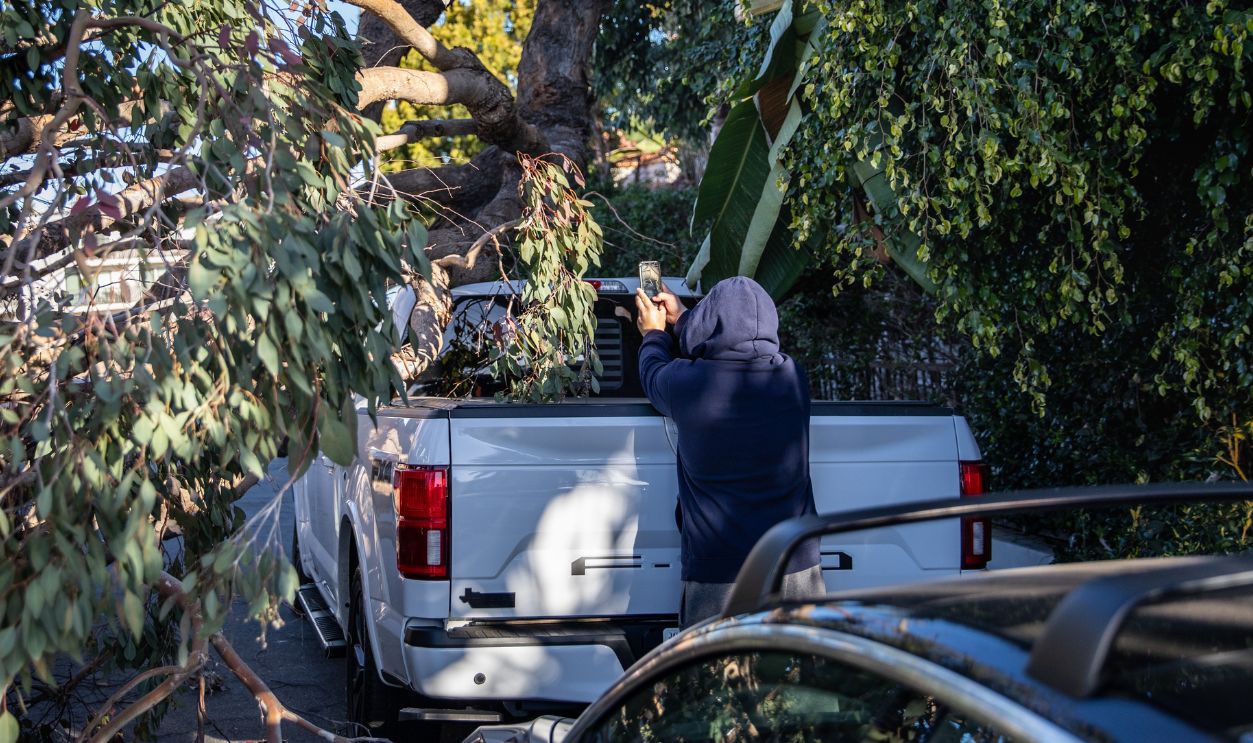
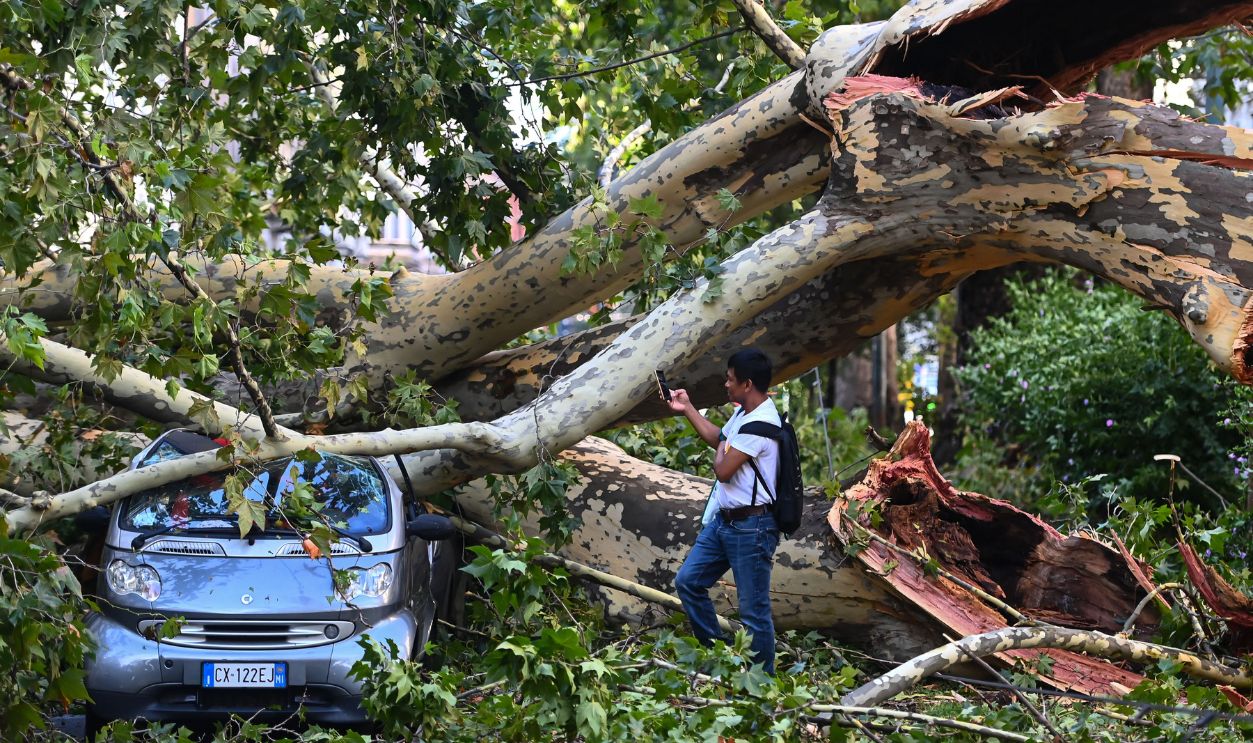
Once everyone is safe, take wide photos of the entire scene and close-ups of the vehicle damage. Photograph the branch, the remaining tree, visible decay, broken sections, and anything else that may help establish what happened. Insurers commonly recommend documenting losses before cleanup or repairs alter the evidence.
 Jay L. Clendenin, Getty Images
Do Not Accidentally Destroy Your Best Evidence
A damaged limb may contain rot, cavities, cracks, or other clues about why it failed. If cleanup has to happen immediately for safety reasons, photograph those details carefully before the branch disappears into a wood chipper. Save existing photos, written warnings, arborist reports, and messages involving the tree as well.
Tell Your Insurer What Happened Promptly
Contact your insurance company and explain that a tree or branch fell onto the vehicle. Provide the photos and any information showing that the tree belonged to somebody else or may have been hazardous beforehand. Your insurer can tell you what documentation it needs and whether your comprehensive coverage applies.

An Adjuster Will Look At The Damage
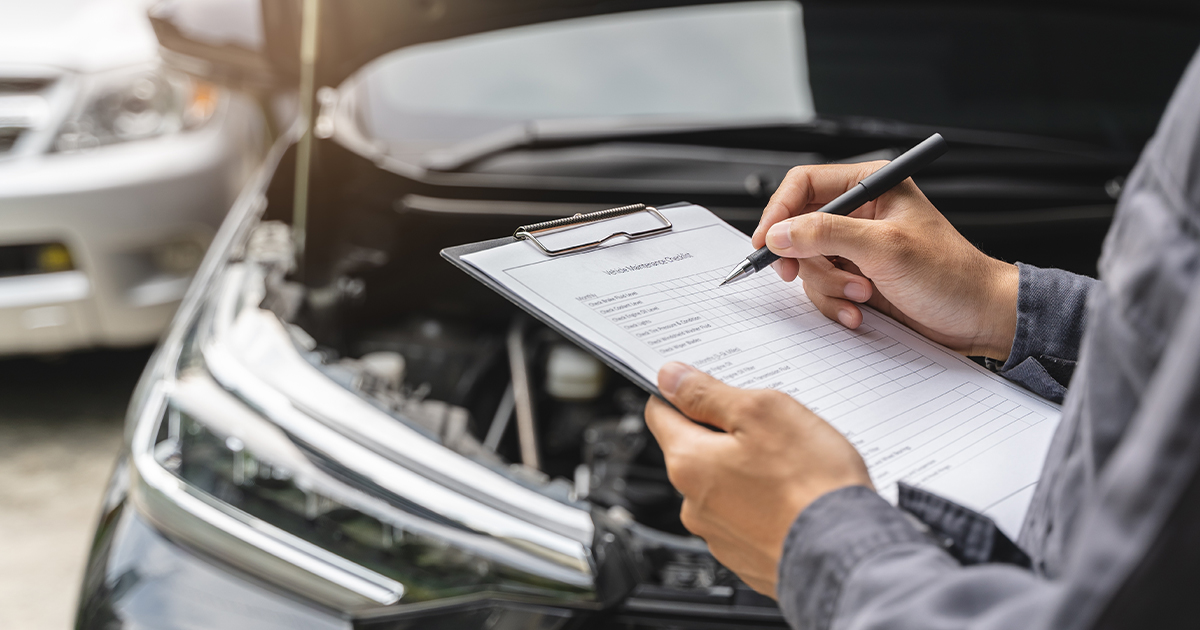
An adjuster or appraiser will typically inspect the vehicle and prepare an estimate, although smaller claims may sometimes be handled using repair estimates. Additional hidden damage can also be discovered once repairs begin. Your policy and the insurer’s evaluation determine how much of the covered loss will ultimately be paid.
A Huge Branch Can Total A Car
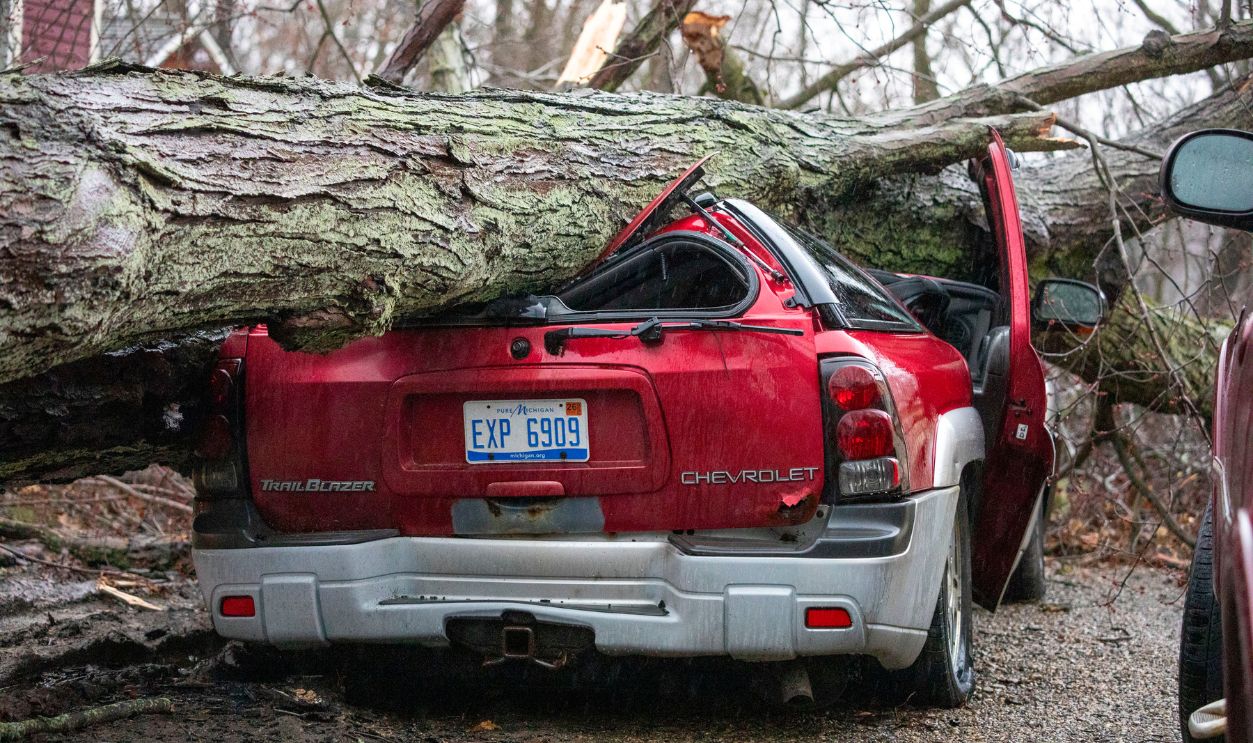
Falling limbs can damage roofs, pillars, glass, body panels, and structural components all at once. If repairs are uneconomical compared with the car’s value, the insurer may declare the vehicle a total loss. Physical-damage claims generally pay the cost of repairing the vehicle or its actual cash value, subject to the policy terms and applicable rules.
Your Loan Balance Does Not Set The Car’s Value
Being upside down on a loan can create another unpleasant surprise. An insurer’s settlement for a totaled vehicle is generally based on the vehicle’s value rather than simply paying whatever remains on your loan. Gap coverage can help cover the difference between the vehicle’s value and an outstanding loan or lease balance when its terms apply.

A Rental Car May Require Extra Coverage
Being blameless does not automatically mean your policy gives you a free rental while the car is being repaired. Rental reimbursement is typically optional coverage with its own limits and conditions. Check your declarations page or ask your insurer before assuming those transportation costs will be reimbursed.
 Harrison Keely, Wikimedia Commons
Disagreeing With The Insurer Does Not End The Process
If you disagree about coverage, the repair estimate, or the value assigned to a totaled car, ask the insurer to explain how it reached its decision. Policies may include procedures for resolving valuation disagreements, and state insurance departments can also provide consumer information or complaint processes. Keep copies of correspondence, estimates, photographs, and claim documents throughout the dispute.

So Who Actually Pays?
If a healthy tree unexpectedly drops a branch during a storm, your comprehensive auto coverage will often be the first place to look. If the neighbor ignored a visibly dangerous tree they knew or reasonably should have known about, their potential liability becomes much stronger. The frustrating answer is that the branch crossing the property line does not settle the question, but the tree’s condition, the owner’s prior knowledge, your evidence, and your insurance coverage often will.
 picture alliance, Getty Images
You May Also Like: