When Your Own Driveway Isn’t Fully Yours
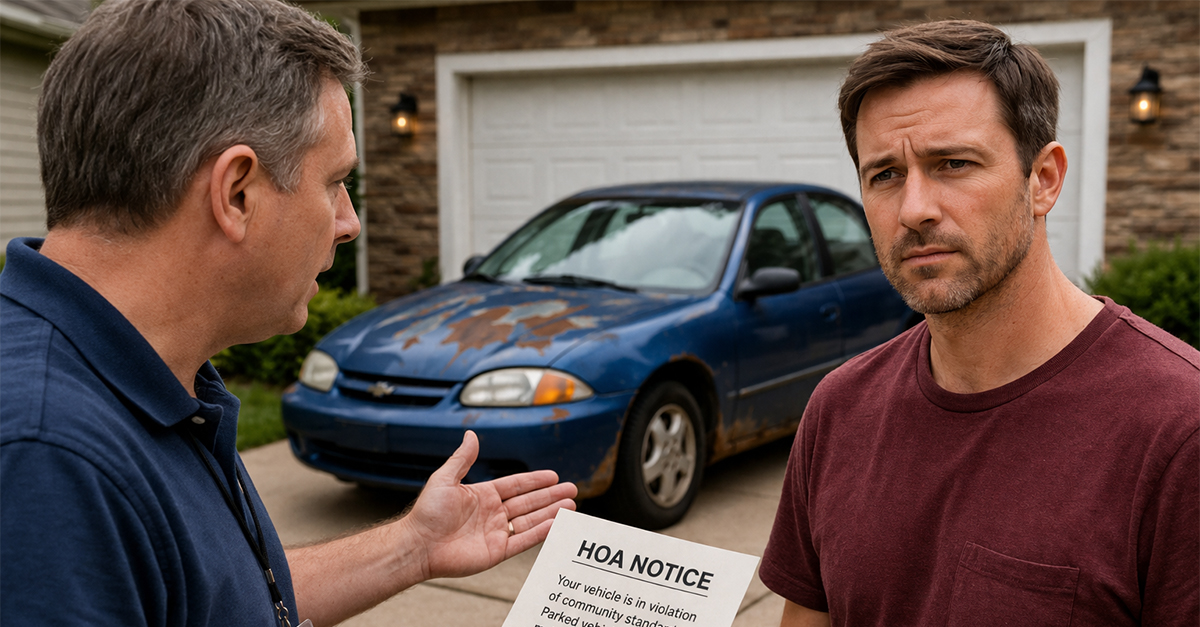
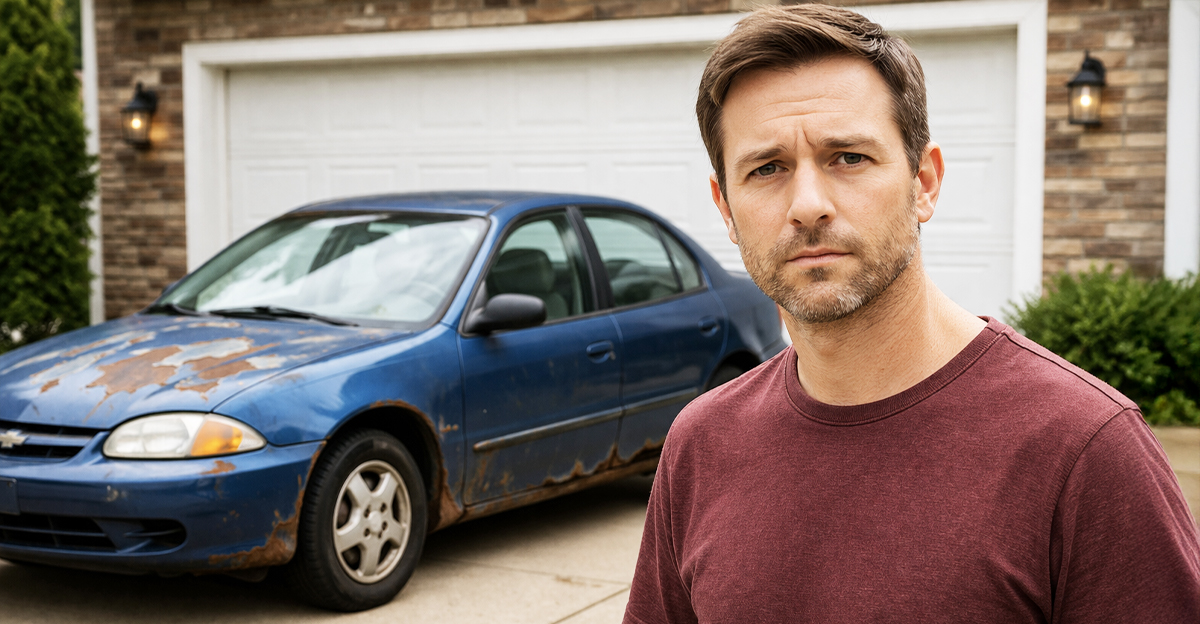
You bought your home thinking your driveway was yours to use however you want. Then a notice shows up from your HOA claiming your car is “too old” and not in acceptable condition. Now you’re facing fines and other threats of enforcement over something parked on your own property.
Why HOAs Have These Rules
Homeowners associations are set up to maintain a certain appearance and property value within a community. To do that, they often create rules about visible items like landscaping, exterior paint, and yes, even vehicles. These rules are usually designed to prevent what they consider signs of visual decline or neglect.

What “Too Old” Usually Means
HOAs rarely define “too old” strictly by age alone. Instead, they often use vague language like “inoperable,” “unsightly,” or “not in good condition.” This gives them a degree of flexibility, but it also creates gray areas where enforcement can feel arbitrary or unfair.

Power Comes From Your HOA Agreement
The key document in any HOA dispute is your governing agreement, often called Covenants, Conditions, and Restrictions. When you bought your home, you agreed to follow these rules. That means the HOA may have authority if the restriction is clearly written and properly adopted.

Location Matters More Than You Think
Some HOAs can regulate what is visible from the street, even if it is on your private property. If your car is parked right out in plain view, they may argue that it affects neighborhood aesthetics. However, rules about enclosed garages are usually more relaxed.

Definition Of “Inoperable” Vehicles
Many HOA rules specifically target inoperable vehicles and not so much older ones. If your car is in running condition, is registered, and insured, you may have a stronger argument. HOAs often struggle to enforce rules against vehicles that are fully functional but simply older.
Selective Enforcement Can Be A Problem
If your HOA is enforcing the rule against you but ignoring similar vehicles nearby, that could weaken their position. Selective enforcement is a common defense in HOA disputes. Rules generally have to be applied consistently across the community.

State Laws Can Limit HOA Authority
While HOAs have significant power, they’re not above the law. Some states restrict how far HOA rules can go, especially when it comes to personal property. Local statutes may override overly broad or vague restrictions.

Reasonableness Is A Legal Standard
Courts often evaluate whether an HOA rule is reasonable. A blanket ban on older vehicles without clear cut and dried criteria may be challenged as arbitrary. If a rule lacks objective standards, it may not hold up under scrutiny.

Fines And Enforcement Actions
HOAs typically enforce rules through fines, warnings, and sometimes legal action. However, they must follow proper procedures. This usually includes notice, an opportunity to correct the issue, and sometimes a hearing before penalties are finalized.

What Your HOA Can’t Do
Your HOA cannot immediately tow your car or impose penalties without following its own procedures. They also can’t enforce rules that were never properly adopted or communicated. If they skip steps, their enforcement actions may be invalid.

Review Your Governing Documents
Start by carefully reviewing your HOA documents. Look for specific language about vehicle age, condition, or storage. The exact wording matters. A vague rule may give you room to challenge how it is being applied.

Asking For Clarification
Before escalating, ask your HOA to clarify the rule in writing. Request specific reasons why your car violates the policy. This forces them to explain their position and may reveal weaknesses in their argument.

Fix The Issue Vs Fighting It
Sometimes the easiest solution is temporary compliance, like covering the car or parking it elsewhere. However, if the rule feels unreasonable or inconsistently enforced, it may be worth challenging rather than quietly complying.

Document Your Case
Take photos of your vehicle and others in the neighborhood. Keep records of all communication with the HOA. Documentation can help demonstrate that your car is in good condition or that the rule is being applied unfairly.

Attend An HOA Hearing
If your HOA offers you a hearing, take advantage of it. Lay out your evidence as calmly and clearly as you can. Emphasize that your vehicle is in good running order, maintained, and comparable to other vehicles in the community.
 Henri Mathieu-Saint-Laurent, Pexels
When Legal Help Makes Sense
If fines escalate or enforcement becomes aggressive, it’s probably worth talking to a lawyer. HOA disputes can become expensive quickly, and a legal opinion can clarify your rights and options.

Possible Outcomes
These kinds of disputes tend to end in compromise. The HOA may back down, clarify the rule, or offer you an exception. In some cases, homeowners can have luck challenging vague or overly broad restrictions.

Prevent Future Issues
If this issue is affecting multiple residents, consider bringing it up at HOA meetings. Rules can sometimes be amended with enough vocal support from the community. Collective action often carries more weight than random individual complaint.

Bottom Line
Your HOA may have the authority to regulate vehicles, but that power doesn’t come without limits. The enforceability of a “too old” rule depends on the wording, consistency, and legality of the policy. Before paying fines or moving your car, take time to understand your rights and push back as far as you can.

You May Also Like: