
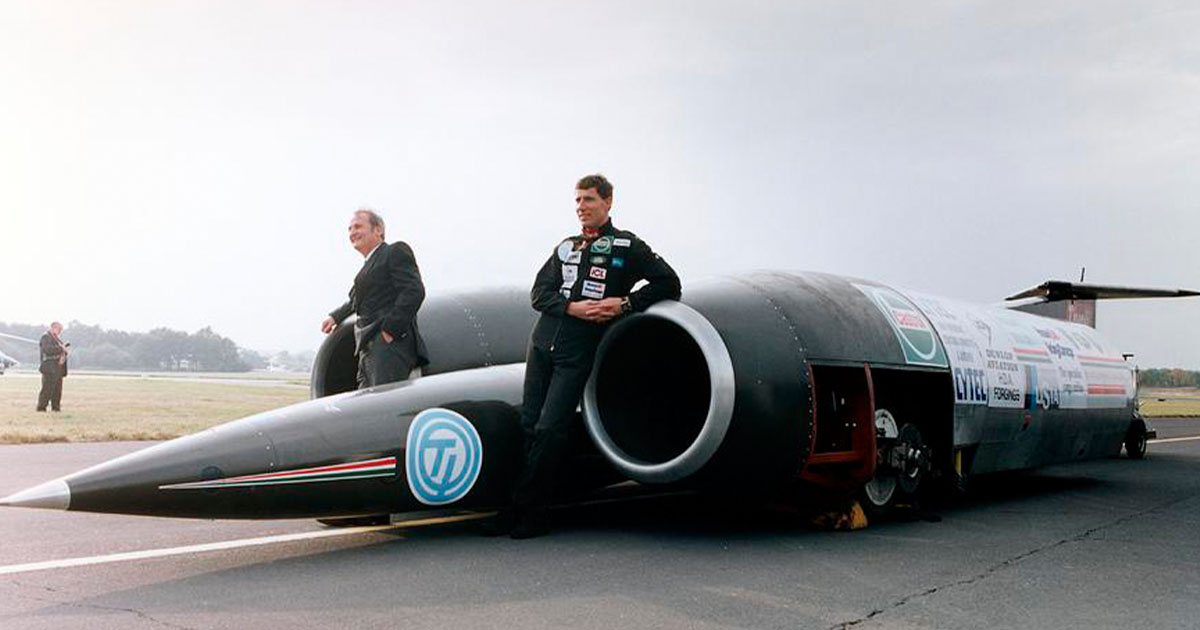
The Thrust SSC
The Thrust SSC—Thrust SuperSonic Car—is not just quick, it’s VERY quick. Actually, this jet car currently holds the world land speed record, making it the fastest car in the world.
Not only did the Thrust SSC break records, it also broke the sound barrier. But that’s not all.
Setting Records
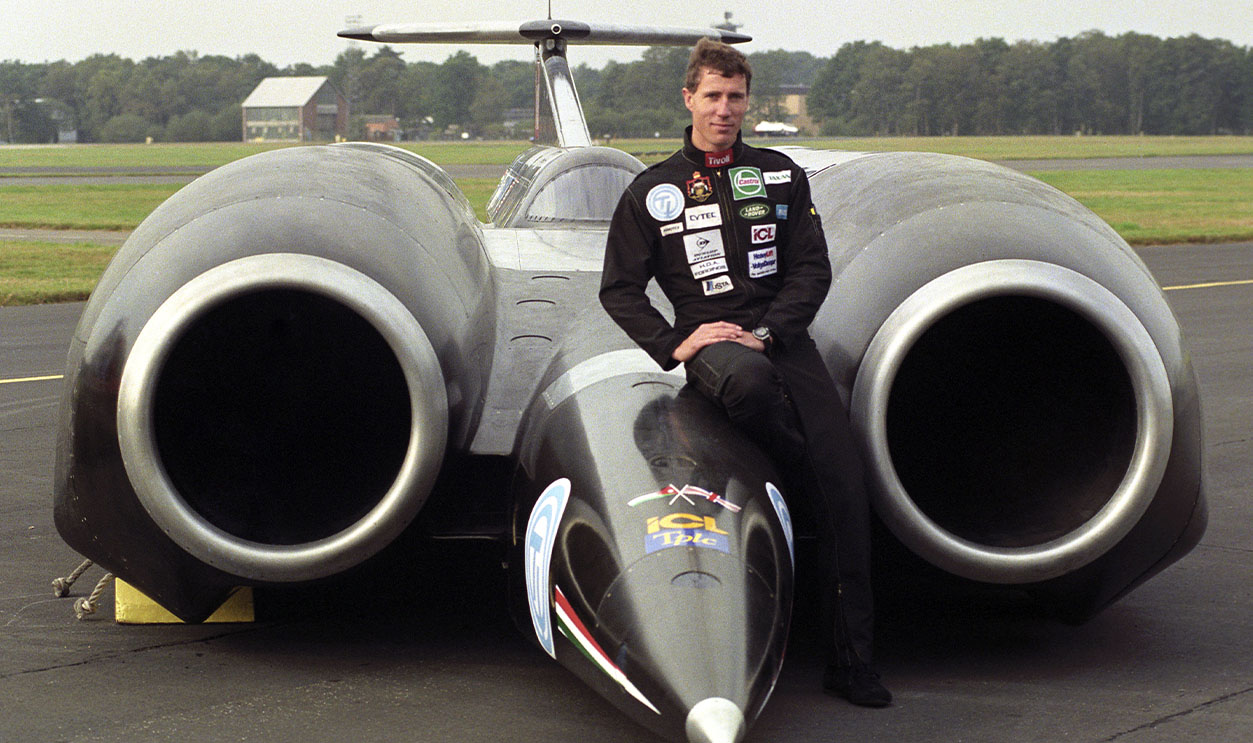
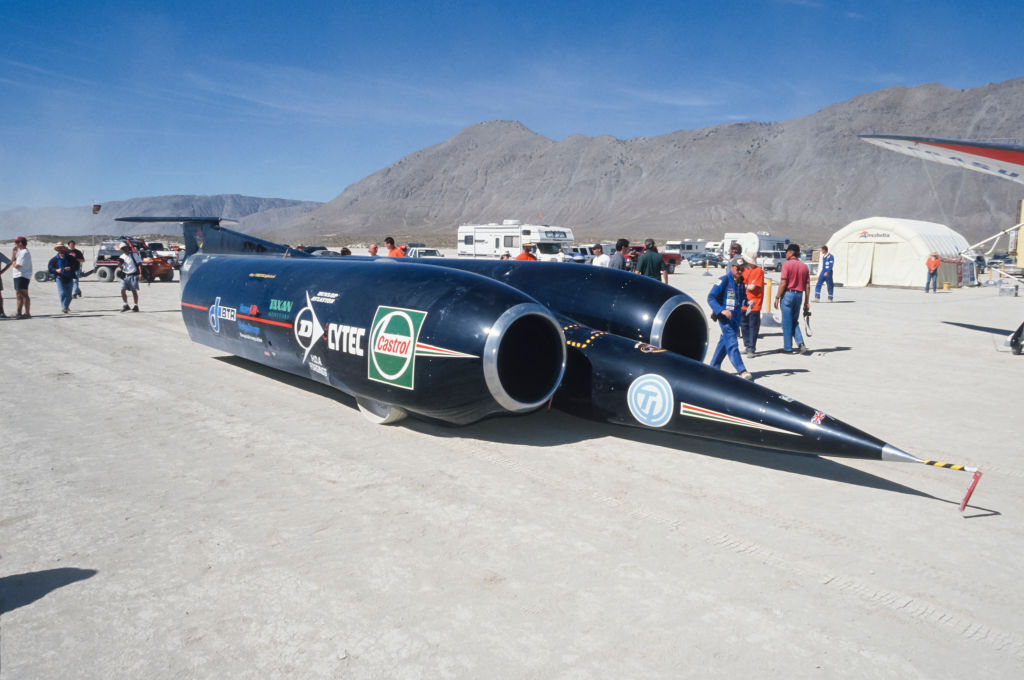
On October 15, 1997, in the Black Rock Desert in Nevada, the Thrust SSC was given a big job, and it certainly didn’t disappoint.
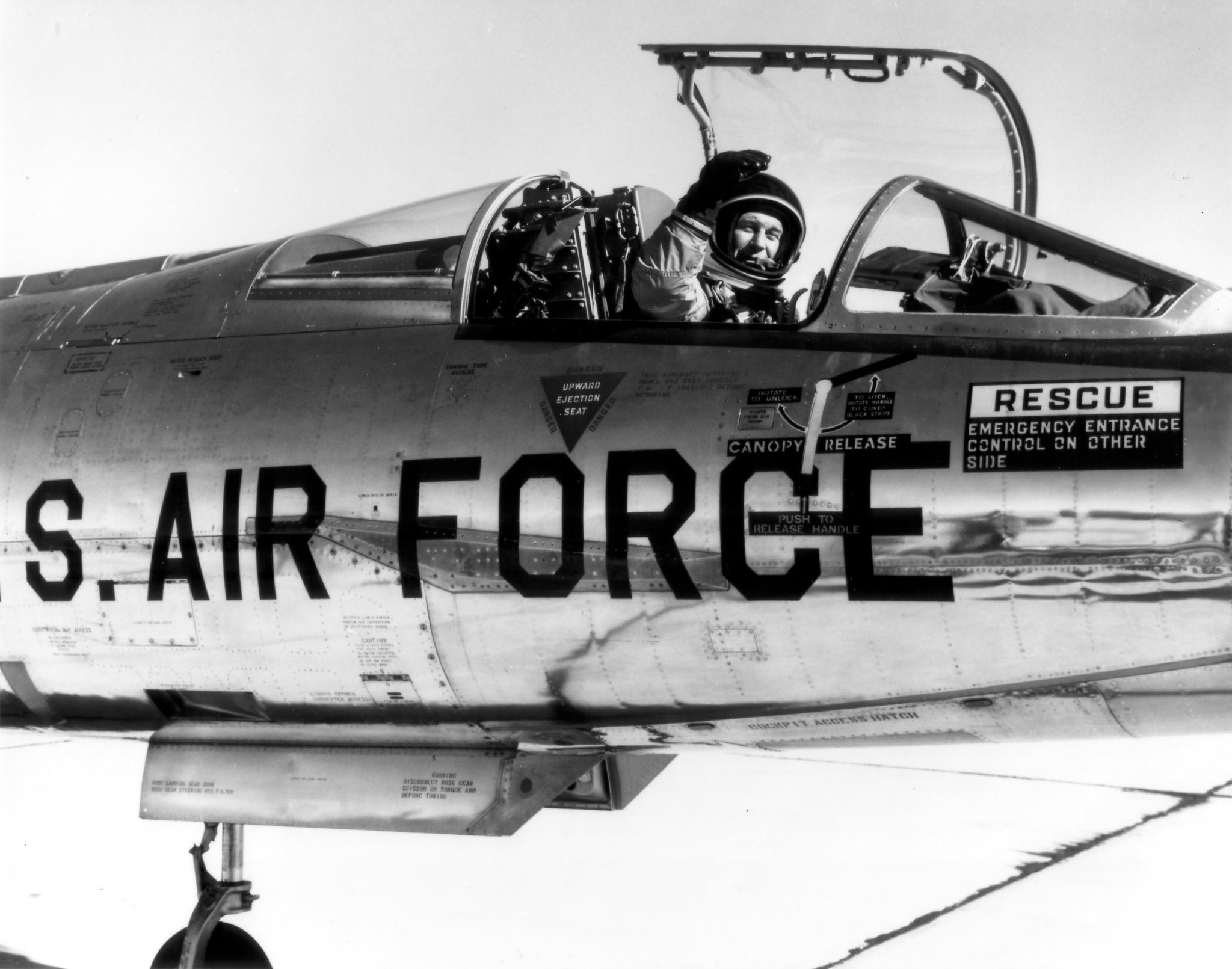
It was exactly 50 years plus a day since the sound barrier was broken in aerial flight by Chuck Yeager—and now they were attempting it with a land vehicle.
But this wasn’t the first attempt.
First Try
Less than a month earlier, on September 25, 1997, the Thrust SSC clocked in at a whopping speed of 1,149.303 km/h (714.144 mph).
But that just wasn’t fast enough.
The Sound Barrier
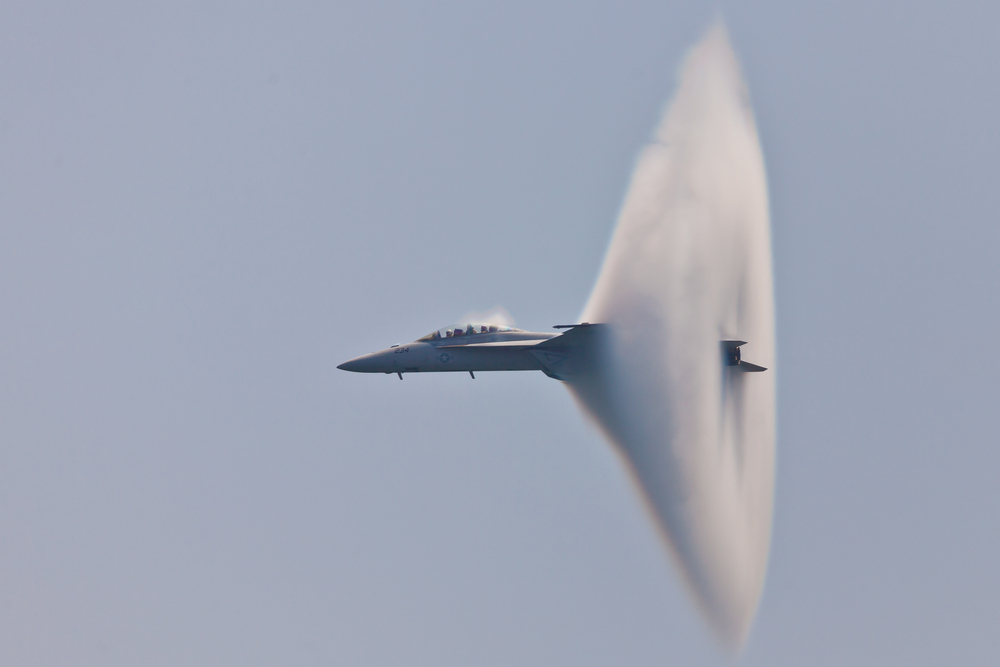
The speed at which sound travels is known as the sound barrier. In order for a vehicle to break the sound barrier, it has to travel about 1,207 km/h (750 mph).
When an object moves faster than sound, it causes a sonic boom—an impulsive noise similar to thunder.
 Eliyahu Yosef Parypa, Shutterstock
Sonic Booms
Believe it or not, 50 years ago, the federal government banned all civilian supersonic flights over land, making it illegal to break the sound barrier. They felt the sonic booms were startling to the public, and could potentially cause property damage.
But the law said nothing about land vehicles breaking the sound barrier.
Supersonic Speed
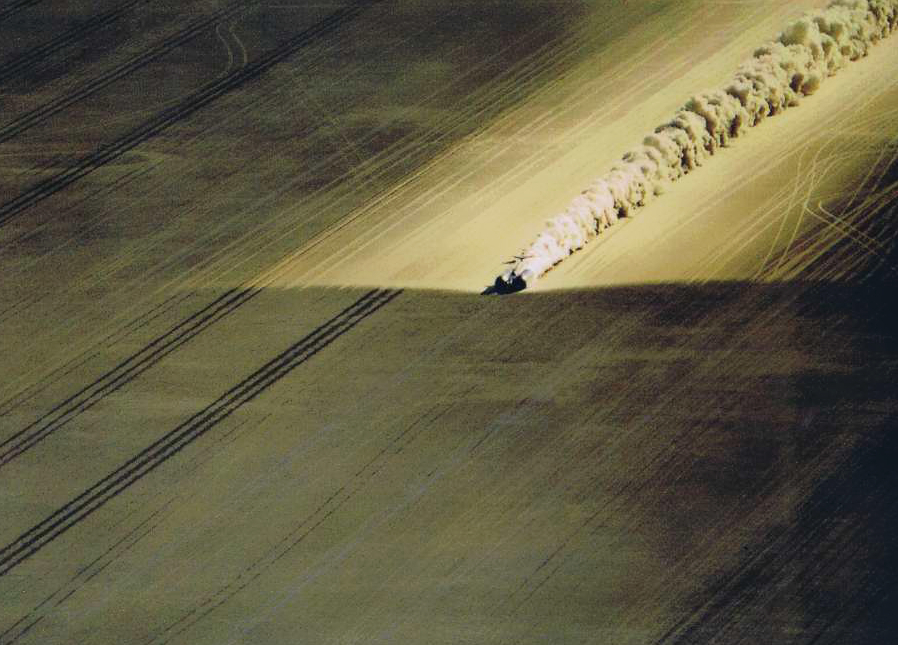
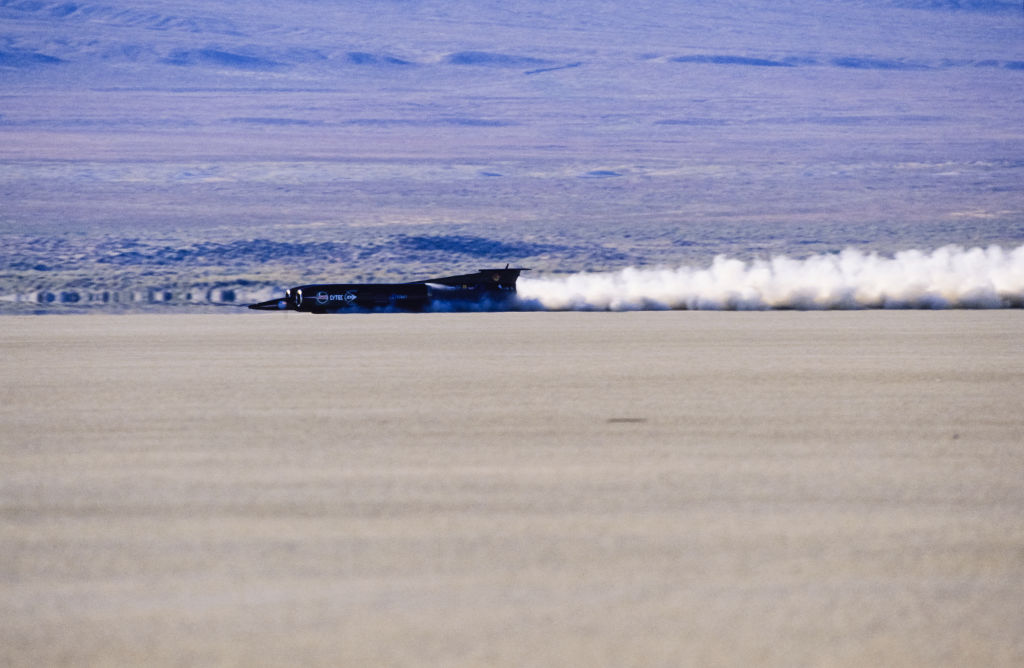
The October 1997 run is when the Thrust SSC set the world record when it reached a mind-blowing speed of 1,228 km/h (763 mph), making it the first land vehicle to officially break the sound barrier.
As the vehicle exceeded the speed of sound, it created that astounding sonic boom everyone was waiting for, and it was glorious.
The Driver
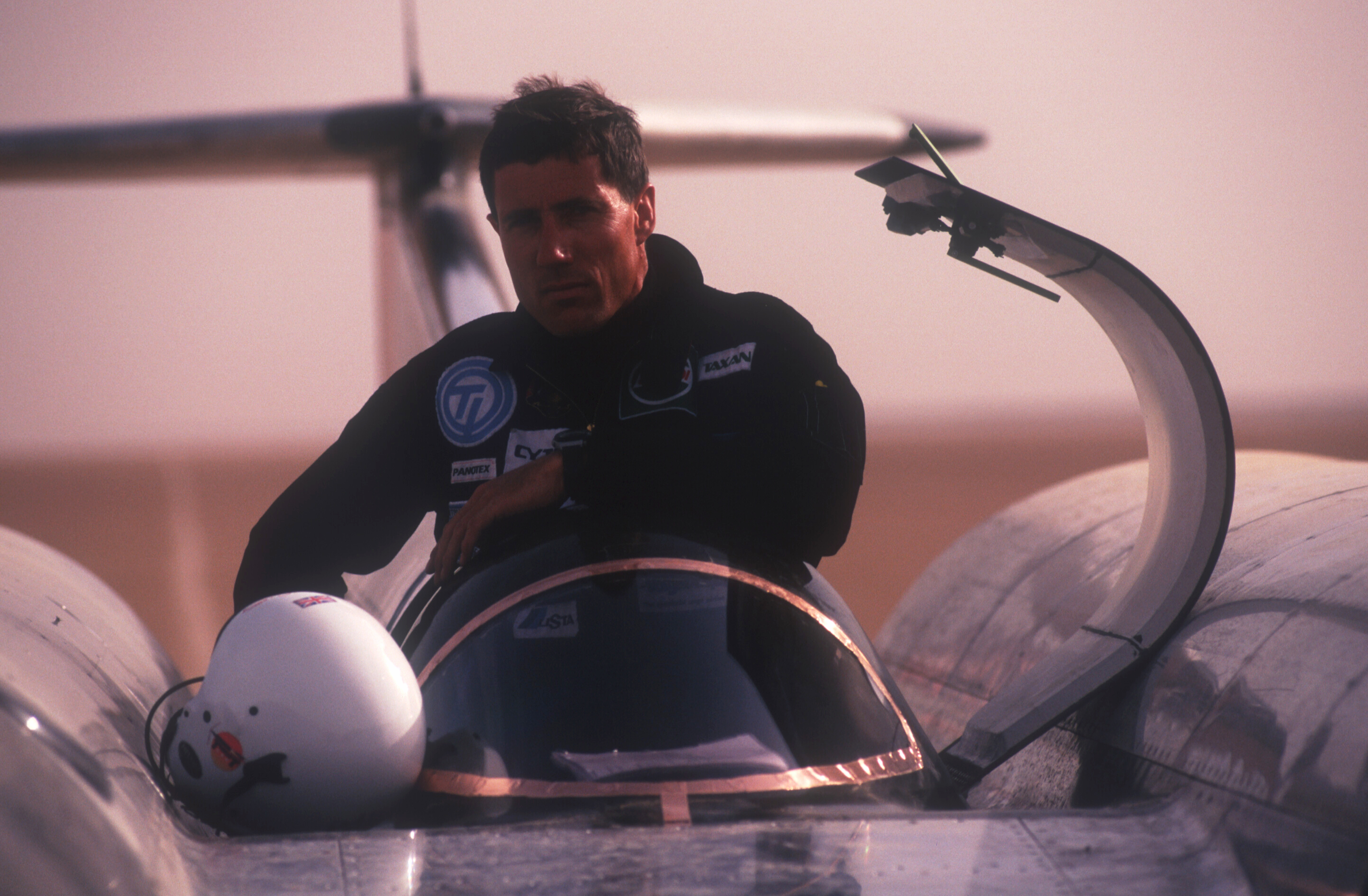
The lucky, and incredibly skilled, driver was Andy Green—a British fighter pilot. He is still currently the holder of the world land speed record. He qualified as a fighter pilot on F-4 Phantom and Tornado F3 aircraft, and in 2003, was promoted to Wing Commander, and later became Officer Commanding Operations Wing. He served in West Germany, Iraq, Bosnia, and Afghanistan.
But why would a pilot drive a supercar?
The Car
Before we dive into the need for a pilot, let’s get a little geeky about the car’s specs.
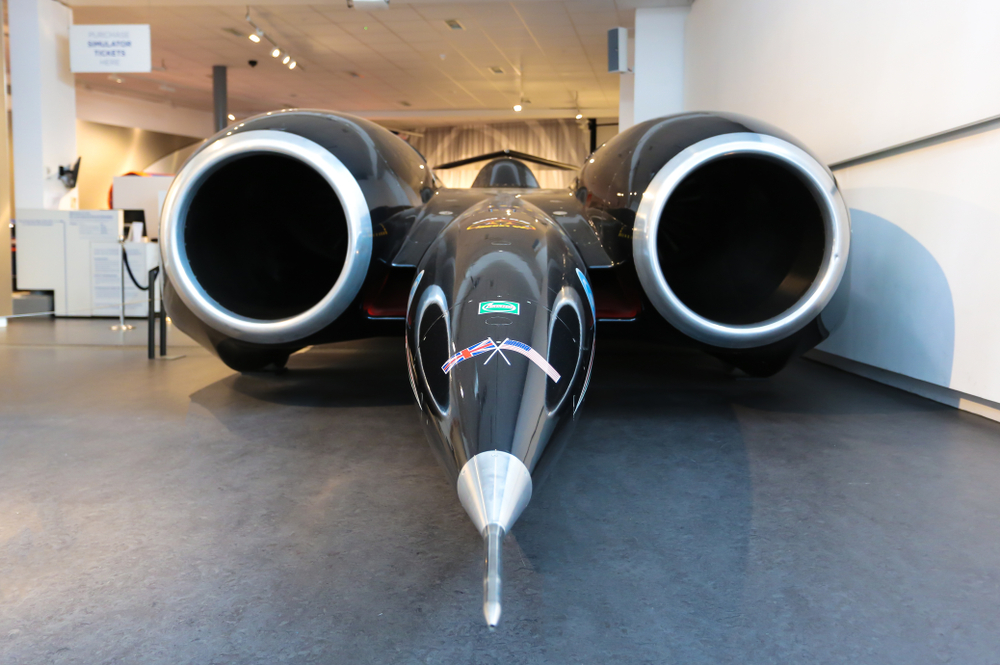
The Thrust SSC is huge. It measures a whopping 16.5 meters (54 feet) long and 3.7 meters (12 feet) wide and weighs around 10 tons. It can deliver a reported thrust of 223 kN (approximately 50,000 pounds force).
It’s definitely packing a punch under the hood.
The Engines
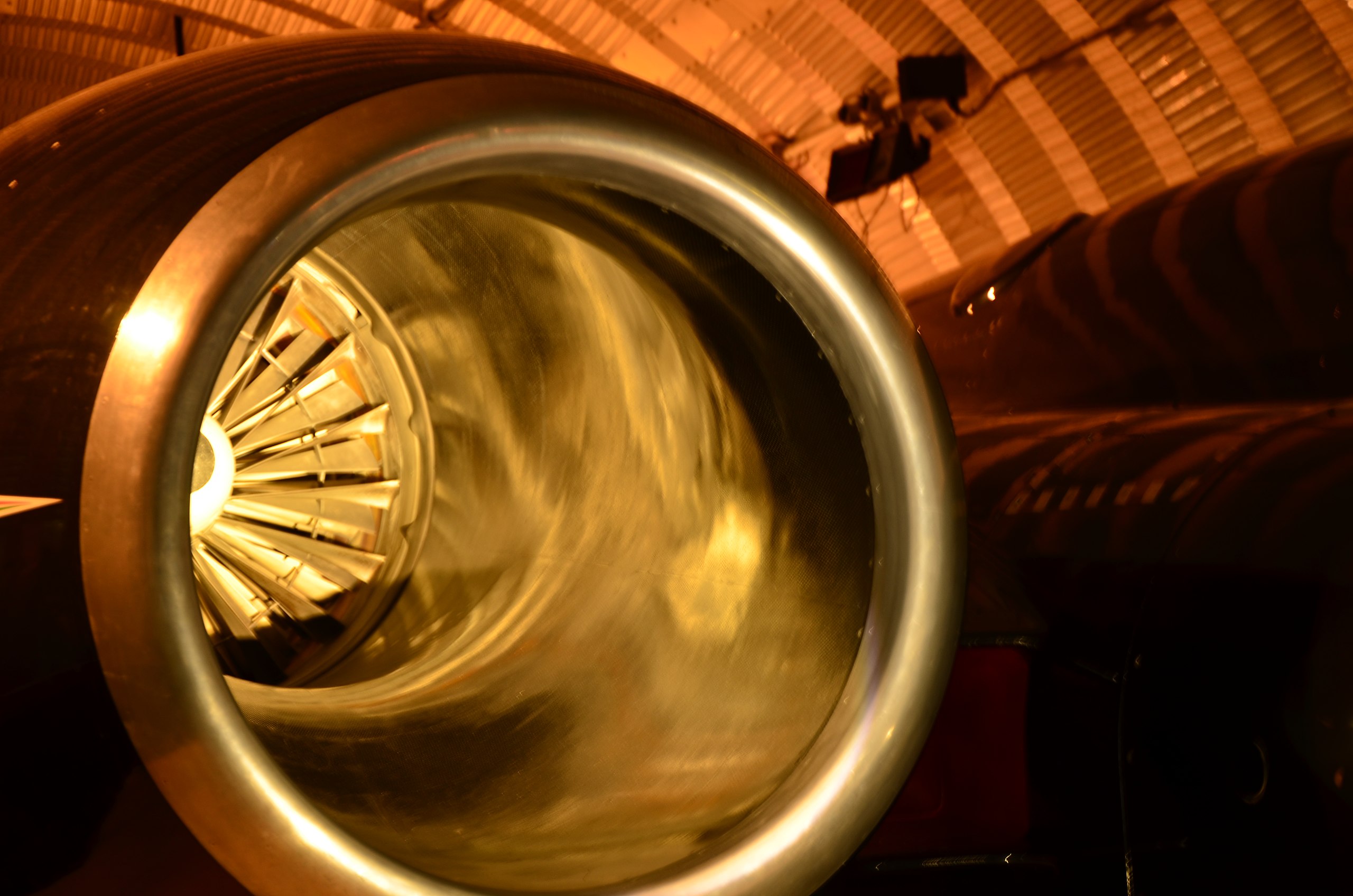
Not surprisingly, this beast sports two afterburning Rolls-Royce Spey turbofan engines, which are the same ones that are used in the British version of the F-4 Phantom II jet fighter—and also why the driver was a skilled fighter pilot.
But those big, powerful engines need a whole lot of fuel.
 Ben Sutherland, CC BY 2.0, Wikimedia Commons
Fuel Consumption
This supersonic car is not exactly eco-friendly—or economical to run either. It burns an astounding 18 liters (4.8 gallons) of fuel per second. So, compared to an average road car, it’ll only do about 4,850 L/100 km (0.05 mpg).
Not only that, when it set the land speed record, the Thrust SSC was only operating at 12% efficiency.
 Culture Coventry Trust, CC BY-SA 4.0, Wikimedia Commons
Testing
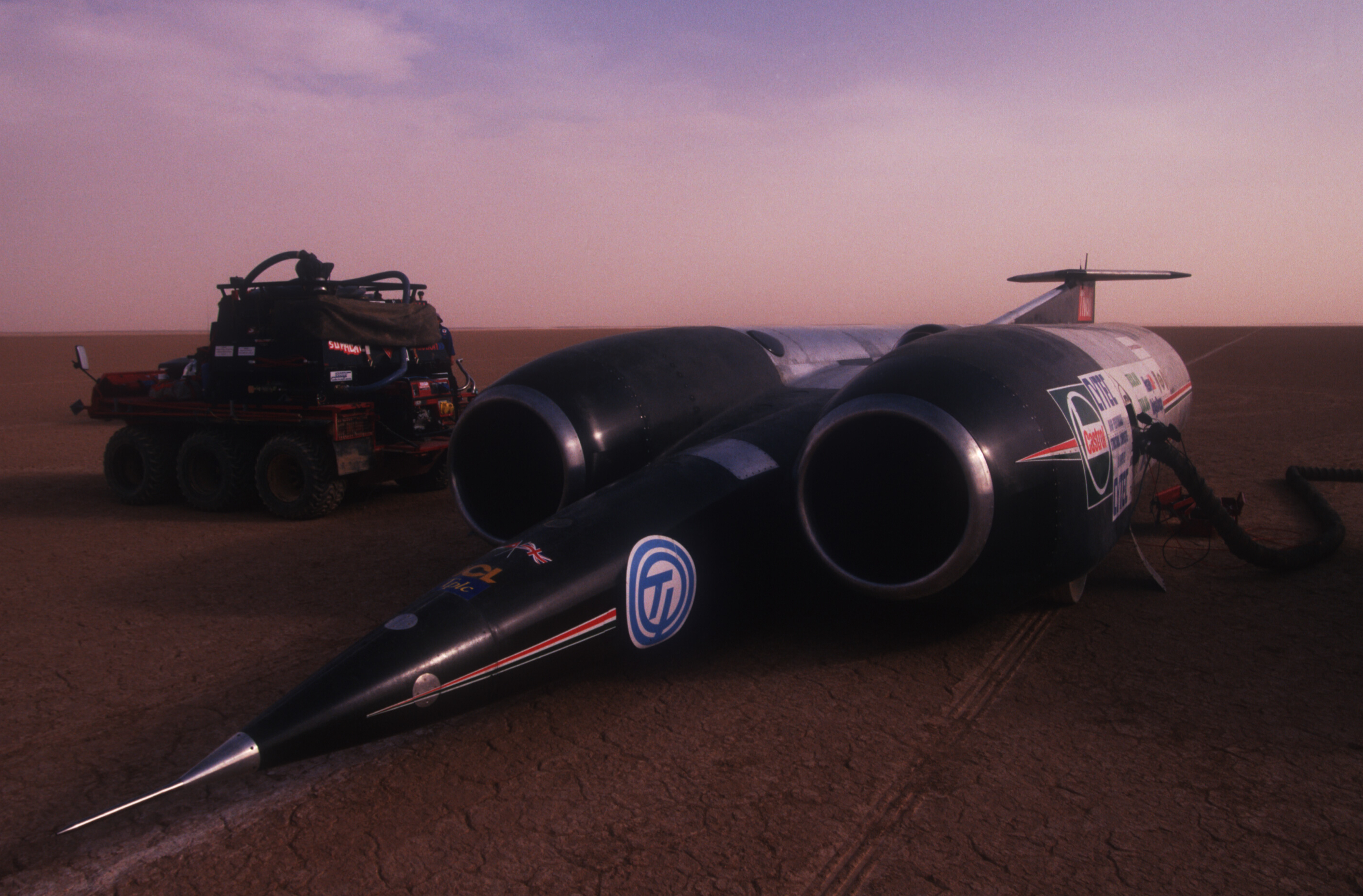
Before its record run in October 1997, the Thrust SSC performed extensive test runs in the Al-Jafr desert (located in Ma'an Governorate) in Jordan—a location unknown before for its capabilities as a test range for high-speed land vehicles.
The Announcement
After the record-breaking moment, the World Motor Sport Council released an inspiring message: “The World Motor Sport Council homologated the new world land speed records set by the team Thrust SSC of Richard Noble, driver Andy Green, on 15 October 1997 at Black Rock Desert, Nevada (USA). This is the first time in history that a land vehicle has exceeded the speed of sound".
It then listed the incredible speed record: 1,227.985 km/h (763.035 mph).
The Brain Behind The Wheel
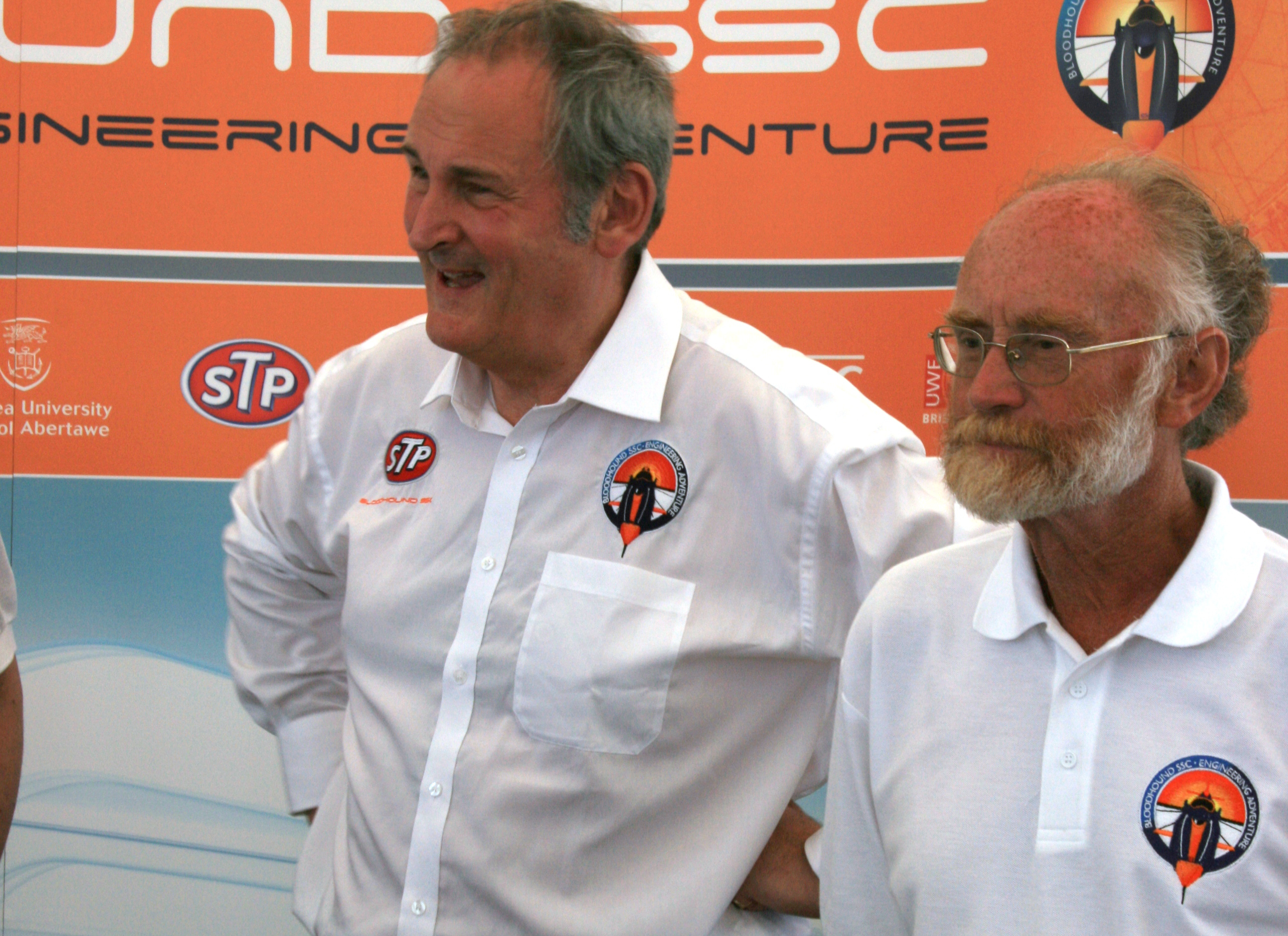
The Thrust SSC was the brainchild of Richard Noble, a British entrepreneur and former land speed record holder. He developed the jet-powered monster with the help of a team of engineering masterminds: Glynne Bowsher, Ron Ayers, and Jeremy Bliss.
 ian mcwilliams, CC BY 2.0, Wikimedia Commons
Richard Noble
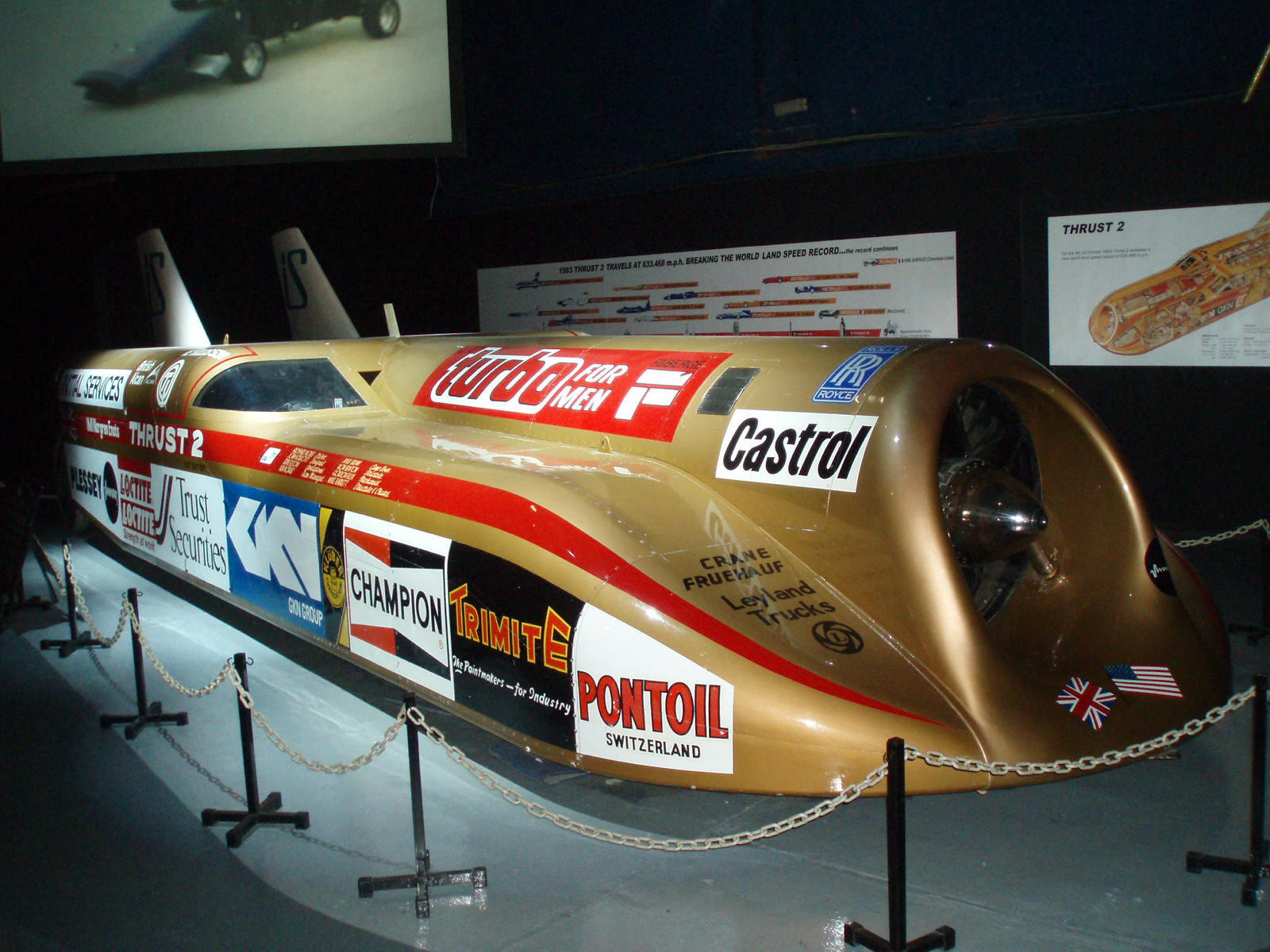
Noble held the land speed record between 1983 and 1997, with the Thrust2. His speed reached 1,019 km/h (633.468 mph). He then became project director of the Thrust SSC.
How much do you think this project cost?
The Price Tag
The Thrust SSC was built in the 1990s and cost about $3.3 million US—which would be just under $8 million in 2024.
It took five years to design, build, and run. So, where is it now?
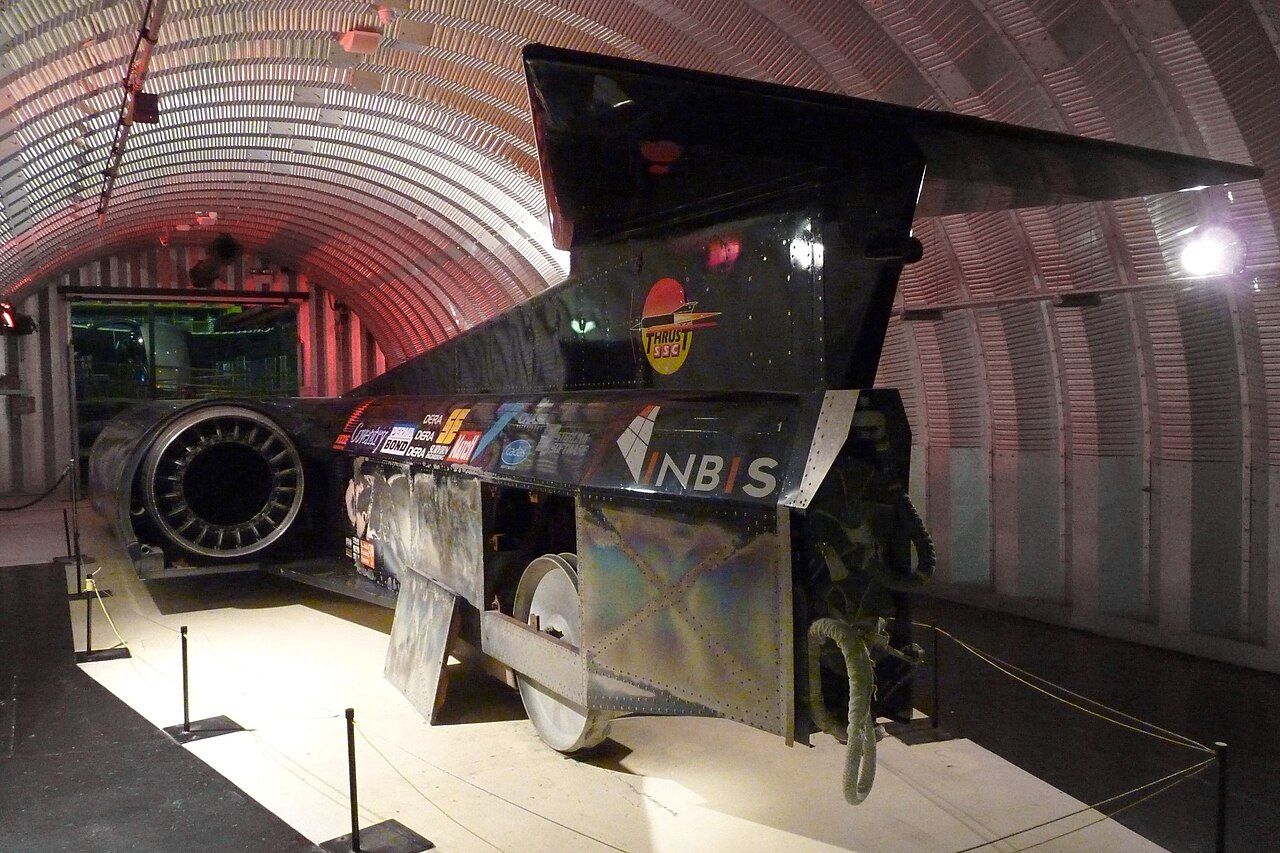 Cmglee, CC BY-SA 3.0 , Wikimedia Commons
The Museum
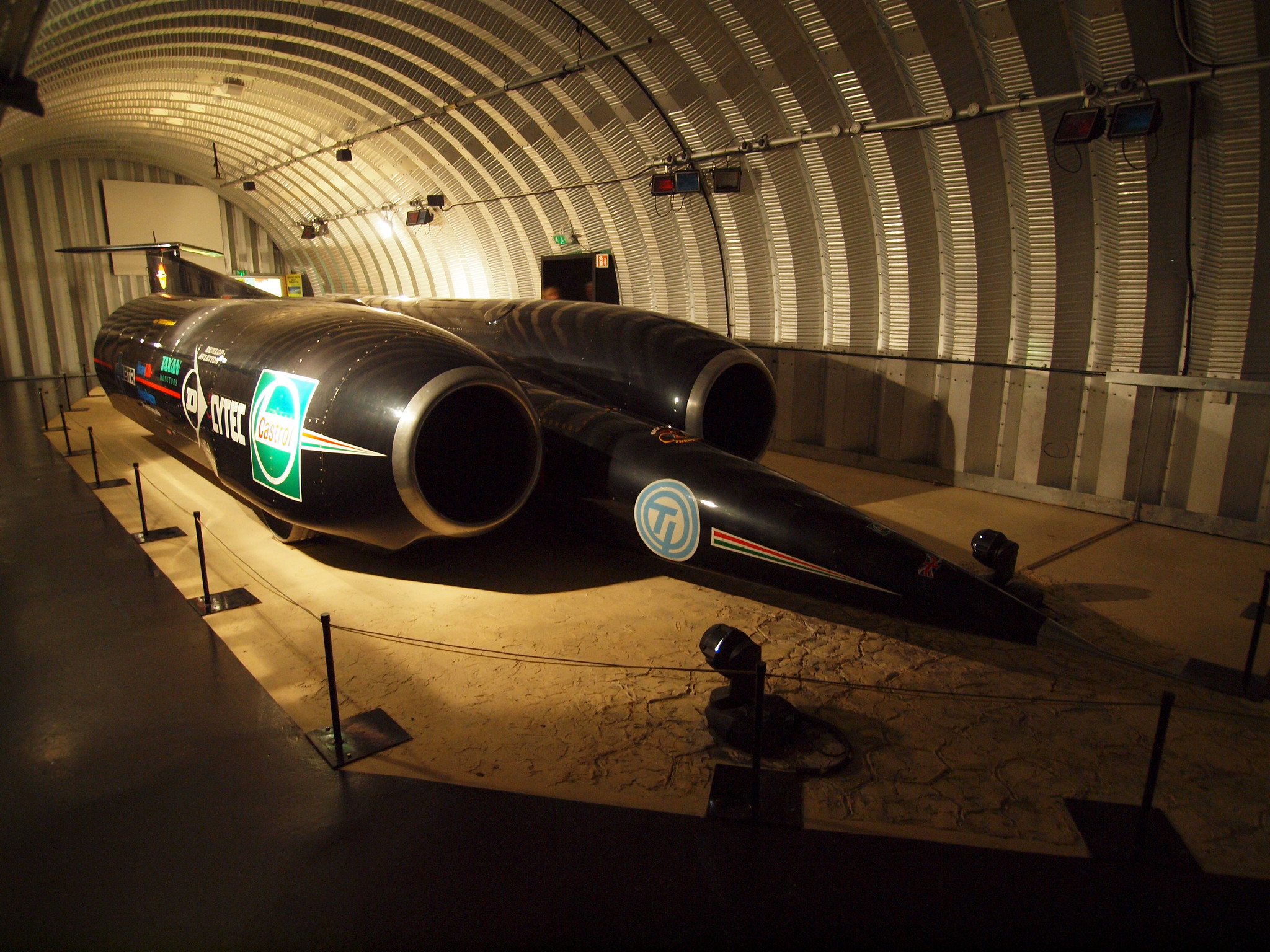
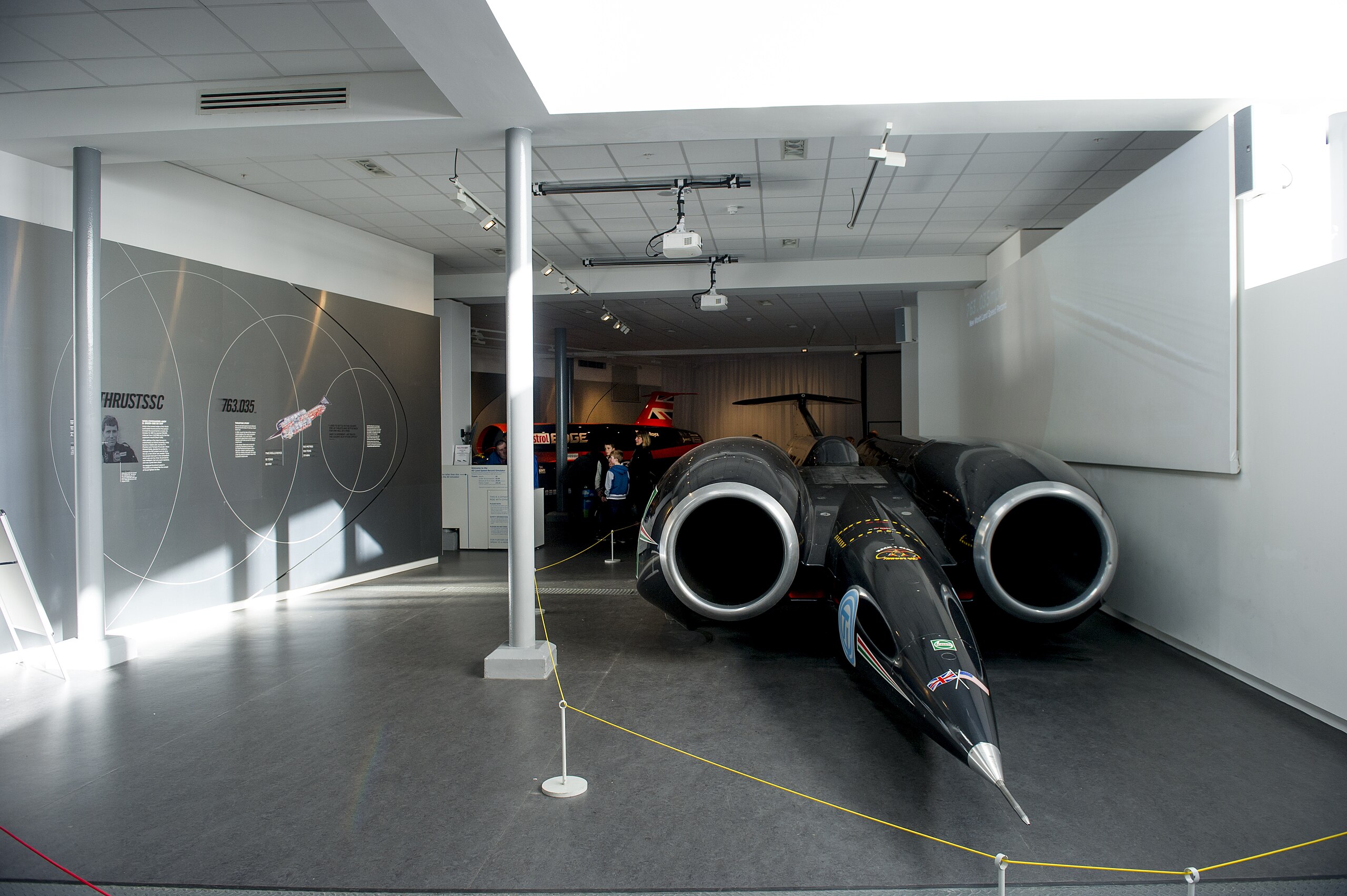
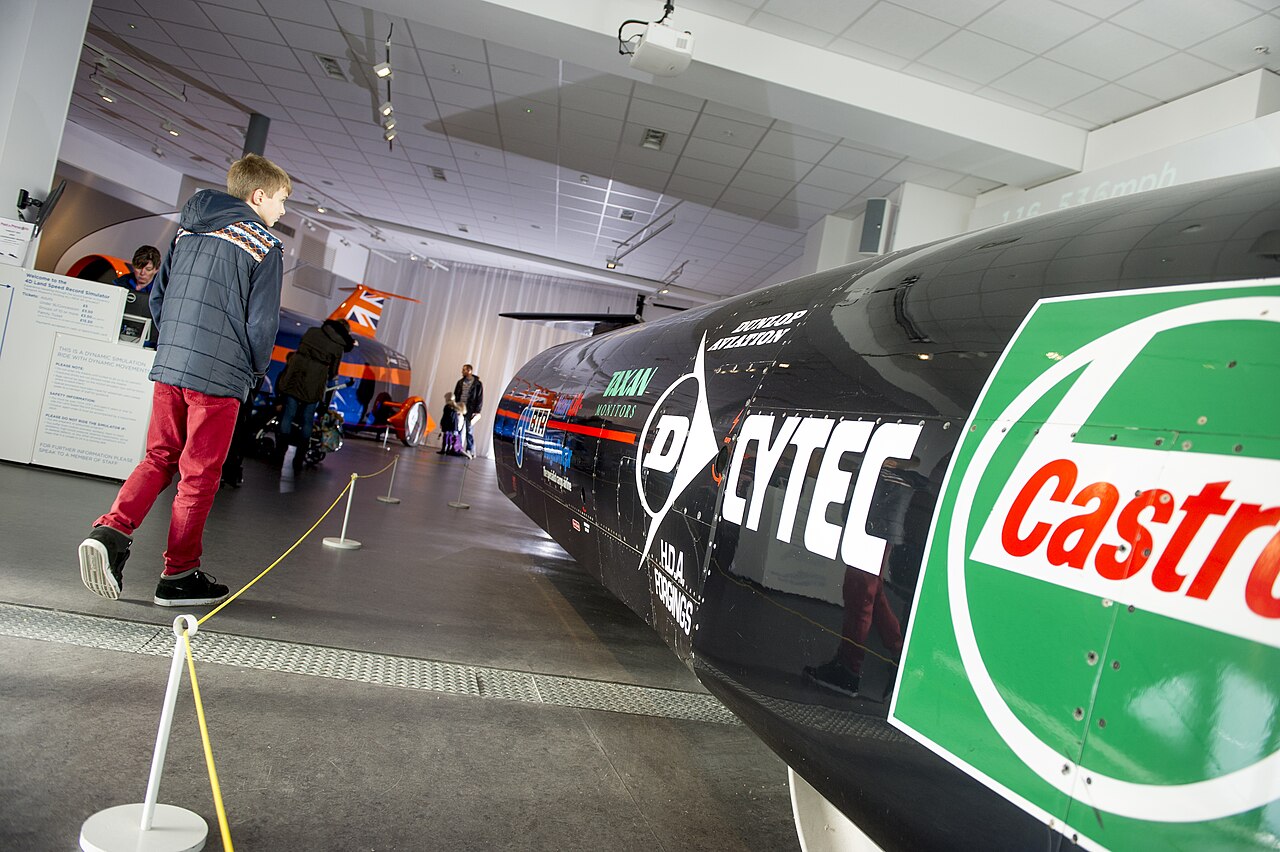
The Thrust SSC was only driven a total of three times—two test runs and the record-breaking run. After that, it was sent over to the Coventry Transport Museum in Coventry, England, to be displayed in the “Spirit of Speed Gallery,” alongside the Thrust2—its predecessor.
In 2015, both jet cars were moved to the new Biffa Award Land Speed Record Gallery. But just because they were behind glass didn’t mean the fun was over.
 Culture Coventry Trust, CC BY-SA 4.0, Wikimedia Commons
Other Attempts
The Thrust SSC was not the only contender for the land speed record. There was another jet car in the mix too, back in 2019. It was a collaboration between Canadian and US engineers, pilots, and mechanics.
The project began in 2013, and made a record-setting run only five years later.
 Oldsport, CC BY 3.0, Wikimedia Commons
The North American Eagle
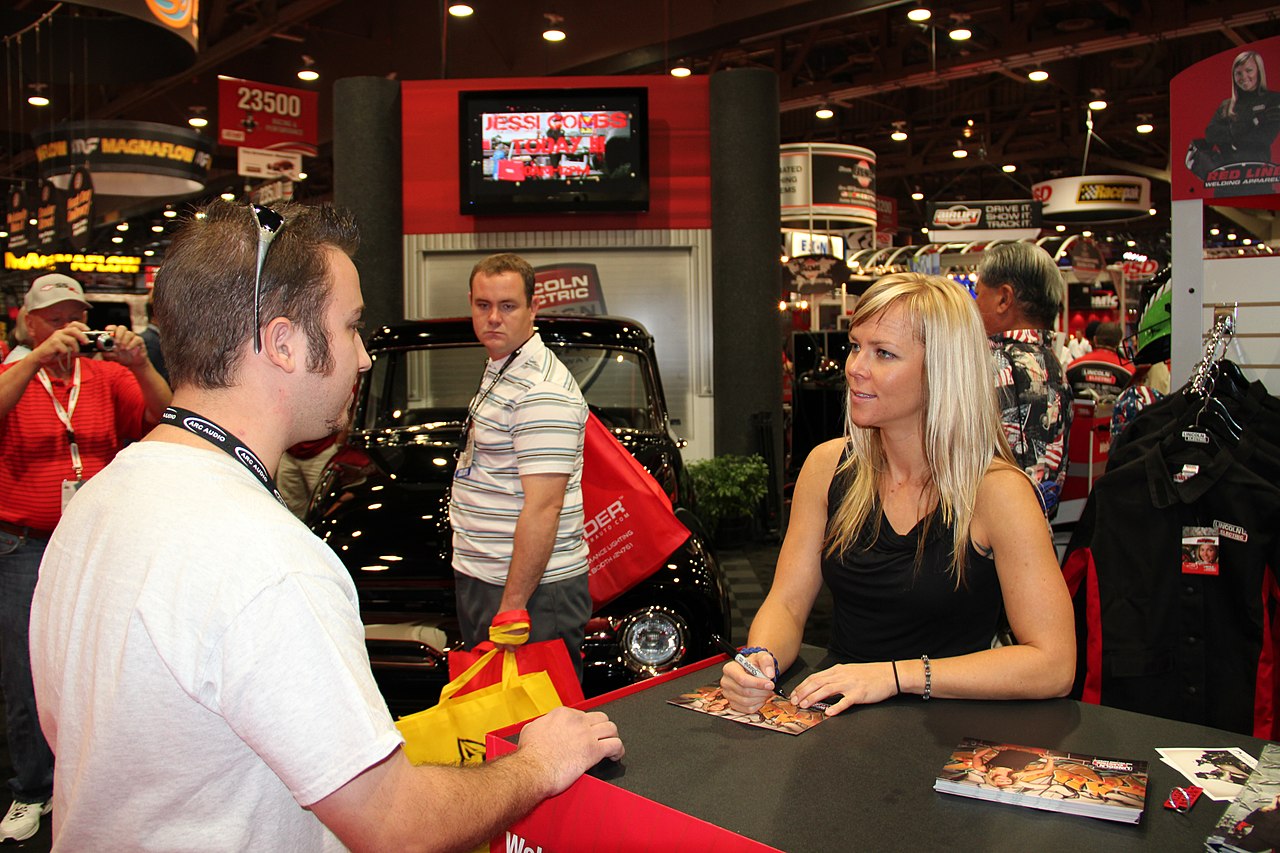
The North American Eagle was driven by Jessi Combs, who made a land speed record attempt on August 27, 2019. During the run, Combs set a new world land speed record for a woman, at 841.338 km/h (522.783 mph)—but unfortunately, the jet car crashed and Combs lost her life.
After that, the project was abandoned.
 Nick Ares, CC BY-SA 2.0, Wikimedia Commons
Up Next
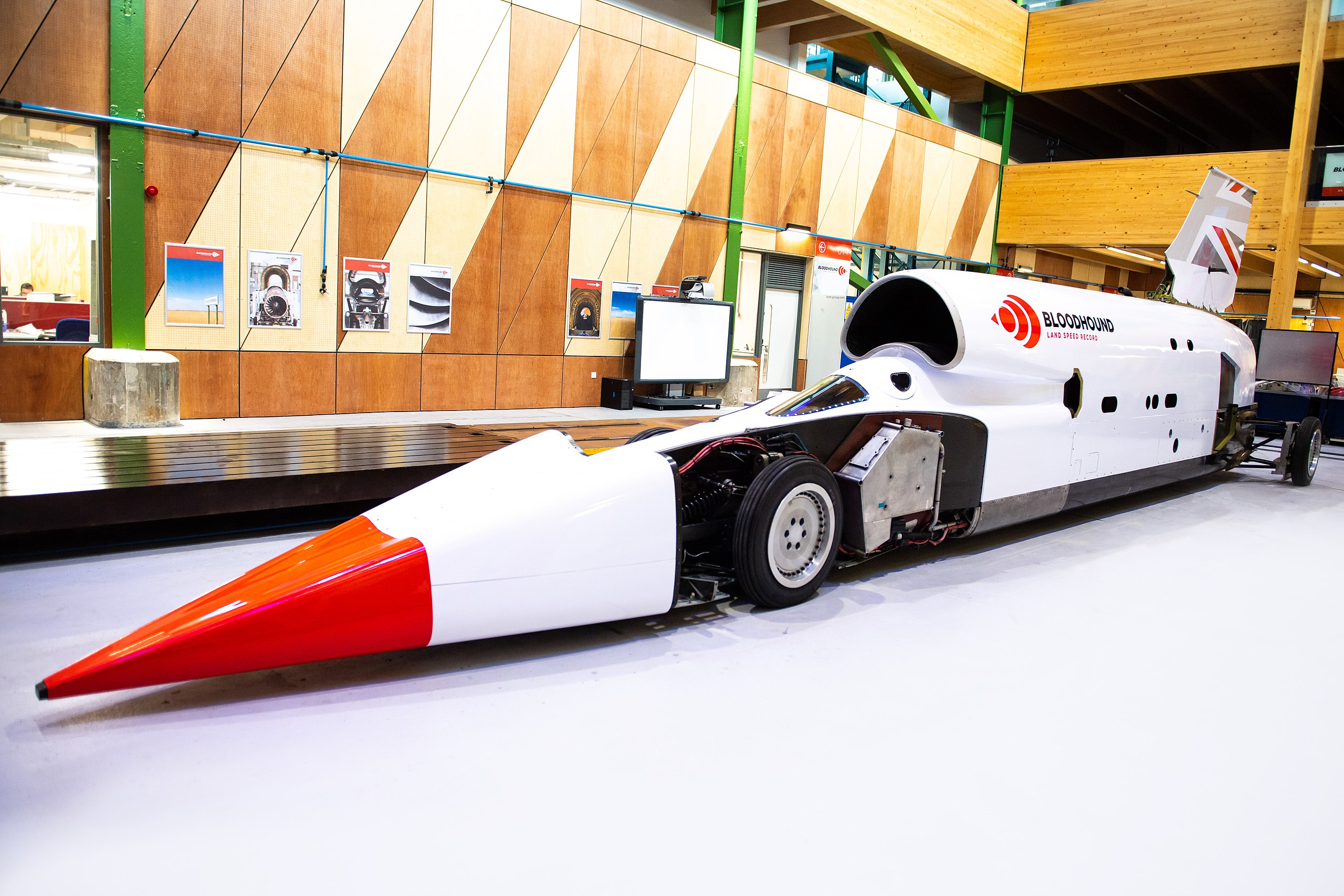
Richard Noble and his team have another plan in the works: the Bloodhound LSR. It’s the latest vehicle they’ve been working on for another land speed record attempt.
The Bloodhound project was announced in 2008 and has since gone through various testing stages, but has hit some bumps along the way. So, it has not yet made its record-breaking attempt.
But apparently, they’re expecting it’ll go much faster than the Thrust SSC—if that's even possible.
 Jules1982, CC BY-SA 4.0, Wikimedia Commons


.jpg)


.jpg)
