The Deposit Drama Starts Earlier Than You Think
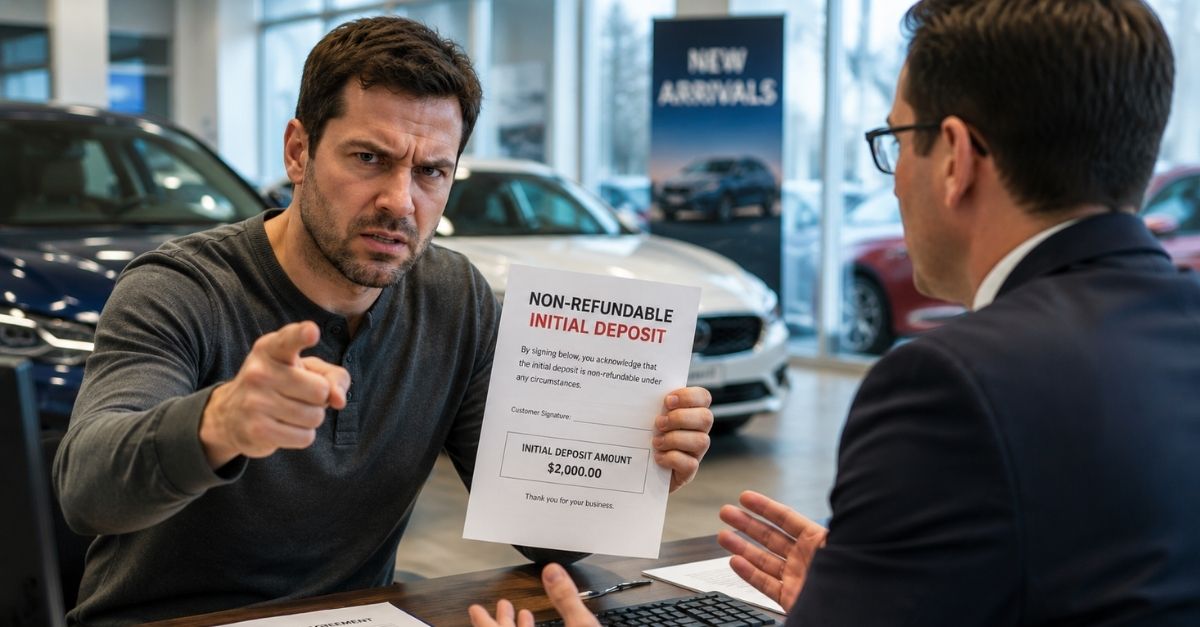
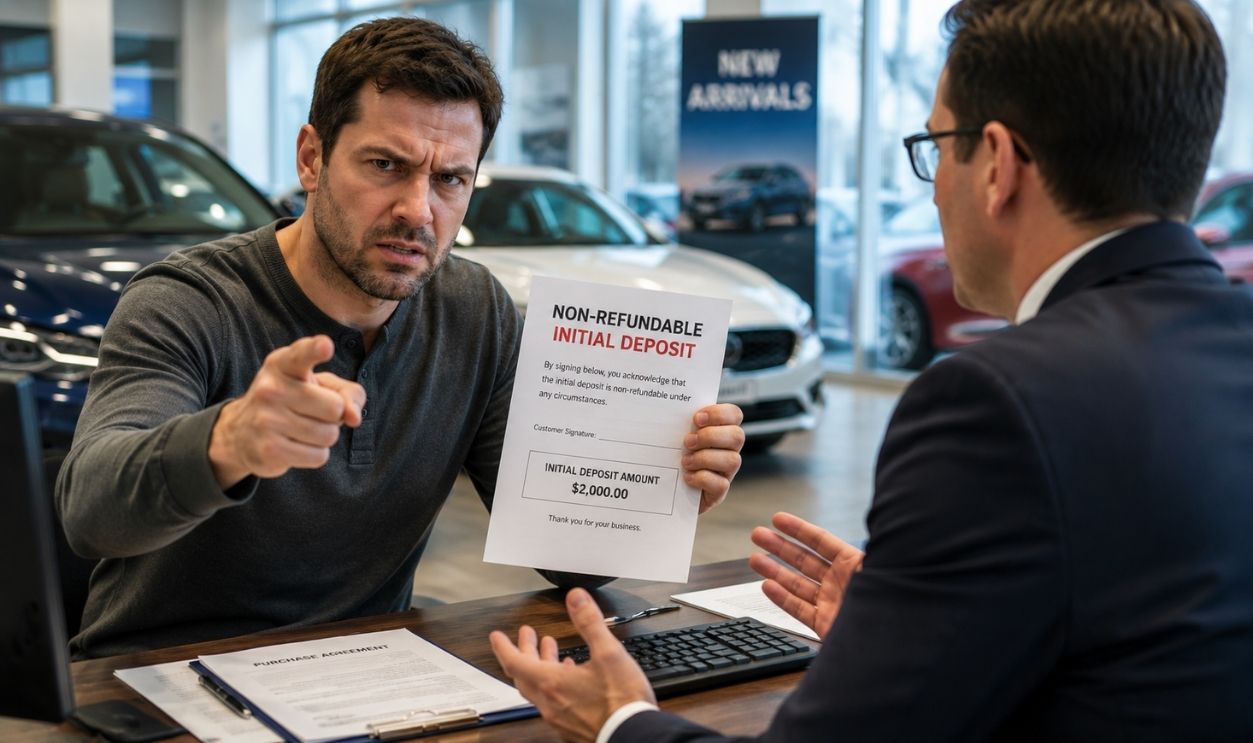
A lot of car-buying trouble starts with one small payment and one big assumption. A shopper is told a deposit is refundable, the car finally arrives, and then the dealer says the rules changed. That is when many buyers start asking whether a dealership can rewrite the deal after taking their money.
Why This Question Matters Right Now
Factory orders, tight inventory, and in-demand models have made deposits more common in recent years. Buyers are often asked to put money down just to hold an incoming vehicle or reserve a build slot. When the paperwork is vague, that setup can turn into a real dispute.

The Key Issue Is Not The Car Arrival
The legal issue usually is not whether the car showed up. The real question is what both sides agreed to when the deposit was taken. If a dealer said the deposit was refundable and accepted your money on that basis, the dealer usually cannot just change that term later without your agreement.

What The FTC Says About Dealer Honesty
The Federal Trade Commission requires dealers to be honest and not mislead buyers about important sale terms. The FTC's guidance for auto dealers makes clear that deceptive statements about costs, fees, or other key terms can violate the law. Whether a deposit is refundable is the kind of detail that can shape a buyer's decision.

Written Terms Usually Decide The Fight
If you have a receipt, buyer's order, text message, email, or credit card record saying the deposit was refundable, that evidence matters. Written proof can seriously weaken a later claim that the money became non-refundable once the vehicle arrived. The more specific the language, the stronger your position usually is.

Verbal Promises Can Count Too
Not every deposit agreement is neatly printed on a form. A salesperson's text, voicemail, or email can help show what you were told before the payment was made. Even if the dealer points to later paperwork, earlier statements can still matter in a dispute.

State Law Often Controls Deposits
Car sales are heavily shaped by state law, and deposit disputes are no different. Some states have specific rules about whether a dealer can keep part or all of a deposit. Others rely more on contract law, unfair trade practice laws, and whether the buyer got clear disclosure.

California Shows How Specific The Rules Can Get
California's Vehicle Code includes a section that directly addresses deposits in a vehicle sale. Under California Vehicle Code section 11736, when there is a written purchase order signed by the buyer, a seller may keep only a limited amount of a deposit if the buyer refuses to complete the purchase. The law also has conditions and exceptions, which is why the paperwork and timing matter.

That California Rule Has A Cap
The California rule surprises a lot of shoppers because it does not give a dealer unlimited power to keep a deposit. In many covered situations, the seller may keep only the lesser of 5 percent of the purchase price or $500. That does not settle every dispute by itself, but it shows the answer can be more buyer-friendly than many people expect.

But California Is Not A Universal Rule
What applies in California may not apply in Texas, Florida, New York, or your home state. That is why a dealership cannot just point to a general store policy and assume it overrides state law. The location of the sale, the wording of the agreement, and the facts of the deal all matter.

Massachusetts Warns Buyers To Get Deposit Terms In Writing
The Massachusetts Attorney General's consumer guidance says buyers should make sure any deposit agreement clearly states whether the deposit is refundable or non-refundable. That advice exists for a reason. Vague terms are exactly where ugly disputes begin.

A Dealer Policy Is Not Automatically Your Contract
Dealers often have internal policies about custom orders, incoming inventory, and hold deposits. But a store policy by itself does not automatically become binding if it was not disclosed when you paid. A dealer usually cannot spring new terms on you later and call it policy.

Changing Terms Usually Requires Agreement
Under basic contract rules, both sides usually have to agree to a major change in terms. That means a dealer generally cannot turn a refundable deposit into a non-refundable one just because circumstances changed or the car arrived. If you did not agree to the new rule, that is a serious warning sign.
 Rodrigo Rodrigues | WOLF Λ R T, Unsplash
Arrival Can Matter Factually, Not Magically
Dealers sometimes argue that once a vehicle arrives, they have taken on costs or missed other sales opportunities. That may explain why they want to keep the money, but it does not automatically make the deposit non-refundable. The real legal weight still comes from the original agreement and the law that applies.
 Harrison Keely, Wikimedia Commons
Look Closely At The Receipt And Buyer's Order
Some disputes turn on one handwritten word or one unchecked box. Pull every document you got when you paid the deposit, including a receipt, purchase order, reservation form, and any add-ons. If the paperwork says refundable, that is hard for a dealer to wave away later.

Texts And Emails Can Be Gold
If a salesperson wrote, “Yes, it is fully refundable,” save that message right away. Screenshots, timestamps, and full message threads can help show exactly what was promised and when. In a close dispute, that kind of evidence can make all the difference.

Credit Card Payments Give You Another Tool
If you paid by credit card, you may have dispute rights through your card issuer depending on the facts and the timing. The Consumer Financial Protection Bureau explains how billing error and merchant disputes can be handled under federal protections. That does not guarantee a win, but it can give you useful leverage if the dealer refuses to cooperate.

Act Fast If The Dealer Backs Away From The Original Deal
Do not wait for weeks while the story keeps changing. Ask the dealership to confirm in writing why it now believes the deposit is non-refundable and what document supports that claim. A quick paper trail can stop a vague dispute from turning into a complete he-said, she-said mess.

Escalate Beyond The Salesperson
If the person who took your deposit is stonewalling, go higher. Ask for the sales manager, then the general manager, and then the dealer principal or owner if needed. Calm escalation usually works better than a shouting match on the showroom floor.

Put Your Demand In Writing
A short, clear email or letter can be surprisingly effective. State the date you paid, the amount, who told you the deposit was refundable, and attach copies of supporting messages or documents. Then ask for a refund by a specific date and request any written term the dealer claims changed the deposit status.

State Agencies May Help Pressure The Dealer
Many states regulate dealerships through a motor vehicle dealer board, department of motor vehicles, attorney general, or consumer protection office. Those agencies may take complaints, mediate disputes, or investigate deceptive practices. Even when they do not solve every case, a formal complaint can get a dealer's attention fast.

The FTC And CFPB Are Not Trial Courts, But They Matter
The FTC and the CFPB do not usually step in to fight one private deposit dispute for you. Still, both agencies collect complaints and publish guidance that helps shape how businesses are supposed to act. If a dealer has a pattern of misleading buyers, those complaints can become much more important.

Small Claims Court Is Often The Practical Option
If the amount is fairly modest, small claims court may be the most practical path. You usually do not need a big lawsuit and expensive legal fees to fight over a deposit. Bring your documents, your messages, your payment record, and a simple timeline of what happened.

Custom Orders Can Be Trickier
A dealer may have a stronger argument for keeping some money if the vehicle was specially ordered or configured just for you and the terms were clearly disclosed in advance. Even then, the details matter. A custom order does not give a dealer a free pass to invent new terms after payment.

If The Paperwork Is Silent, The Dealer May Have A Problem
Silence does not automatically help the dealer. If the deposit receipt does not say non-refundable and the buyer was told the opposite, the dealership may have a hard time justifying keeping the money. Courts and regulators often care a lot about what the consumer was actually told at the time of payment.

The Best Protection Is Boring But Powerful
Before paying any deposit, ask one direct question in writing: “Is this fully refundable under all circumstances, and if not, when exactly does it become non-refundable?” Then get the answer on the receipt or in an email before you send the money. It is not glamorous, but it can save you a major headache.

So Can They Change The Terms After Taking Your Money
In most cases, not just by saying the car arrived and the rules are now different. The answer depends on the original agreement, your state's law, and the evidence showing what was promised when the deposit was accepted. If the dealer told you the deposit was refundable, took your money, and only later tried to relabel it non-refundable, that is exactly the kind of dispute where paperwork, messages, and quick action matter most.