Weight Kills Speed
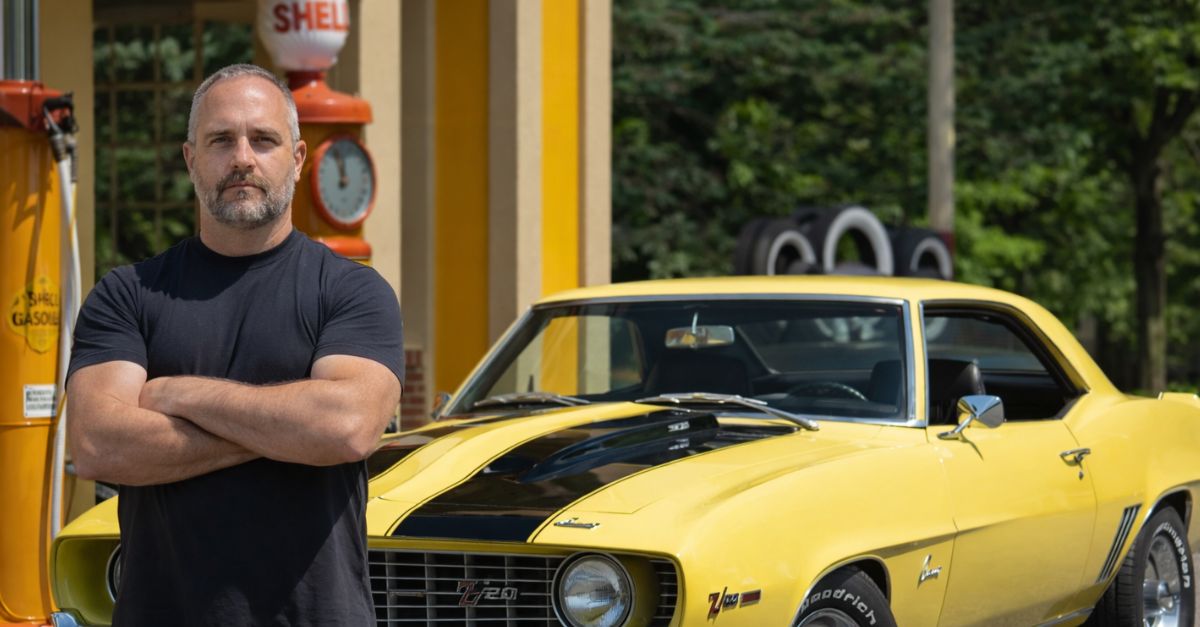
Trans Am racing needed production cars that could corner, so big-block bruisers showed up but failed spectacularly. The Z/28 arrived as Chevrolet's answer—smaller engine, sharper reflexes, genuine speed through turns.

Mustang Creates Market
Ford's 1964½ Mustang created an entirely new category that Detroit hadn't seen coming. Lee Iacocca's pony car sold over 400,000 units in its first year, catching General Motors completely flat-footed. The formula was brilliant: sporty styling, affordable pricing, and endless customization options.

GM Responds Late
By 1967, Chevrolet finally had its answer, but those three years of Mustang dominance cost them dearly in both sales and credibility. The Camaro arrived as GM's F-body platform, sharing underpinnings with Pontiac's Firebird. Unlike Ford's head start, Chevrolet was playing catch-up in a market Ford had already defined.
 Alexander Migl, Wikimedia Commons
Trans Am Founded
The Sports Car Club of America launched the Trans-American Sedan Championship in 1966, creating a professional racing series that would become legendary. This was specifically designed to attract Detroit's automakers with rules favoring production-based sedans. Two classes emerged.

Piggins Sees Opportunity
Vince Piggins, Chevrolet's product promotion specialist and performance mastermind, recognized that the Trans Am offered the perfect platform to build Camaro's image. He wasn't just thinking about trophies. He understood that "win on Sunday, sell on Monday" actually worked when executed properly.

305 Displacement Limit
Trans Am's 305 cubic inch ceiling crafted a fascinating engineering puzzle that big-block muscle couldn't solve. The rules required production sedans with wheelbases under 116 inches, back seats, and at least 1,000 units sold to qualify. Chevrolet's existing lineup included 283 and 327 cubic inch V8s.

302 Engine Created
Piggins and his engineers built the 302 through brilliant parts-bin engineering that racers had already discovered worked beautifully. They mated the 327's four-inch bore with the 283's three-inch stroke, yielding exactly 302.4 cubic inches—just under the 305 limit. This over-square design, with its short stroke, enabled stratospheric rpm capability.

Z/28 Package Introduced
RPO Z28 appeared on December 29, 1966, taking its name from the next available Regular Production Option number on Chevrolet's list. The package added $358.10 to a base Camaro coupe and included the F41 handling suspension, front disc brakes with metallic rear drums, and a quicker steering ratio.
 Jeremy from Sydney, Australia, Wikimedia Commons
Silent December Launch
The Z/28's stealth introduction meant most Camaro shoppers walked past their dream car without knowing it existed at dealerships. Chevrolet deliberately kept it quiet, focusing marketing dollars on volume-seller Camaros while the Z/28 served its true purpose: homologation for Trans Am racing.

Penske Racing Partnership
Roger Penske received six of the very first Z/28s ever built, delivered directly to his racing operation before regular customer orders began. Penske's reputation for meticulous preparation and engineering excellence made him the perfect partner. Penske's team ran the Sunoco-sponsored blue Camaros with an analytical approach.
 healthiermi, Wikimedia Commons
Donohue Takes Wheel
Mark Donohue brought something unusual to 1960s racing. It was an engineering degree from Brown University combined with natural driving talent and analytical precision. Penske hired him specifically because Donohue could both drive fast and explain exactly why the car behaved as it did.

1968 Championship Won
Donohue and Penske's 1968 season became the stuff of legend with ten victories in thirteen races, a Trans Am record that stood for nearly thirty years until Tommy Kendall's eleven wins in 1997. The dominance was the systematic destruction of the competition, which included Ford Mustangs and AMC Javelins.
 Nathan Bittinger, Wikimedia Commons
Big Block Problems
The SS 396 Camaro put a crushing 59.3 percent of its weight on the front axle, creating a nose-heavy monster that plowed through corners. Road Test magazine captured it perfectly: “At the mere suggestion of work, the axle leaps and hops, judders and bucks”.

Weight Distribution Issues
A cast-iron big block weighed approximately 685 pounds fully dressed, while the small-block 302 came in around 575 pounds—a 110-pound difference concentrated entirely over the front wheels. This fundamentally altered the car's balance and responsiveness in ways that couldn't be fixed with stiffer springs alone.
 Greg Gjerdingen from Willmar, USA, Wikimedia Commons
Handling Vs Horsepower
Detroit's muscle car marketing had conditioned buyers to worship cubic inches and quarter-mile times while ignoring that cars also turned and stopped. The Z/28 represented a philosophical revolution: racing-derived handling, balanced power delivery, and high-revving character instead of tire-smoking torque.
 Charles from Port Chester, New York, Wikimedia Commons
1969 Styling Revolution
The 69 featured horizontal eyebrows over the wheelwells, a deeper V-shaped grille with inset headlights, and completely new sheetmetal except for the hood, trunk lid, and roof. This one-year-only styling—the 1970 model was delayed, extending 1969 production to eighteen months—created what many consider the most beautiful Camaro ever built.
 Greg Gjerdingen from Willmar, USA, Wikimedia Commons
Sales Explosion Begins
From 602 units in 1967 to 7,199 in 1968, then exploding to 20,302 in 1969, the Z/28 went from homologation special to legitimate sales success. These numbers represented genuine demand, not just racing requirements, as customers discovered you could actually buy a race car for the street.
 Lyn Gateley from Silicon Valley, CA, USA, Wikimedia Commons
Cowl Induction Added
The ZL2 Special Ducted Hood arrived mid-December 1968 as a $79 option, featuring Larry Shinoda's brilliant design that drew high-pressure air from the windshield base. The rearward-facing scoop pulled cooler, denser air from the cowl's high-pressure zone directly into the carburetor through an underhood plenum.
 OlliFoolish, Wikimedia Commons
Four Wheel Discs
The JL8 four-wheel disc brake option cost a steep $500.30, yet 206 sets found homes on 1969 Z/28s despite making the car even more expensive. Chevrolet borrowed this technology directly from the Corvette, using four-piston calipers at all four corners for unprecedented stopping power.
 Mustang Joe, Wikimedia Commons
Second Championship Victory
Donohue's 1969 season nearly duplicated his 1968 dominance, but with Parnelli Jones' Ford Mustangs fighting back harder than ever. The championship came down to the final seven races, where Donohue won six consecutively to seal the driver's title, though Ford narrowly edged Chevrolet for the manufacturer's championship.
 Ford Motor Company, Wikimedia Commons
Boss 302 Debuts
Ford finally answered the Z/28 in 1969 with the Boss 302 Mustang, arriving two full years after Chevrolet had established dominance. The Boss featured Ford's Windsor-based 302 V8, making a claimed 290 horsepower—the same suspicious rating as the Z/28 for insurance purposes—tuned for similar high-rpm performance.

Z/28 Outsells Competition
The sales numbers told a devastating story for Ford: Chevrolet moved 20,302 Z/28s in 1969 while Ford's Boss 302 managed just 1,628 units in its debut year. Chevrolet had spent two years building the Z/28's reputation through Trans Am victories and magazine coverage.
 MercurySable99, Wikimedia Commons
Road Course Dominance
On twisting road courses like Laguna Seca, Riverside, and Watkins Glen, the Z/28's advantages became overwhelming against big-block muscle. Where SS 396 Camaros understeered into corners then snapped to oversteer mid-turn, the Z/28 rotated predictably and held its line.
 Nathan Bittinger, Wikimedia Commons
Philosophy Shift Begins
The Z/28's success forced enthusiasts to reconsider what made a muscle car truly fast—was it quarter-mile times or lap times around actual race tracks? Big blocks delivered tire-smoking launches and impressive straight-line speed, but the Z/28 proved that balanced engineering beat brute force when roads curved.
 Matt Morgan from Alameda, Wikimedia Commons
Muscle Car Redefined
Before the Z/28, "muscle car" meant one thing: stuff the biggest available engine into a mid-size body and go straight really fast. The Z/28 expanded that definition to include handling prowess, brake performance, and driver skill as equally important factors.
 OlliFoolish, Wikimedia Commons