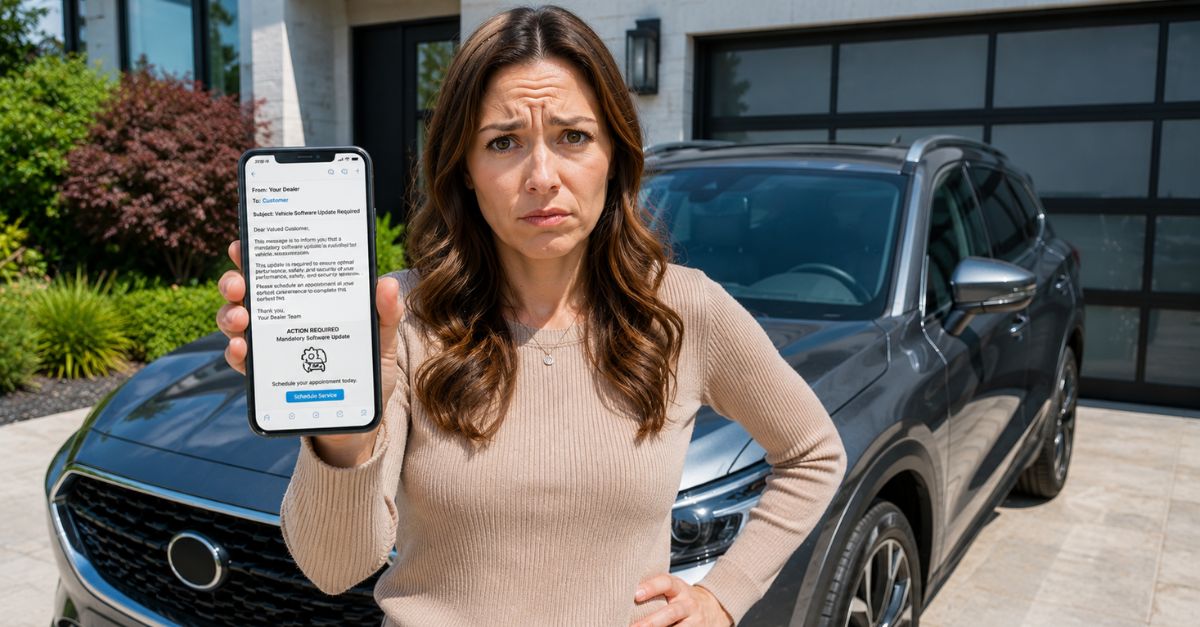
That “Mandatory Upgrade” Email Can Sound Scarier Than It Is
If your dealer keeps emailing about a “mandatory software upgrade” for your brand new, modern car, it's easy to think you have no choice. Luckily, a dealer cannot usually force you to install routine updates on your own car. The big exception is a safety recall, because recalls fall under federal safety rules and carry much more weight.
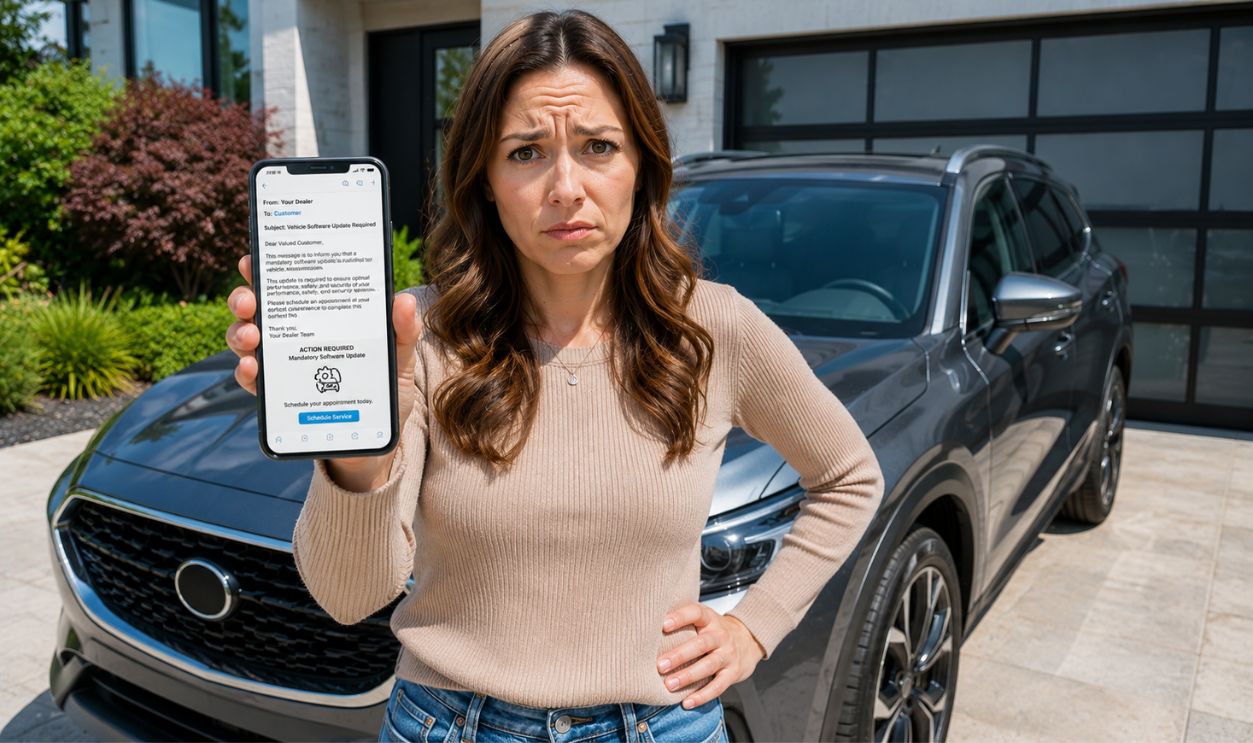
Start With One Basic Question
Ask whether the update is a recall, a service campaign, or a product improvement. That difference matters. A recall usually deals with a safety defect, while a service campaign or convenience update is often optional unless it is needed for another covered repair.

Recalls Are Where The Rules Change
The National Highway Traffic Safety Administration, or NHTSA, requires manufacturers to notify owners when a vehicle or piece of equipment has a safety-related defect or does not meet a federal motor vehicle safety standard. In those cases, the manufacturer has to offer a fix, which can mean repair, replacement, or refund depending on the situation. That is why a software update tied to a recall is much more than a routine dealer suggestion.
 Anatoliy Cherkas, Shutterstock
Even Then, Dealers Usually Cannot Force You To Show Up
Here is the part many drivers miss. A recall notice does not usually mean a dealer can drag you in right away. It means the automaker has to notify you and offer the fix. In some cases, though, a vehicle with an open recall can run into restrictions later if the problem is not addressed.

The Law Got Stricter For Serious Recall Risks
Congress took a harder line on especially risky recalled vehicles in the Moving Ahead for Progress in the 21st Century Act, known as MAP-21. NHTSA explains that this law can keep rental companies from renting out unrepaired recalled vehicles, and it also affects the sale of some new vehicles with open recalls. That helps explain why some dealer messages sound urgent when safety is involved.

Used Cars Follow Different Rules Than New Ones
Federal law generally blocks dealers from selling new vehicles that are covered by certain unrepaired recalls, but that does not broadly ban the sale of every used car with an open recall. The Federal Trade Commission says used cars can still be sold with open recalls in many cases, which is why buyers need to check for recalls themselves. That same split matters when a dealer calls a software update “mandatory.”
 Bodgan Vacarcuic, Shutterstock
What NHTSA Tells Owners To Do
NHTSA’s advice is simple. Check whether your vehicle has an open recall using your VIN, and get safety recalls fixed as soon as possible. If the issue is a recall, the repair is supposed to be free under federal law.

Why Dealers Use The Word “Mandatory” So Much
Sometimes “mandatory” really means “the manufacturer strongly wants this done.” The update might improve system stability, charging behavior, infotainment bugs, or warranty processing. That does not automatically mean you are legally required to install it right away.

Over-The-Air Updates Changed The Whole Situation
Software fixes no longer always mean a trip to the service department. NHTSA has recognized that over-the-air updates are now part of how automakers fix some vehicle problems, including safety-related ones in some cases. That has blurred the line between an old-school recall repair and the kinds of digital updates owners once treated like phone patches.

Tesla Helped Turn This Into A Mainstream Issue
Tesla’s software-heavy approach pushed this topic into everyday conversation years ago. Owners got used to fixes and feature changes showing up by software, sometimes without much warning. Regulators also started looking more closely at when a software push is just an improvement and when it is actually a recall remedy.
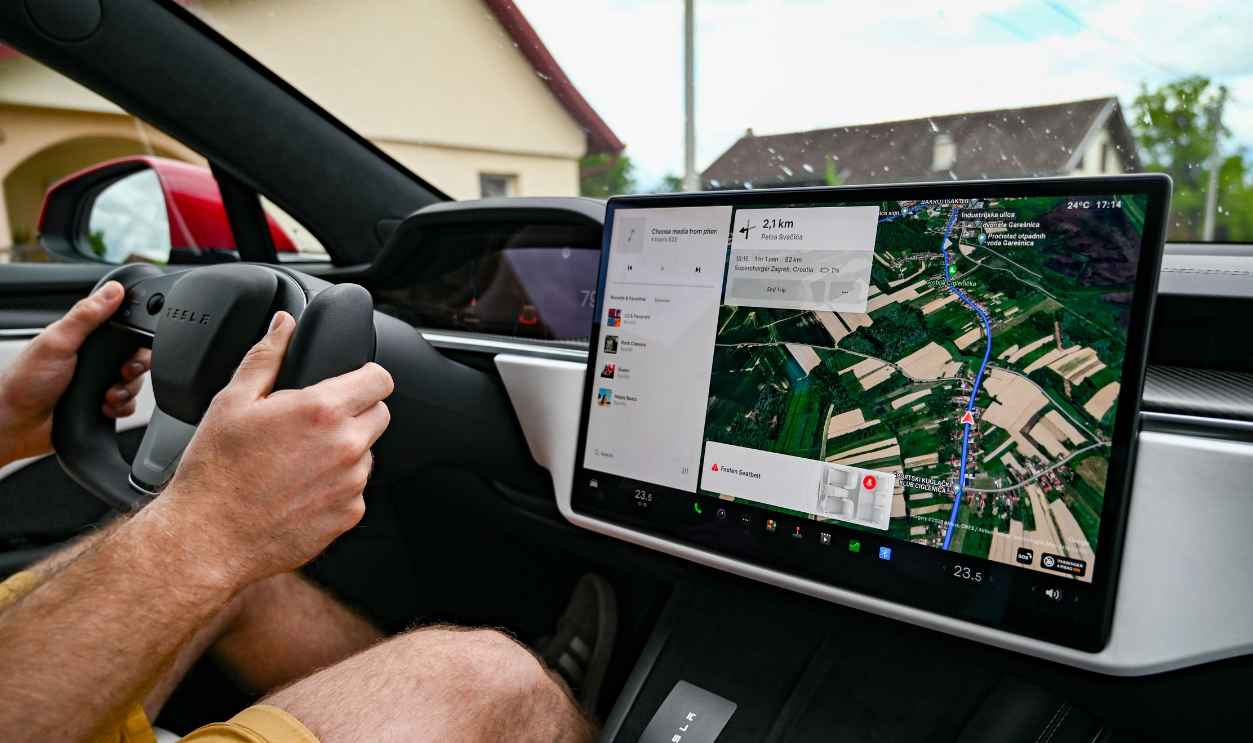
NHTSA Spelled Out That Difference
In a 2023 recall report involving Tesla, NHTSA described a remedy that would be delivered through an over-the-air software update. That was not just a convenience patch. It was a formal safety recall action, which shows that software can absolutely serve as the fix for a legally recognized safety defect.
Ford Owners Have Seen The Same Thing
Ford has also used software updates as recall remedies for some vehicles. In recall filings and owner notices, the company has described software recalibration or module updates as the repair. When that happens, the update is not just a nice extra, even if it sounds less dramatic than replacing a physical part.

Not Every Update Has Anything To Do With Safety
Many dealer emails are about technical service bulletins, warranty extensions, or field service actions rather than recalls. Those are real manufacturer programs, but they are not all treated the same under the law. If the dealer cannot point to a recall number, that is a strong sign you may be dealing with an optional or case-by-case update.

Ask For The Recall Number Or Campaign Number
This is the easiest way to cut through the wording. If it is a recall, there should be a recall or campaign number attached to it, and you should be able to verify it through NHTSA or the automaker’s owner site. If it is a service campaign, ask whether it is required for warranty coverage or simply recommended.

Your VIN Is The Best Reality Check
NHTSA’s VIN lookup tool is one of the most useful free tools drivers have. Enter your 17-character VIN and it will show unrepaired safety recalls reported to the agency. If nothing appears there, the “mandatory” label in the email may be more sales language than legal requirement.

Can A Dealer Refuse Other Work If You Say No
Sometimes yes, but the reason matters. A dealer may refuse certain related work if an open safety recall affects the vehicle or if the update is needed to properly diagnose another covered issue. That is very different from saying the dealer can generally force you to accept every software change it recommends.

Warranty Coverage Can Make Things Murkier
If an automaker says a software update is needed before it can process a warranty repair, ask for that explanation in writing. There can be real technical reasons, especially when a control module needs the latest calibration. Still, that is a warranty issue, not proof that every update is automatically mandatory for every owner.

Leased Vehicles Come With Extra Fine Print
If you lease your car, your contract may require you to keep it in good repair and complete recall work. That can make it harder to ignore a software campaign, especially if it is safety-related. Read the lease terms before assuming the email can be ignored without consequences.

Fleet And Work Vehicles Can Be Different
Company-owned vehicles often fall under internal policies that require all recalls and software campaigns to be handled quickly. That is not because every update has the force of law. It is because employers, insurers, and compliance teams often see unresolved safety issues as too much risk.

Insurance Usually Is Not The Immediate Problem
Drivers sometimes worry that skipping a software update will instantly void their insurance. Usually, that is not how it works. But if you knowingly ignore an open safety recall and that unrepaired defect helps cause a crash, it could lead to serious arguments later.

Privacy Questions Matter Too
Software updates can do more than fix bugs. Modern vehicles collect and send a lot of data, and update notices may come with revised privacy terms or connected-services rules. If that concerns you, read the update details and the automaker’s privacy notice before agreeing.

What If The Update Removes A Feature You Like
This is one reason some owners hesitate. Automakers have issued updates that change charging behavior, driver-assistance features, or infotainment settings. If the update is optional, ask exactly what changes and decide whether the tradeoff is worth it.

But Safety Recalls Usually Override Personal Preference
If the update is tied to a safety defect, not liking the change usually does not stop the manufacturer from treating it as the official fix. You can and should ask questions. Just understand that this is the category where “mandatory” has the strongest real-world meaning.

How To Reply Without Guessing
Send back a short list of questions. Ask whether the update is a safety recall, ask for the recall or campaign number, ask whether it is free, and ask what happens if you decline. Those four questions usually make it clear whether the email is truly urgent or just written that way.

What To Do If The Dealer Is Vague
Check the claim yourself. Look up your VIN on NHTSA’s site, search your automaker’s recall page, and review any messages in your owner portal. If the dealer still insists the update is mandatory but cannot point to a recall or contract requirement, ask for that claim in writing.

The Bottom Line
No, a dealer usually cannot force you to install every software update it emails about. Yes, you should take it seriously if the update is part of a documented safety recall or is required under a lease, warranty process, or another binding agreement. The smartest move is neither blind trust nor automatic refusal. Check your VIN and get the exact campaign details first.

Before You Delete The Email
The real story is not that dealers have secret control over your car. It is that software has become a safety tool, a warranty tool, and sometimes a marketing tool at the same time. That is why the same email can sound like a legal order when it is really just a recommendation, or sound optional when it is actually tied to a formal recall.